In 2015, when Winston-Salem’s seminal rock group, the “5” Royales, was inducted in Cleveland’s Rock & Roll Hall of Fame, Winston-Salem’s mayor and city council were inspired to create a local “Arts, Culture & Entertainment Memorial Walk of Fame” to recognize local individuals who made a difference on stage or behind the scenes.
The walk’s bronze stars, found adjacent to Benton Convention Center, already include the late Reynolds Professor of American Studies Maya Angelou, author John Ehle and country music’s George Hamilton IV, an R.J. Reynolds High School graduate. Now, two Wake Forest icons are joining the “stars”: Harold Tedford (P ’83, ’85, ’90), professor emeritus of theatre, who died in 2021; and Julian Burroughs (’51, P ’80, ’83), professor emeritus of communication, who died in 2008.
Full disclosure: I wrote the application for Professor Burroughs and was a big fan of Professor Tedford, so I am happy to share these recollections of a pair of Wake Forest legends.
Harold Tedford
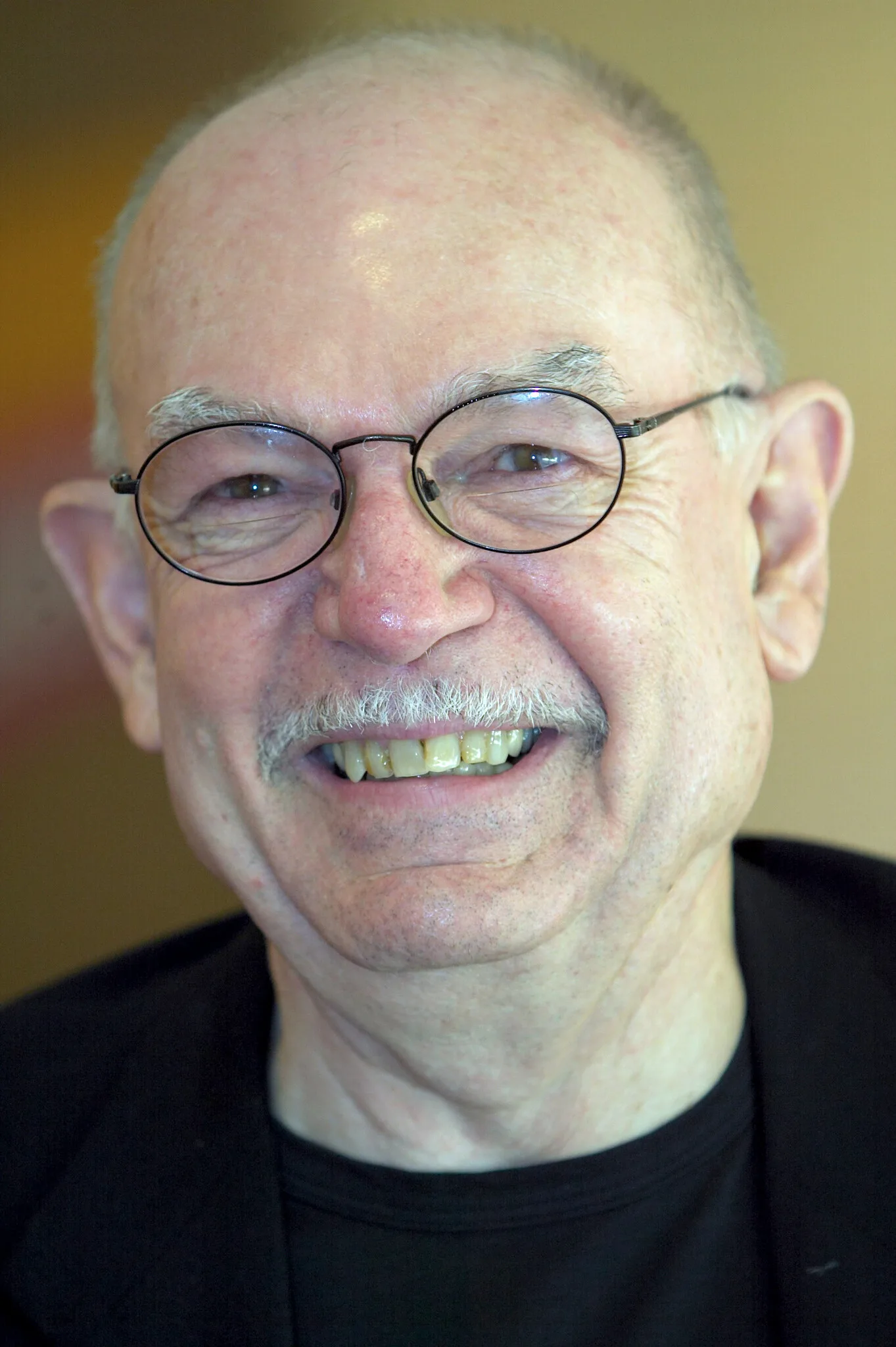
Tedford directed plays and worked with college and local theater technicians and actors. He had an ecumenical fondness for the arts, including visual media, volunteering at Artworks Gallery on Trade Street in downtown Winston-Salem, where he sought out artists and patrons, advocating passionately for the local art on display. He served on the board of the Winston-Salem Theatre Alliance, assisted The Little Theatre of Winston-Salem in play selection and created a weekly “Lunch Bunch” for arts leaders.
In 2016, Wake Forest named the Mainstage at Scales in Tedford’s honor. It was the perfect recognition of a career dedicated to theater and the arts in Winston-Salem. As a young child, Tedford was fascinated by the magical world of theater; with his imagination, he created “theater” in any space he could find — and involved family and friends. To the benefit of Winston-Salem and Wake Forest, he continued that work as an adult.
Some will recall the powerful College Theatre productions that unfolded “on the boards” on the eighth floor of Z. Smith Reynolds Library. With constrained technical resources in what was to have been a “temporary” location when the campus opened in the 1950s, Professor Tedford and his colleagues, including Professor Burroughs, created theatrical magic that continued when thespian activities migrated to Scales Fine Arts Center in 1976.
Julian Burroughs
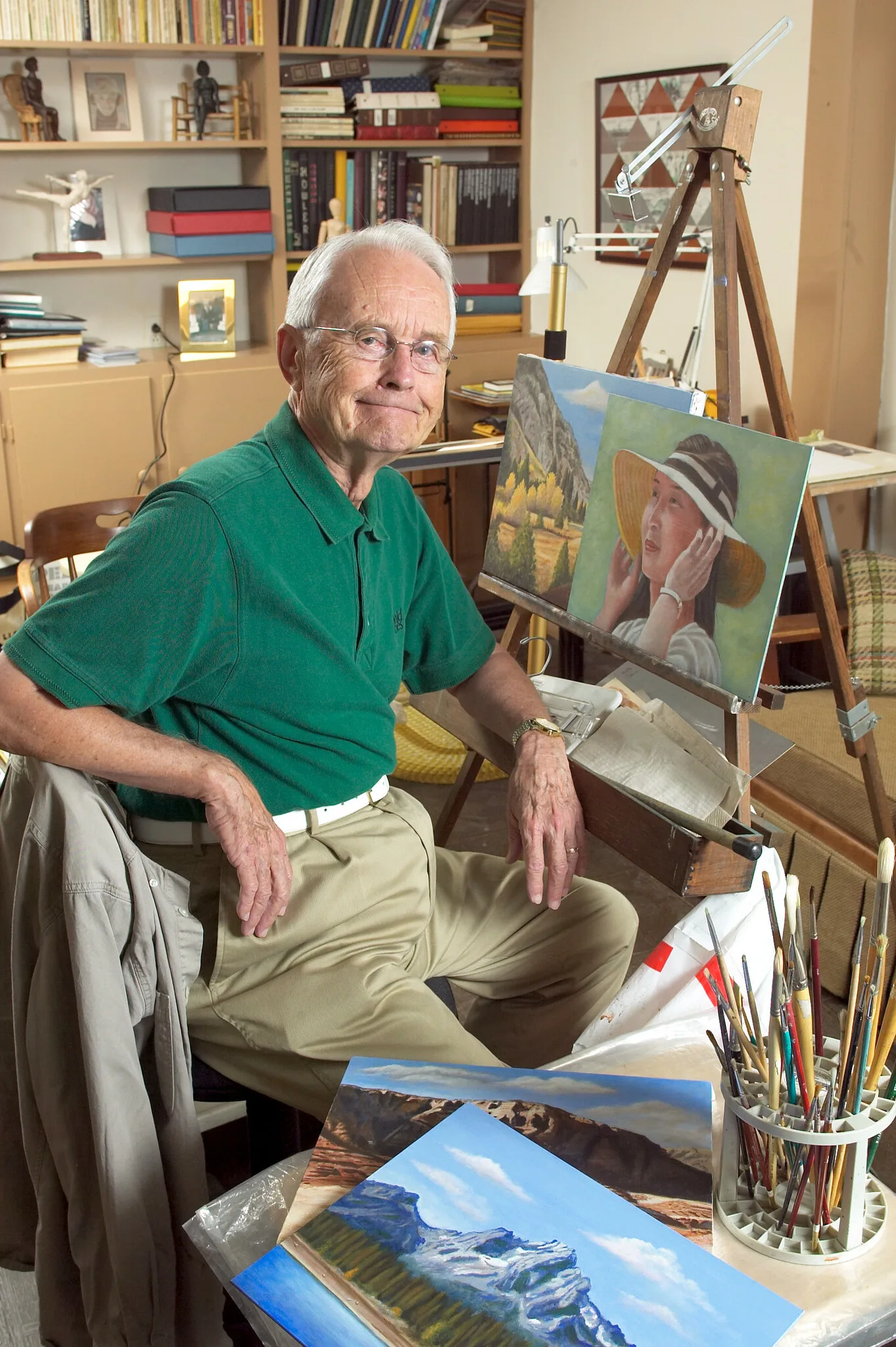
Starting with his days as a Wake Forest undergrad on the “old campus,” Burroughs and WFDD were synonymous. He was the student station manager, and after graduation and two years of U.S. Army service in Korea, he earned a PhD in broadcasting from the University of Michigan. As he was about to head to the airport for a job interview in Virginia, he received a phone call from the “new campus” in Winston-Salem: Would he be interested in heading WFDD, along with teaching, coaching debate and working with the theatre program? He cancelled the trip to Richmond.
For decades, Burroughs helped lead the station’s growth. In 1961, WFDD secured one of the first “over-the-air” broadcasting licenses on the “educational band” of the FM spectrum. In 1967, working with a local nonprofit group called Friends of Fine Broadcasting and corporate supporters, the station’s power and coverage area expanded, along with its broadcasting schedule, to 365 days a year. In 1971, WFDD became the first FM station in North Carolina to join newly created National Public Radio. Today, with another transmitter in Boone, North Carolina, the station’s signal reaches west into the mountains and east beyond Burlington, North Carolina.
WFDD has developed one of the area’s largest local newsrooms as well. The station earned a national Edward R. Murrow Award for a “community conversation and a related reporting series on mental health.” Two digital subchannels also carry full-time BBC programming and classical music around the clock.
These professors’ contributions live on today and will continue to reverberate well into the future. So on July 24, Wake Forest alumni can be proud that these men are being remembered for their untiring efforts to promote theater and communication.
Ken Johnson (’68) majored in speech communication and worked at WFDD, including as the student station manager from 1966-68.
More Stories
Charting the course
How alumni are leading though turbulent times in their industries.
Fit? Check.
President Peter Rodriguez has landed at a university that is “congruent” with his background and his values.
Shining a light on Wake Women
Wake Forest is not a single story. It is the sum of every individual experience of those who have passed through this institution.