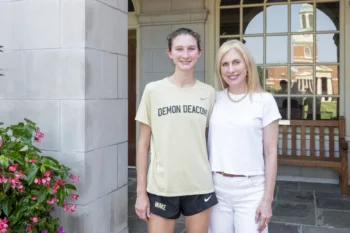
It’s back-to-school shopping season, and Anna Anstey (’26) is helping students turn cast-offs into dorm-room essentials.
Through her fledgling business, Campus Reclaimed, students and alumni can donate or consign gently used items to give them a second life.
Shortly before graduating in May, Anstey started applying her major in communication and minors in entrepreneurship and marketing communication to launch her startup. She got the idea for it after seeing the volume of stuff thrown out during move-outs. Most of her donors and customers are from Wake Forest — for now.
“Campus Reclaimed is basically a textbook-buyback program, but for furniture, decor and clothing,” she says. “Students can go to the website, request a tote, I’ll leave it outside their door, and they’ll fill it with items they were interested in donating or selling. And I’ll come get it, and then it’s as simple as that.”
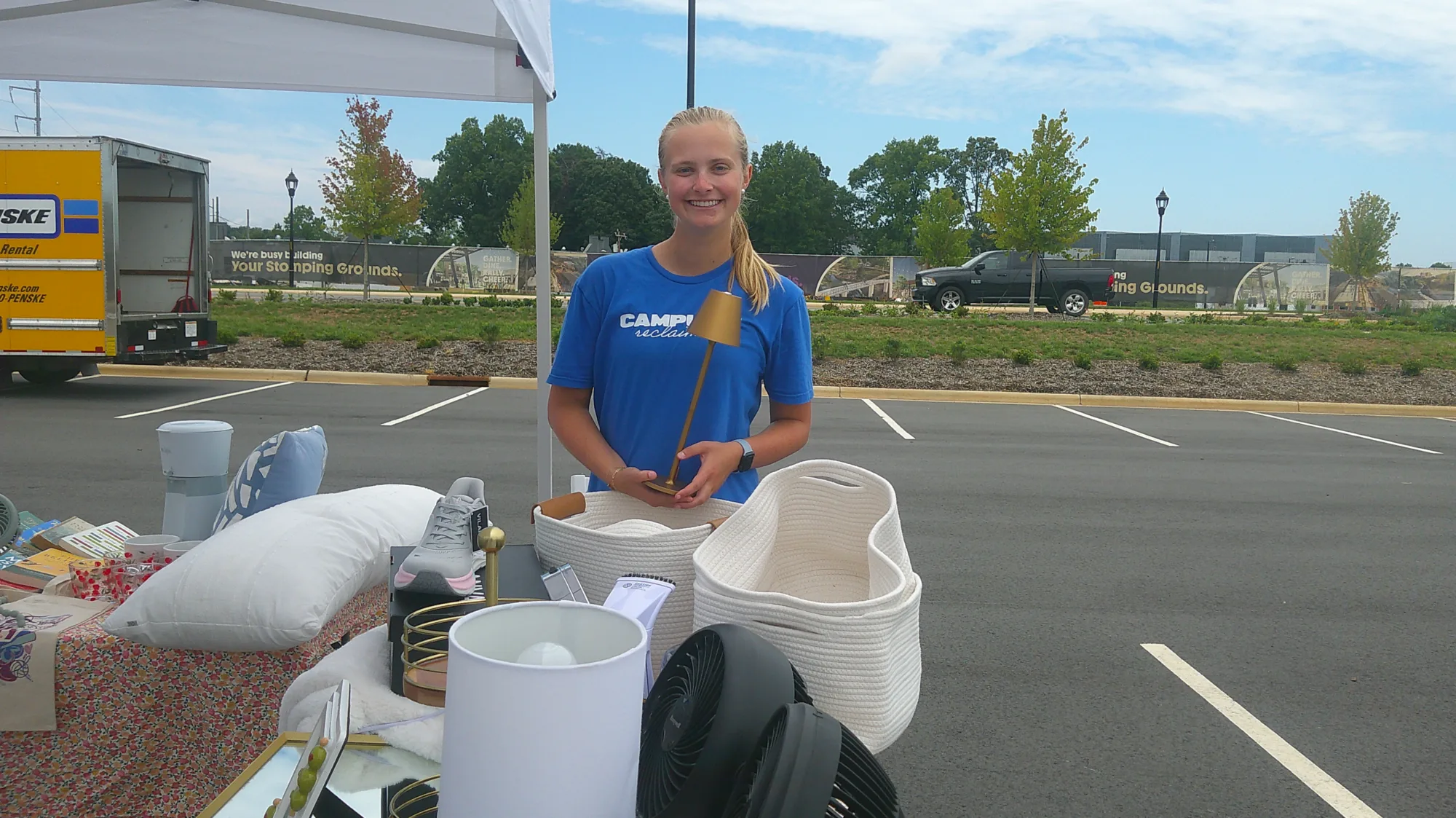
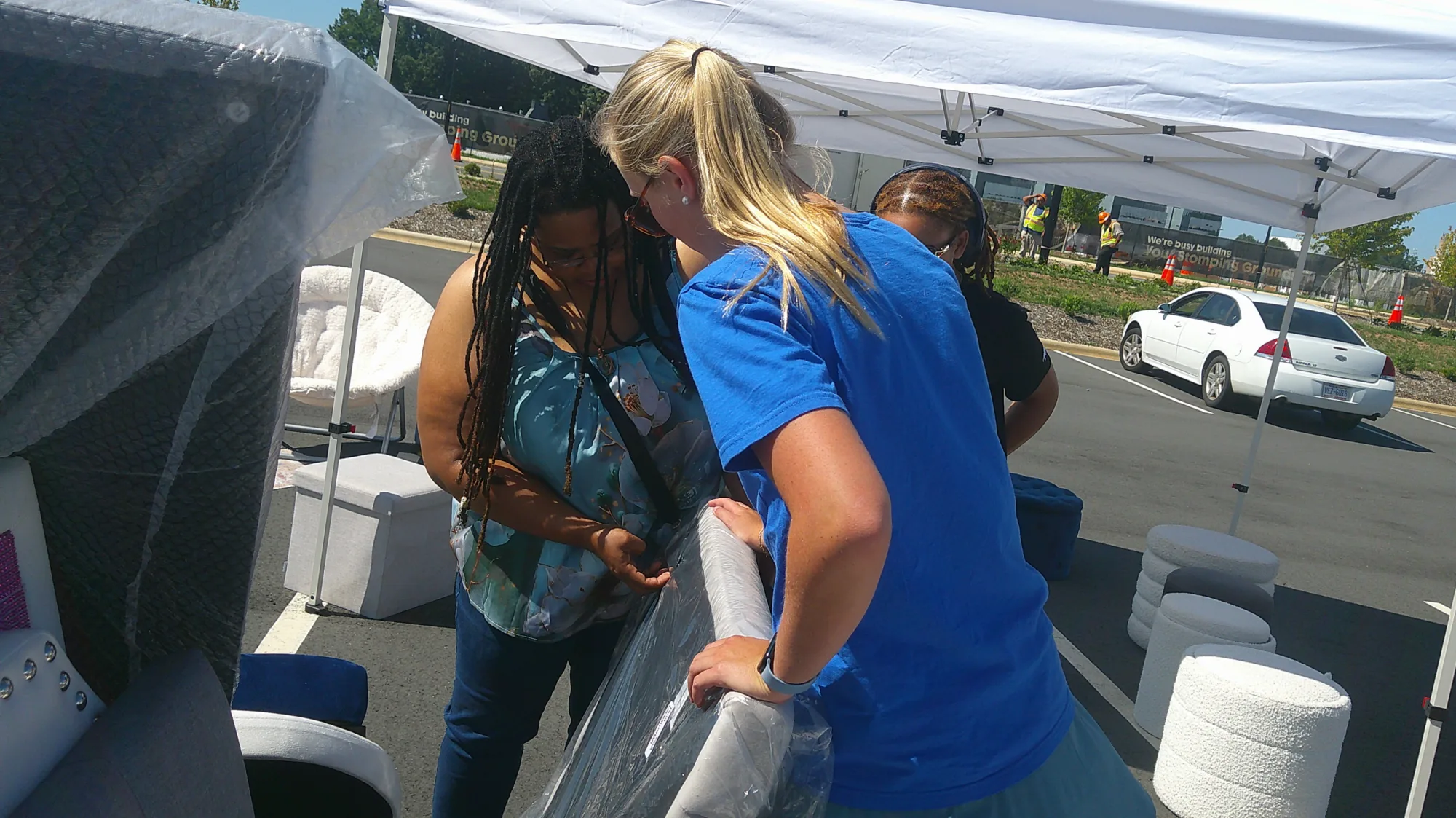
At Campus Reclaimed’s pop-up shop in late July and early August, customers could browse and buy books, clothes and furniture, including lamps, mirrors and chairs. The top-selling items? Headboards and ottomans.
“I think (Campus Reclaimed) is a great idea,” says Ellen Haggstrom, a recent shopper from nearby Clemmons, North Carolina, who starts her freshman year at Appalachian State University in Boone, North Carolina, this semester. “I thrift a lot of my clothes, so it’s kind of the same idea, just reusing things.”
Anstey promoted the event, held in a parking lot at Lawrence Joel Veterans Memorial Coliseum, through social media and flyers around town. “I saw the flyer, and I thought, especially just moving in, it was like the perfect opportunity to get furniture that was not super expensive,” says Sofia Miguel (’26), who was moving into a new apartment.
Anstey has long had a bent toward entrepreneurship, selling 1,700 boxes of Girl Scout cookies one year. For her Girl Scout Gold Award, Anna set up a pet-food pantry outside Blacksburg, Virginia, getting donations from Purina, the pet food company, for the Mountain View Humane Society.
At Wake Forest, Anstey honed her fundraising and money-management skills through her involvement with the women’s club soccer team, Delta Delta Delta and Best Buddies International, a nonprofit group supporting people with intellectual and developmental disabilities.
In class, Anstey says she found guidance and support for her concept at the Center for Entrepreneurship’s Startup Lab, where she and her classmates had the chance to learn from local entrepreneurs. She also credits the encouragement she received from Greg Pool (JD/MBA ’08), director of the Startup Lab, and Dan Cohen (P ’25), executive director of the Wake Forest Center for Entrepreneurship.
“In a lot of my classes, we … talked about (playing) the ‘s’ card, which was the ‘student card,’ ” Anstey says. “(People) are so much more willing to help, knowing that you’re a student, so one of the biggest things that I took away from that was, ‘there’s no better time than now to start this business.’ ”
Anstey presented her idea at Entrepalooza to an audience of 650.
“My main goal with the whole pitch was just trying to educate students and trying to hope that they do the right thing during move-out and not just ditch (their stuff) in the dumpster,” she says.
Anstey’s parents have cheered her on, and at the first pop-up, her father, John Anstey (MBA ’03, P ’26), helped arrange the merchandise.
A partner in Anstey Hodge Advertising Group in Roanoke, Virginia, her father credits Wake Forest for helping him, and now Anna, gain the tools needed to start a business.
“Wake Forest has been so supportive of her entrepreneurship. Her professors connected her with other entrepreneurs as well. She’s talked with the folks that started Storage Scholars, and they’ve been really helpful, as they are Wake Forest alumni,” he says.
“My parents have been very influential, specifically starting this and not taking the ‘normal route’ out of college,” the daughter says. “So far, it’s been going great, and I’ve been loving it.”
Making dorm furnishings more sustainable is a goal shared by the University’s Deacs Donate program, which has given more than 275 tons of discards to Goodwill since 2010. In May, the program donated 36.8 tons, marking its biggest move-out collection so far, according to the University Office of Sustainability.
What’s ahead for Anstey? She’s looking to expand to other North Carolina schools, expecting move-in and move-out days to be her peak times, with online sales and collections continuing year-round.
“It’s been exciting to watch Anna launch Campus Reclaimed,” says her father. “She found a problem, and every great business starts with a problem. … She’s solving the problem of students basically throwing out all of these things at move-out, and she’s taking them in and ultimately reselling them to students that are coming in the following year.”