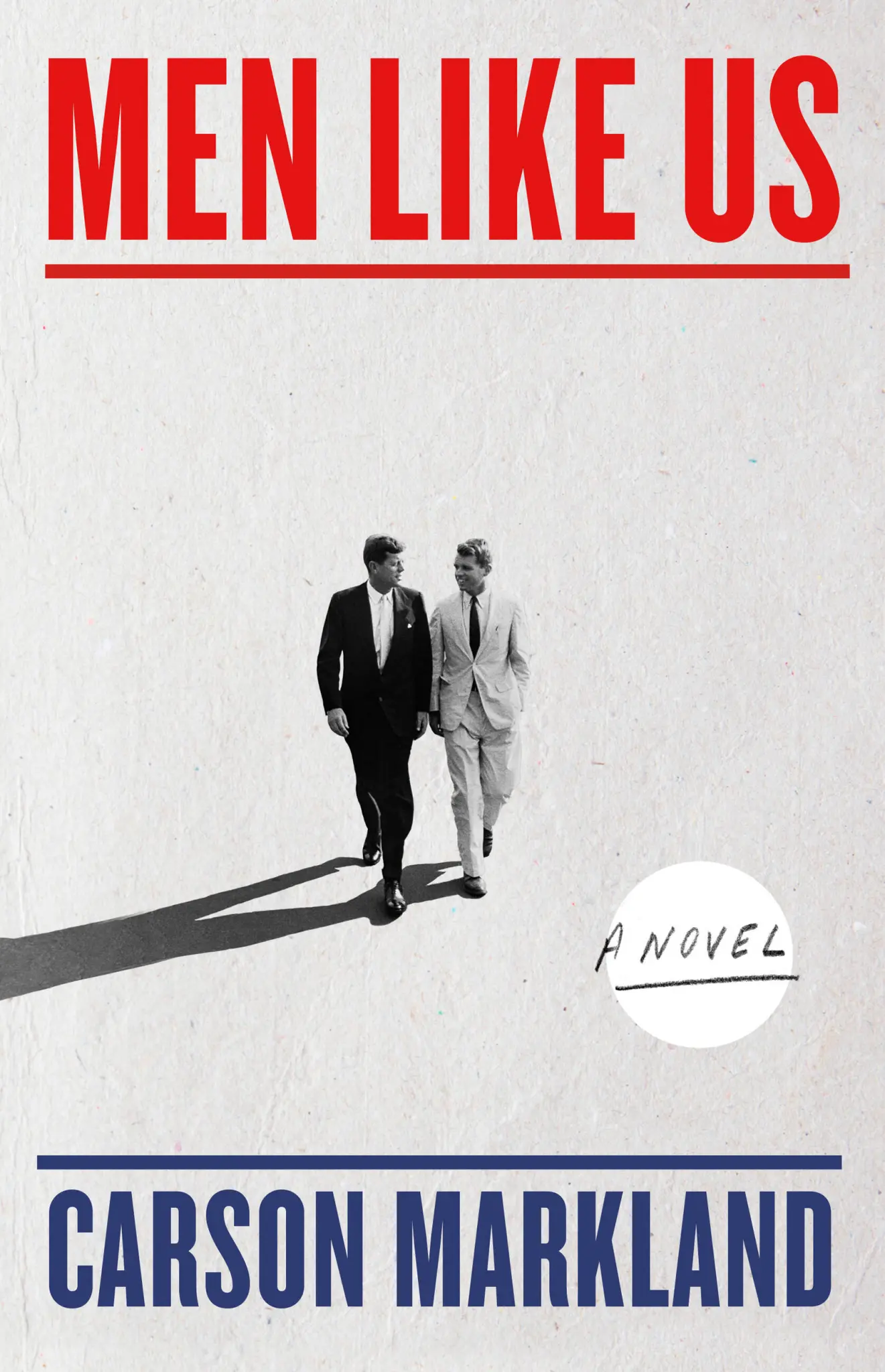
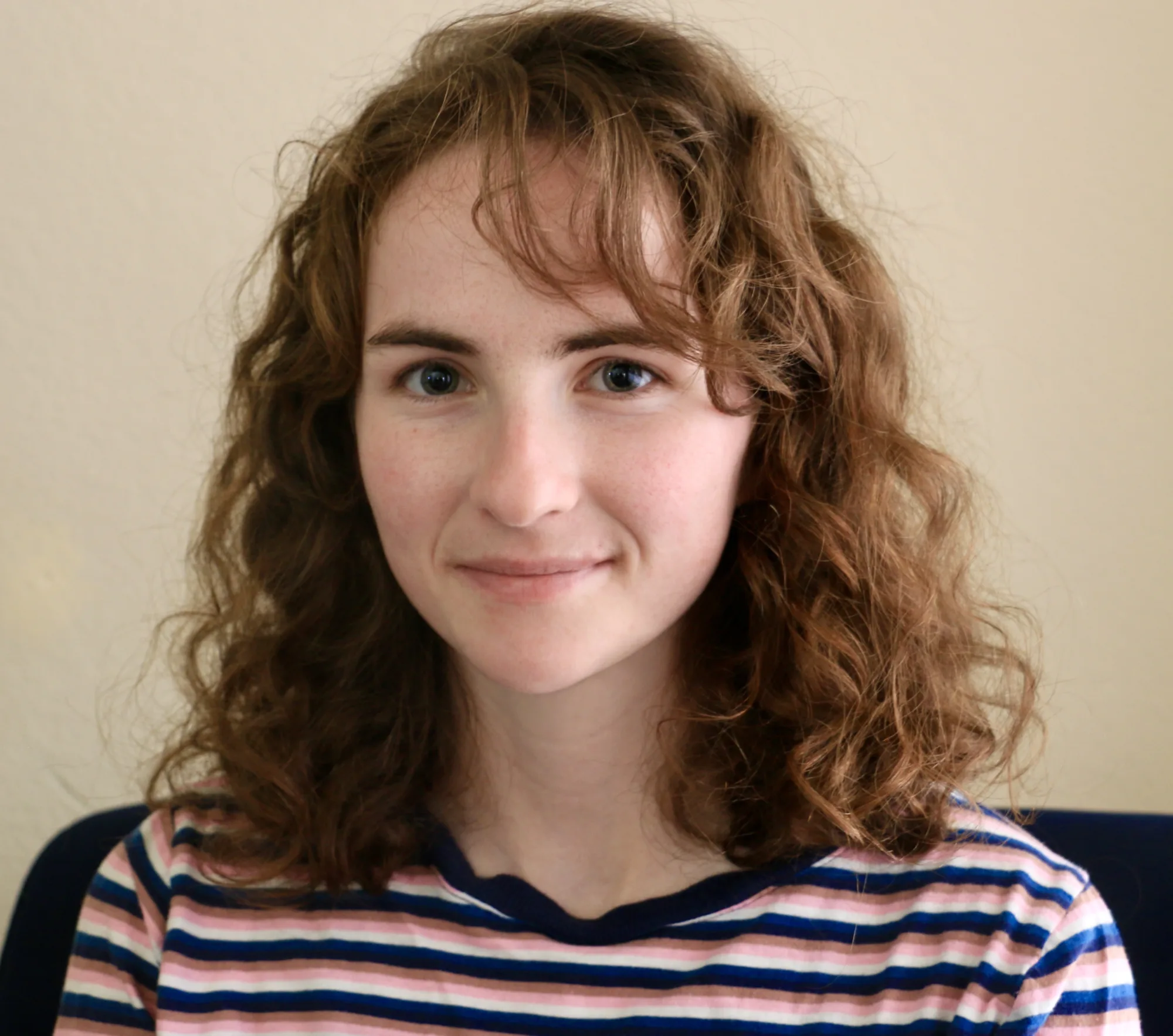
During my senior year at Wake Forest, I wrote a story about the Kennedy family for my thesis project. The story — a fictional telling of the family’s rise to power during the 1950s, as seen through the eyes of Bobby Kennedy — was inspired by an excellent historical fiction workshop I took with English Professor Joanna Ruocco, as well as my own experience growing up in a large, unruly family. This summer, it was published as my first novel, “Men Like Us.”
I didn’t intend for that assignment — or any assignment — to change my life. At the time, I was newly 21 and had two goals: 1) Drink with my friends as often as possible, and 2) Write something that fulfilled the requirements for graduation quickly so that I could get back to (1).
In fall 2019, noodling around with the story in Tribble or my dorm, I didn’t imagine the places it would take me — across states, into the archives, back to the height of the Cold War. I didn’t imagine that the very next semester, a global pandemic would hit and I’d finish college from my childhood bedroom. Easily the biggest surprise is that it became a book at all.
At a book launch event this summer, an attendee asked me, “If you could ask JFK or RFK one thing, what would it be?”
First, obviously, I’d ask if they liked my book.
Once they assured me, “Of course, Carson, we loved it!” I would move on to more serious business, namely what they made of the world now, 60 years after they occupied the most consequential jobs in the world. How would they approach a time when technology is changing career paths faster than higher education can redesign itself, societal divisions multiply overnight, and institutions scramble to adapt and keep trust?
The more I thought about the question, the more I realized I didn’t need to break out the Ouija board to ask about these things. The Kennedys had already given us their answers in their leadership style.
Take one of our most pressing issues: artificial intelligence. Poised to reshape academia, the job market, society at large — an existential threat, according to some; the thing that will save us, according to others. A rapidly accelerating technology we neither fully understand nor can fully control that might give us the upper hand over Russia, China and other global competitors.
Read that back. Couldn’t we just as easily be talking about the space race?
The Kennedys responded to that challenge not with hand-wringing or fear, but with a call to action: “We choose to go to the moon. We choose to go to the moon in this decade and do other things, not because they are easy, but because they are hard.”
That line isn’t just a good sound bite, it’s a guiding ethos for leadership in times of uncertainty. To the Kennedys, the right question wasn’t, “Can we guarantee success?” but instead, “Can we try in spite of the fact that we might fail?” That philosophy calls for us to be bold and rise to the challenge instead of shrinking from it.
This attitude wasn’t limited to speeches; it was embedded in how they came to power at all. The Kennedys’ leadership was embodied by an ability to adapt — to new televisual media, to new technology, to a shifting racial landscape in the South — and to communicate their vision to the country. Their view of America was expansive and outward-looking; it offered a broader purpose beyond private interest, not unlike Wake Forest’s Pro Humanitate spirit. That motto reminds us that it’s easier to navigate change when we remember why we’re changing: for the betterment of humanity.
That’s what “leading in this moment” looks like to me — not a promise that everything will go right, but the willingness to keep going in spite of the bits that go wrong, to resist both paralysis and certainty. In a divided, uncertain world, the Kennedys offer something more useful than comfort: a model for action. Hard problems, met head-on, with enough courage to try, fail and try again.
Carson Markland (’20) is the author of the novel “Men Like Us.” Her short stories have been selected for the Best Microfiction anthology and long-listed for the Disquiet International Literary Prize. She lives in New York.
More Stories
Around the Quad – Fall 2026
Highlights from across Wake Forest this summer and early fall.
Emily Giffin’s Wake Forest Sequel
The acclaimed author and alum was shaped by Wake Forest. In August, she was back on campus to help launch her youngest child into her first year.
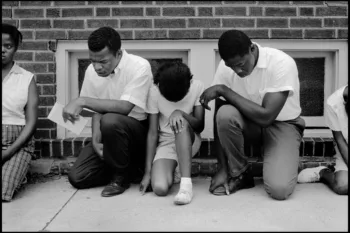
An American Flash Point
Danny Lyon photographed the Civil Rights Movement. His work is now on display at Reynolda House Museum of American Art.