Danny Lyon photographed the Civil Rights Movement. His work is now on display at Reynolda House Museum of American Art.
In the summer of 1962, University of Chicago student Danny Lyon packed his camera and hitchhiked south. By August, he was in jail in Albany, Georgia, in a cell across from Rev. Martin Luther King Jr.
Lyon linked up with the Student Nonviolent Coordinating Committee (SNCC), a group of mostly Black college students that became a driving force in the Civil Rights Movement. Lyon photographed SNCC members as they organized and protested. He captured lunch counter sit-ins and voter registration drives, dangerous activities that could lead to being jailed or beaten. Lyon set out to document the movement, but his photos became much more than historical records. They were tools of civic change.
Now, more than 50 of Lyon’s most famous photos are set to be displayed at Reynolda House Museum of American Art, and have been promised as gifts Wake Forest by James Agah (P ’26, ’28) and Wendy Agah (P ’26, ’28). “Flash Point: The Civil Rights Photography of Danny Lyon” will run from Sept. 17- Jan. 3.
How to see Flash Point yourself
For details on how you can see the exhibit and other on-campus art and history exhibits this fall, jump to the bottom of this story
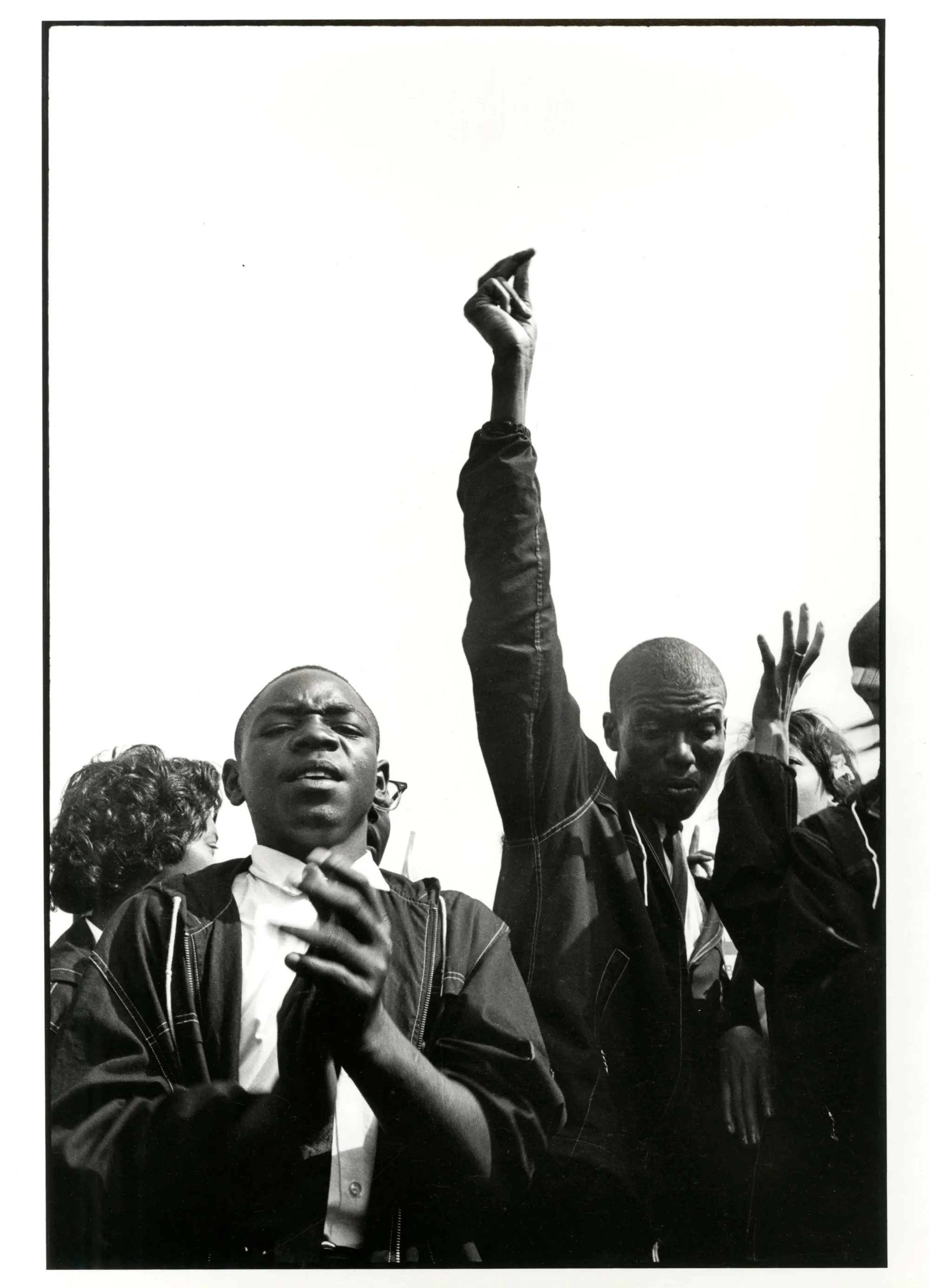
At top: Demonstrators sing during the 1963 March on Washington, which culminated in the Rev. Martin Luther King Jr.’s “I Have a Dream” speech. © Danny Lyon / Magnum Photos.
“Of the many ways to reflect on the American quarter-millennium, a look back at its art is one of the most rewarding,” says Phil Archer (’95, MBA ’05), the Betsy Main Babcock Deputy Director at Reynolda House and co-curator of the exhibition. “Artists are aware; they notice things in their own time that their fellow Americans overlook.”
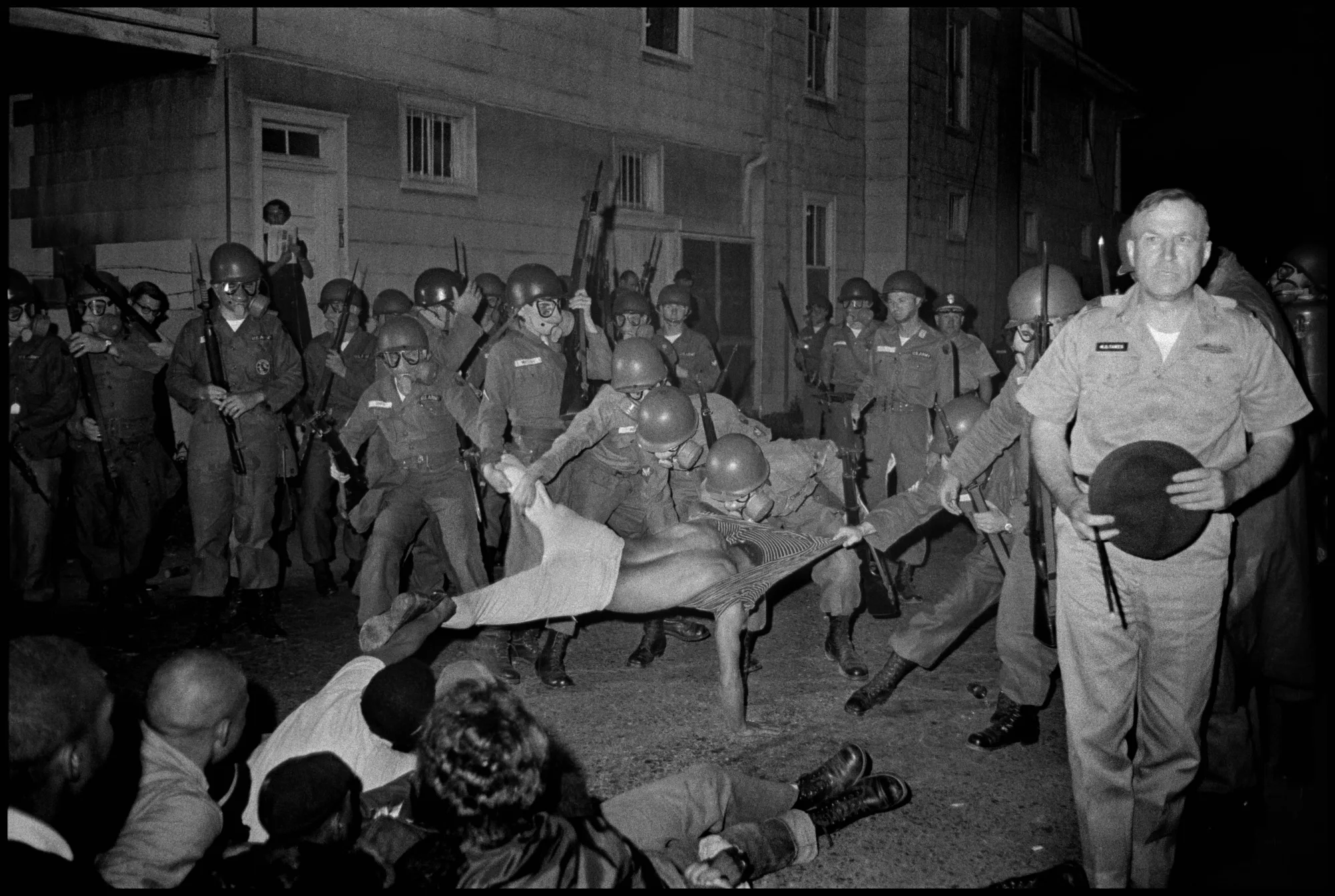
“Danny Lyon’s photographs provided information about what was happening in the South visually: They were published in SNCC pamphlets, posters and calls to action, and, as a result, helped to sway public opinion,” says co-curator Ashley Givens, an adjunct assistant professor of art history. “He photographed protestors in calm moments of song as well as revealing the violence inflicted upon protestors and activists.”
Lyon’s photographs include images of musician and activist Bernice Johnson Reagon, singer Bob Dylan, and civil rights activists Stokely Carmichael and John Lewis.
Some of Lyon’s photos, which include King and James Baldwin, could give the impression that the movement was driven by extraordinary individuals. But most of his work shows that history is not shaped by prominent individuals alone. Instead, it highlights how great change was created by ordinary people, many of them young, whose everyday acts of courage and commitment made lasting change possible. Winston-Salem’s history contains one important example.
In 1960, 10 Wake Forest students joined students from Winston-Salem State University (then called Winston-Salem Teachers College) in sit-in protests at the lunch counter at Winston-Salem’s F.W. Woolworth’s. That sit-in began just a week after the famed Woolworth’s lunch counter sit-in in nearby Greensboro, North Carolina, led by students from North Carolina A&T University. The Winston-Salem sit-in led to the desegregation of restaurants and lunch counters in the city.
“Societies can undergo change gradually or in bursts of radical reshaping. For young people who are brave, engaged and informed, these periods of concentrated dissonance are golden opportunities to contribute to reform,” Archer says.
“Lyon’s photo seems to ask: ‘Really, are these the scary protestors disturbing the peace?’ “
Michelle Gong (’27)
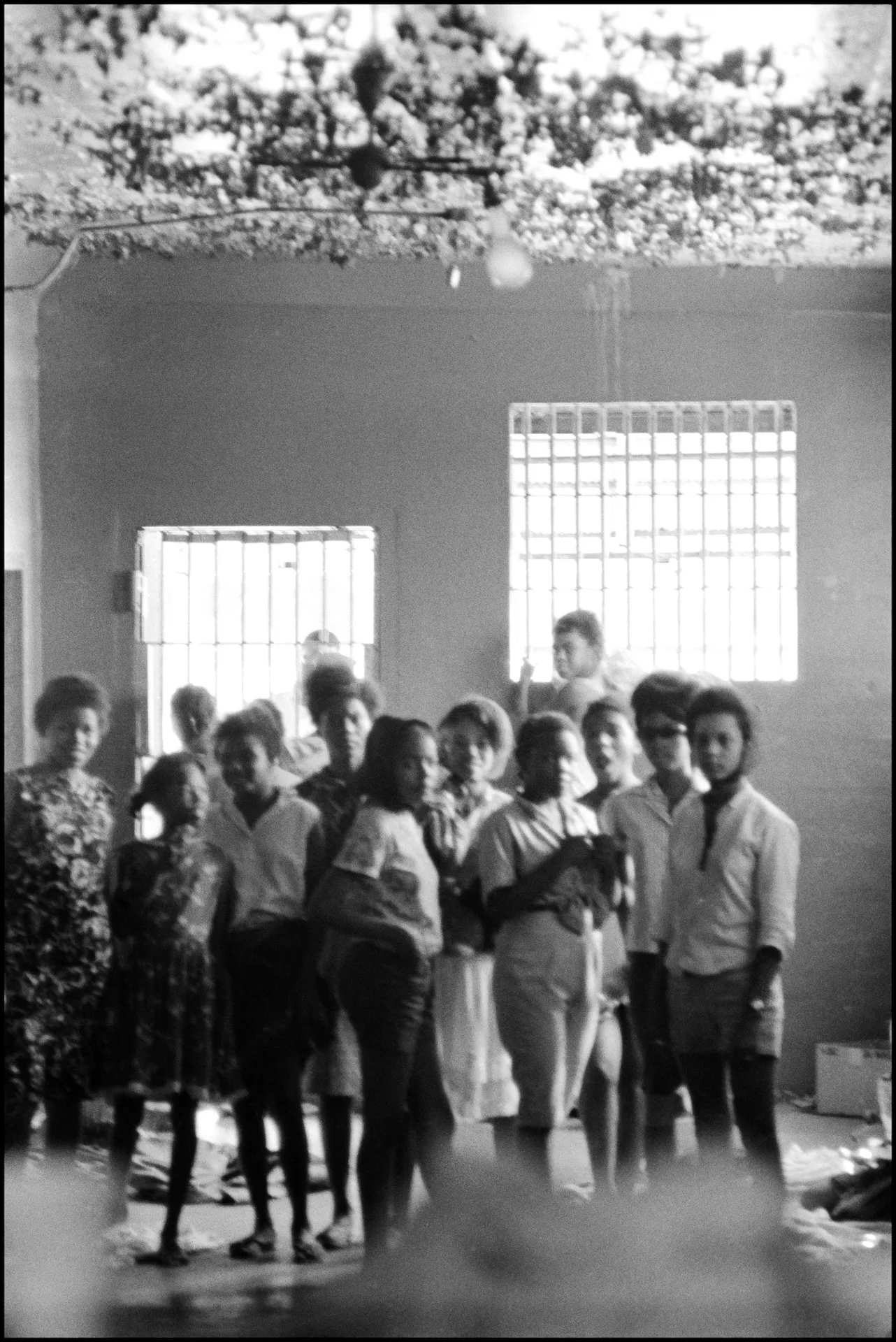
Lyon did not come to Winston-Salem for the sit-in, but he witnessed plenty of similar actions, which are on display in “Flash Point.” The collection includes searing images of Carmichael and Clifford Vaughs and the National Guard during 1964 demonstrations in Cambridge, Maryland. In the documentary “SNCC,” Lyon recalled photographing a group of teenage girls who had been demonstrating in Americus, Georgia. They included girls as young as 12 and one who was pregnant, and they were confined in a stockade without beds or working toilets.
Lyon said in the documentary that after his photos of the Leesburg Stockade girls were published in the Congressional Record and Jet magazine, public attention helped secure their release. For Lyon, the episode proved that documentary photography could do more than preserve history; it could contribute directly to political change.
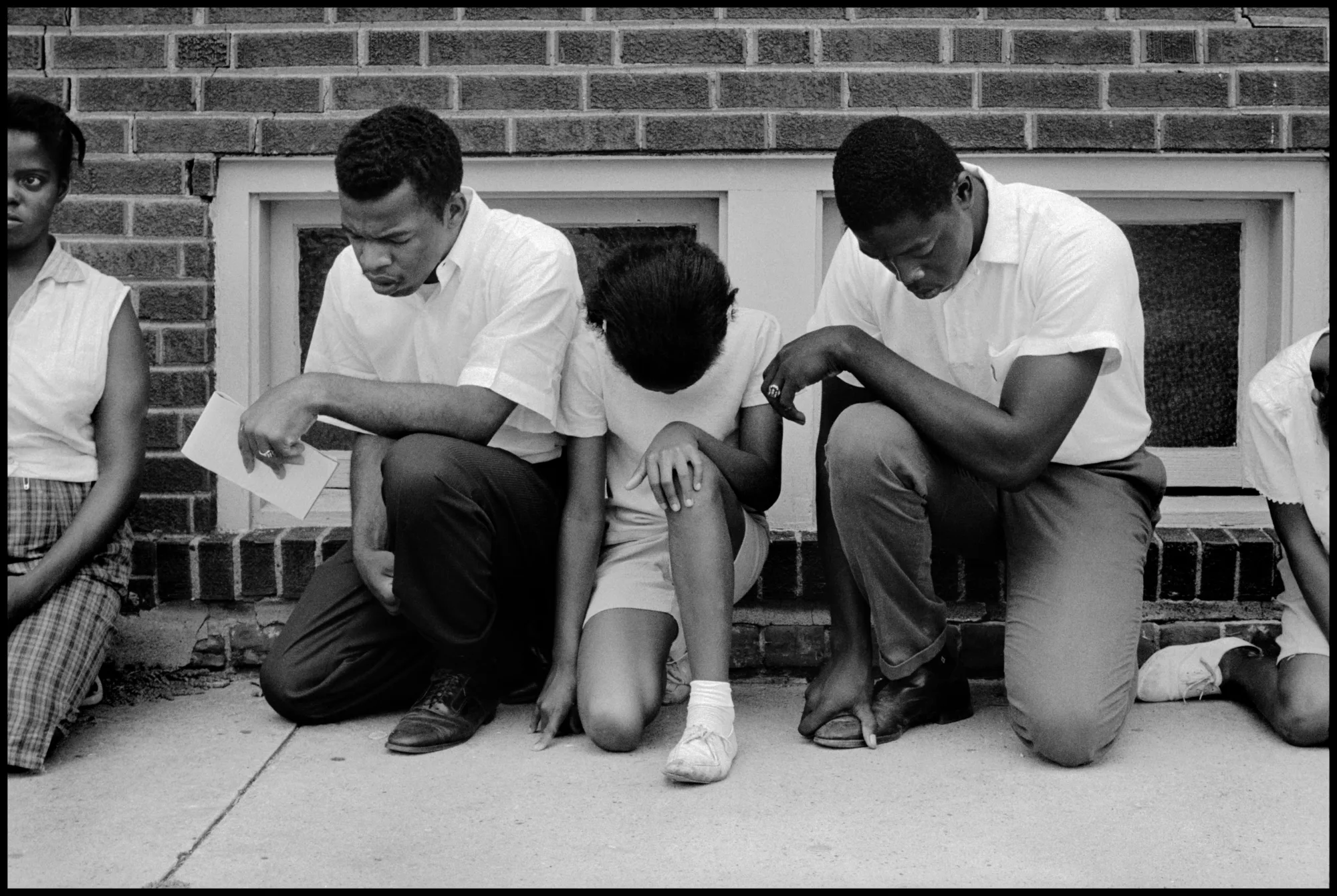
For Michelle Gong (’27), an art history minor, Lyon’s photographs of routine activism are as important as those taken during pivotal moments. “Take, for example, the photo of a young John Lewis kneeling in prayer outside a segregated swimming pool,” Gong says. “In that photo, Lewis is this 22-year-old kid bowing his head with other students. I really love the quiet irony of this shot. … Lyon’s photo seems to ask: ‘Really, are these the scary protestors disturbing the peace?’ ”
Archer describes Lyon’s photos as a metric for America’s success at living up to its founding ideals, showing “how challenging it was, a century after emancipation, for Black Americans to exercise their constitutional rights to vote, to assemble in public, to read and speak without governmental censorship.”
Now, visitors to Reynolda have an opportunity to reflect on those themes as we mark America’s semiquincentennial. The art collection at Reynolda asks viewers to “think afresh about declarations that were inscribed, treaties that were honored or broken and constitutional provisions that were observed or amended,” Archer says.
SEE FOR YOURSELF
Events marking and reflecting on key moments in the nation’s history are ongoing at Wake Forest this semiquincentennial year, including several exhibits this fall on or near the Reynolda campus. Together, they invite guests to examine the stories and perspectives that shape America. How to plan your visit:
Art and Democracy
Open now through June 30, 2027 in the Northwest Bedroom Gallery and West Bedroom Gallery, Reynolda House Museum of American Art. A reflection on the nation’s 250th anniversary, with works that span centuries and examine the American experience and the ideals that shaped it. Tickets are available on-site or at reynolda.org
Flash Point: The Civil Rights Photography of Danny Lyon
Open now through Jan. 3 at the Mary and Charlie Babcock Wing Gallery, Reynolda House Museum of American Art. More than 50 iconic photographs will be on display, featuring pivotal figures in the Civil Rights Movement and acts of protest that changed America. Tickets are available on-site or at reynolda.org
Hank Willis Thomas: High Visibility
Open now through Dec. 2 at Hanes Art Gallery in Scales Fine Arts Center. Conceptual artist Hank Willis Thomas addresses themes of race, identity, history and mass media through his multidisciplinary practice. This is an interactive exhibit featuring a selection of Thomas’ retroreflective and lenticular artworks. Admission is free and open to the public. Visit hanesgallery.wfu.edu for hours of operation.
Reading the Revolution: Print Culture in 18th Century America
Open now through Dec. 31 at the Special Collections & Archives, Z. Smith Reynolds Library, Room 625
Wake Forest archivists have curated a collection of rare printed texts from figures including Benjamin Franklin, Thomas Paine and Phillis Wheatley Peters in an exhibition examining the key role printed materials played in shaping the American Revolution and the nation’s founding. Read more about the exhibit. Admission is free and open to the public Monday-Friday, 10 a.m. – 4 p.m. Guided tours or group visits available by request:
More Stories

Your character biography exercise
The following exercise is adapted from a workbook used in the Program for Leadership and Character 's seminars and workshops.
Leadership in character
The Program for Leadership and Character has expanded into a campuswide movement rooted in Pro Humanitate — and become part of the Wake Forest experience.
A tradition reimagined
Wake Forest’s Program for Leadership and Character is a powerful example of what can happen when tradition and innovation come together in the hands of a creative leader.