The Program for Leadership and Character is a powerful example of what can happen when tradition and innovation come together in the hands of a creative leader.
BY NATHAN O. HATCH (LHD ’21)
Traditions matter. They give institutions identity, continuity and purpose. But traditions can also become commonplace — taken for granted and gradually drained of the power they once conveyed. From time to time, the most important traditions need to be recovered, renewed and reimagined.
Wake Forest has long believed in educating the whole person: engaging intellect and character, head and heart. The question I had during my tenure as president was how to renew that tradition in a modern, pluralistic university. Wake Forest, like many universities, had invested deeply in strengthening the quality of teaching and research. More challenging was finding ways to make the formation of character intellectually rigorous, educationally compelling and credible to contemporary faculty and students.
The answer to that question sprang from an unexpected opportunity.
Jim O’Connell (’13), who was studying at the University of Oxford as a Rhodes Scholar, called me out of the blue in the spring of 2015 and said there was a young scholar I needed to meet. Jim was part of a discussion group at Oxford led by Michael Lamb and sensed a striking overlap in our interests — particularly in the question of how character could be woven into liberal arts education, an issue of vital importance at Wake Forest.
Why Wake Forest?
Hatch saw four reasons why the University was the right place to launch a character-focused initiative.
1. A culture premised on relationships. Wake Forest has long been a place where people are taken seriously for who they are — a community in which strong relationships, personal attention and hospitality matter.
2. Faculty-student engagement. Faculty have long developed strong relationships with students, taking an interest not simply in their academic performance but in what it means to mature as a young adult and enter the world as a person of purpose and character.
3. Big and important questions. Wake Forest has also been a place willing to pose large questions to students: What gives life meaning? What are our gifts for? What do we owe to others? Toward what ends should a life be lived?
4. The study of character. Over the last two decades, Wake Forest has become a significant center for the academic study of character. Under the leadership of Christian Miller, the A. C. Reid Professor of Philosophy, Wake Forest faculty have developed the Character Project and the Honesty Project, two major research initiatives examining character and virtue.
A few months later, Michael and I met in North Carolina. I had long dreamed of creating a scholarship program at Wake Forest focused on character development, and Michael and I began brainstorming about what such an effort might become.
Six months later, we invited Michael to Wake Forest for an extended visit. Both of us were exploring two questions: Was such a program really feasible, and was Michael the right person to lead it? In the summer of 2016, we welcomed Michael to the Wake Forest faculty and gave him the challenge — and the opportunity — to imagine and develop a signature program in leadership and character.
From the beginning, nothing was certain. But I was convinced we had two critical ingredients: the right leader and a University culture that offered fertile soil in which an innovative program could take root and grow.
The scale and depth of what has emerged is nothing short of breathtaking. At least four features help explain why the Program for Leadership and Character has become so innovative and compelling.
Character formation can be intellectually rigorous. The program began with the conviction that character development could be approached with the same intellectual seriousness as other dimensions of a university education. Its work draws on seven strategies of character development rooted in the Aristotelian tradition and increasingly supported by research in education, psychology and the social sciences.
The goal is formation, not simply information. The program is concerned not only with helping students study character but with helping them become people of character. The ultimate question is not simply what students know about courage, justice, humility or practical wisdom, but how those virtues begin to shape the way they actually live.
From the archives: President Emeritus Nathan Hatch discusses “The Soul of Wake Forest” and setting a north star of intellect and character in this inspiring address from 2019.
More on Leadership and Character
Character has been woven across the curriculum. Rather than isolating character education in a single program or set of courses, the program has worked to embed it throughout the University. Faculty grants have enabled professors to deepen their expertise in character-development pedagogy, develop new courses and revise existing ones so that students’ growth as people and leaders of character becomes part of the educational experience across disciplines.
The program has transcended polarization. Perhaps most remarkably, the program has avoided the riptide of polarization that has characterized so much of American public life — and university life — in recent years. It has built bridges across political, intellectual and religious differences without being easily categorized as liberal or conservative, secular or religious. Instead, it has focused on enduring questions of human flourishing and the common good, challenging students to pursue lives of purpose and meaning with courage, grace and humility.
Students of widely differing political convictions and religious traditions have flourished in the program.
That may be the deepest lesson from what has happened at Wake Forest. Innovation need not mean abandoning tradition. At its best, innovation can recover the deepest purposes of a tradition and find new ways to make them compelling for a new generation.


In less than a decade, Wake Forest’s Program for Leadership and Character has become part of the fabric of campus — and a national model for character education. Here’s how.
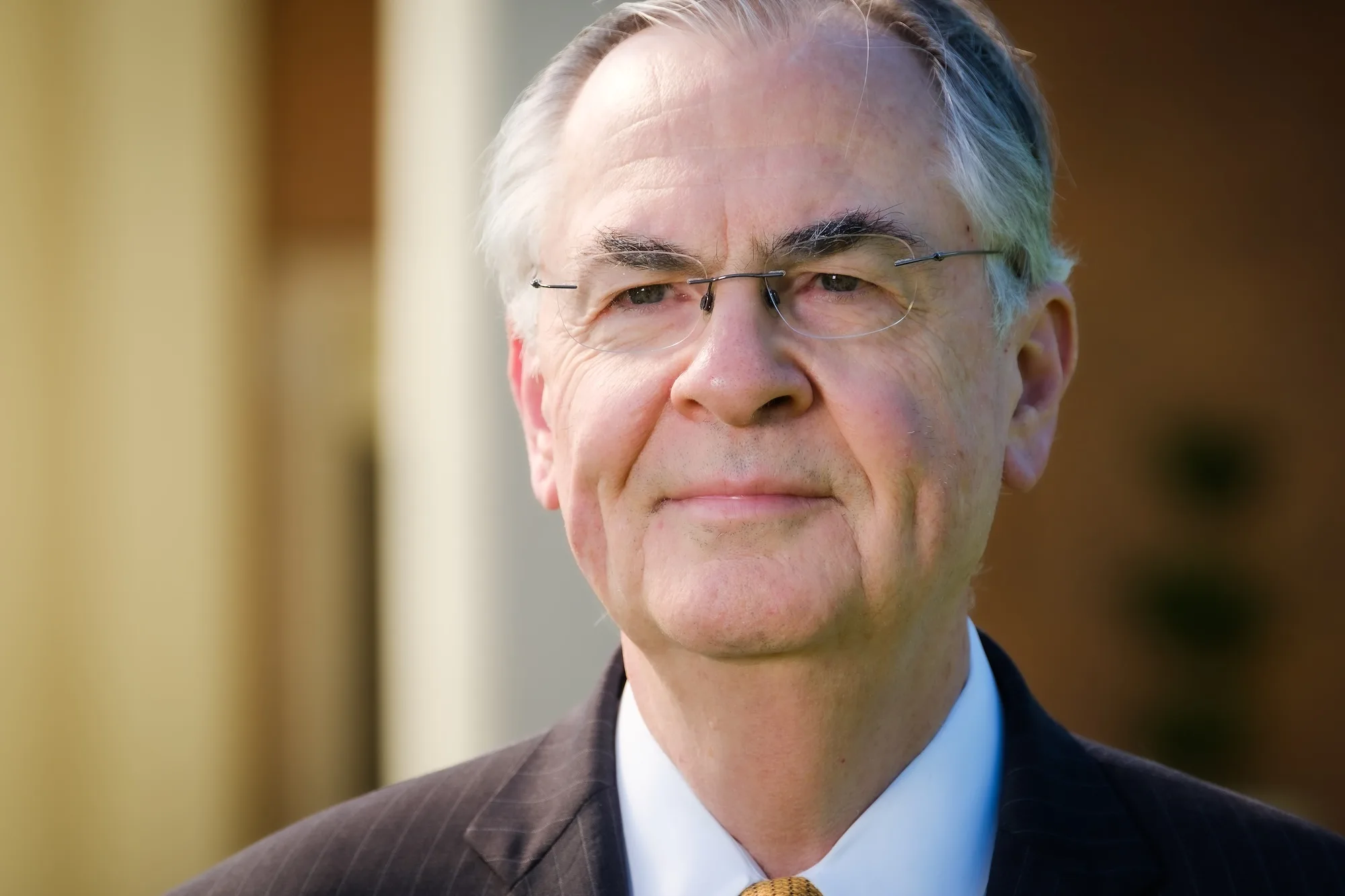
Nathan O. Hatch (LHD ’21) was the president of Wake Forest from 2005 to 2021.