

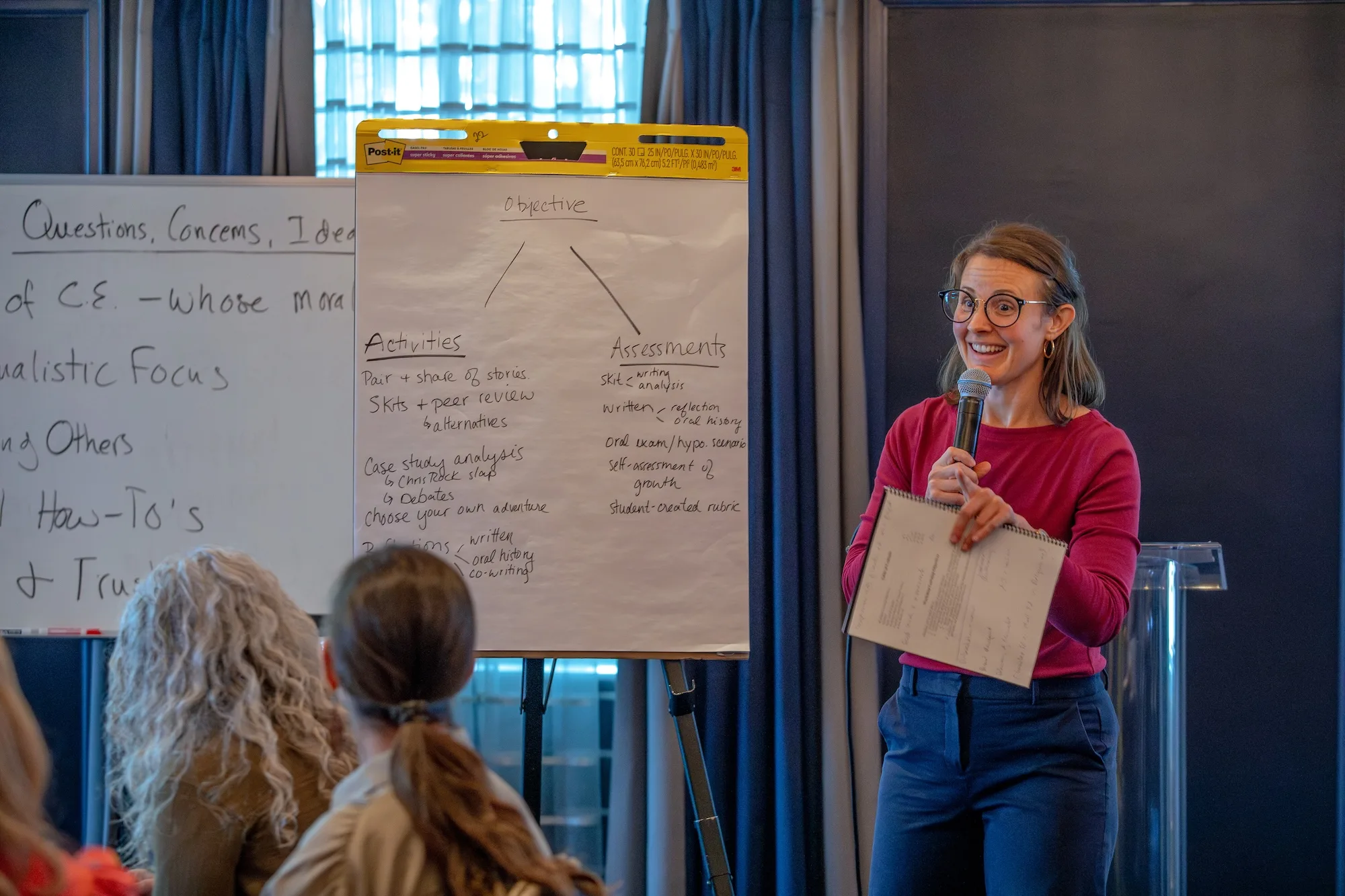
While Associate Professor of Communication Rebecca Gill watched documentaries on fraudsters Anna Delvey and Elizabeth Holmes, she sensed a teaching opportunity. She took that hunch to a workshop offered by the Program for Leadership and Character, which helped her turn it into a real class: How to Be a Con Artist: Stories of Fraud, Entrepreneurship and the Social Imagination.
It “gave me the space and the time to just sit back and really think about the characteristics of leaders that I want us to focus on when we look at these case studies,” Gill says. Twenty-five students took the course in 2023, and it will be offered again in 2027.
Kal Wuor (’28) heard about the program’s regular Wednesday Night Dinners as a first-year and was hooked by the atmosphere: the meaningful conversation, the welcoming company, the break from usual campus life. Now, Wuor is an official student ambassador of the program, part of a group of students who complete workbook activities tied to the fundamentals of leadership and character.
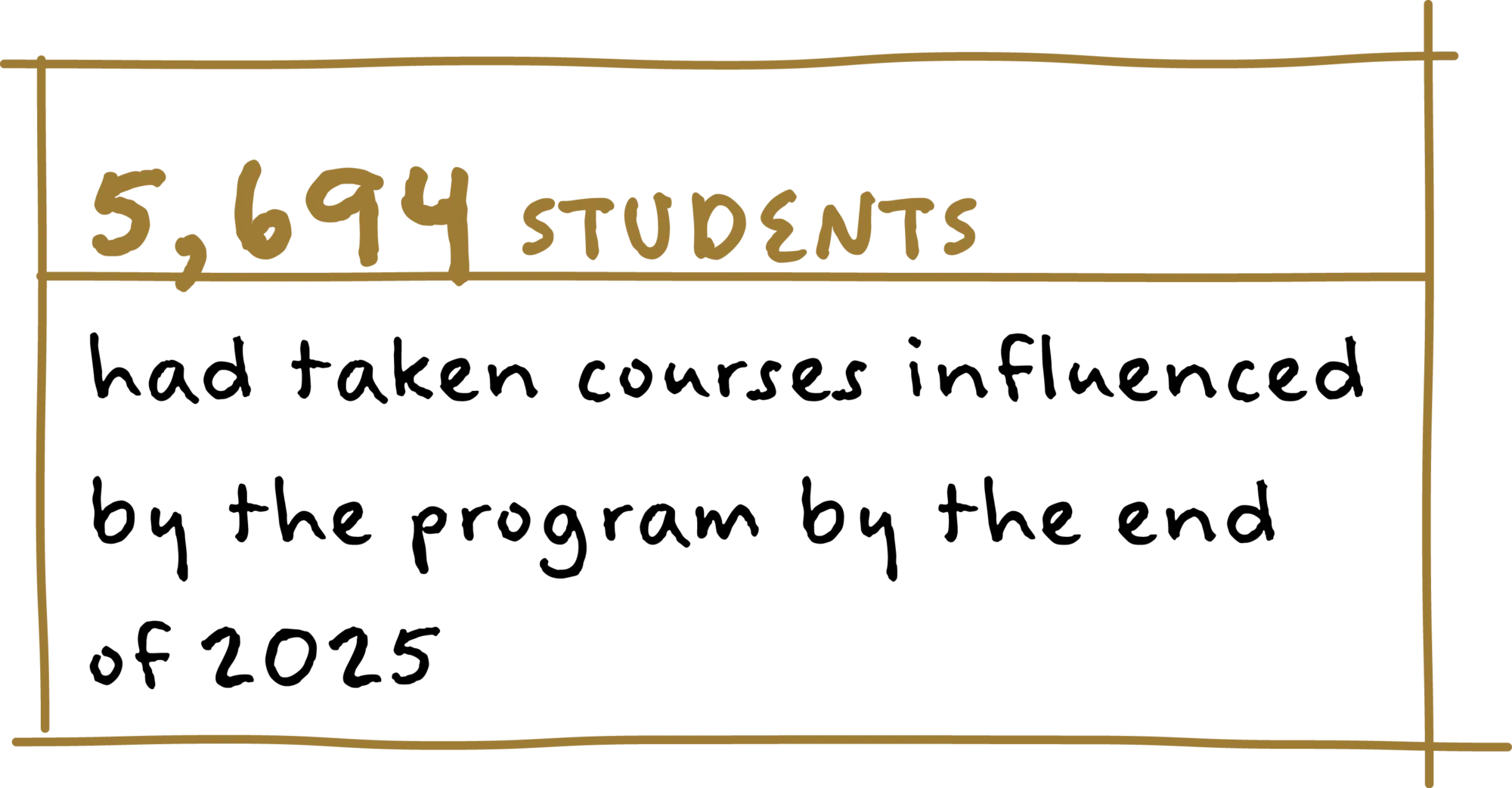
The program has become part of the fabric of campus since its start nine years ago, giving faculty and staff a way to put Wake Forest’s Pro Humanitate ethos into words and actions. More than 300 faculty and staff have participated in training through the program and have applied that training in courses ranging from law and business to the arts and humanities. By the end of the 2025 calendar year, more than 5,500 Wake Forest students had taken those courses.

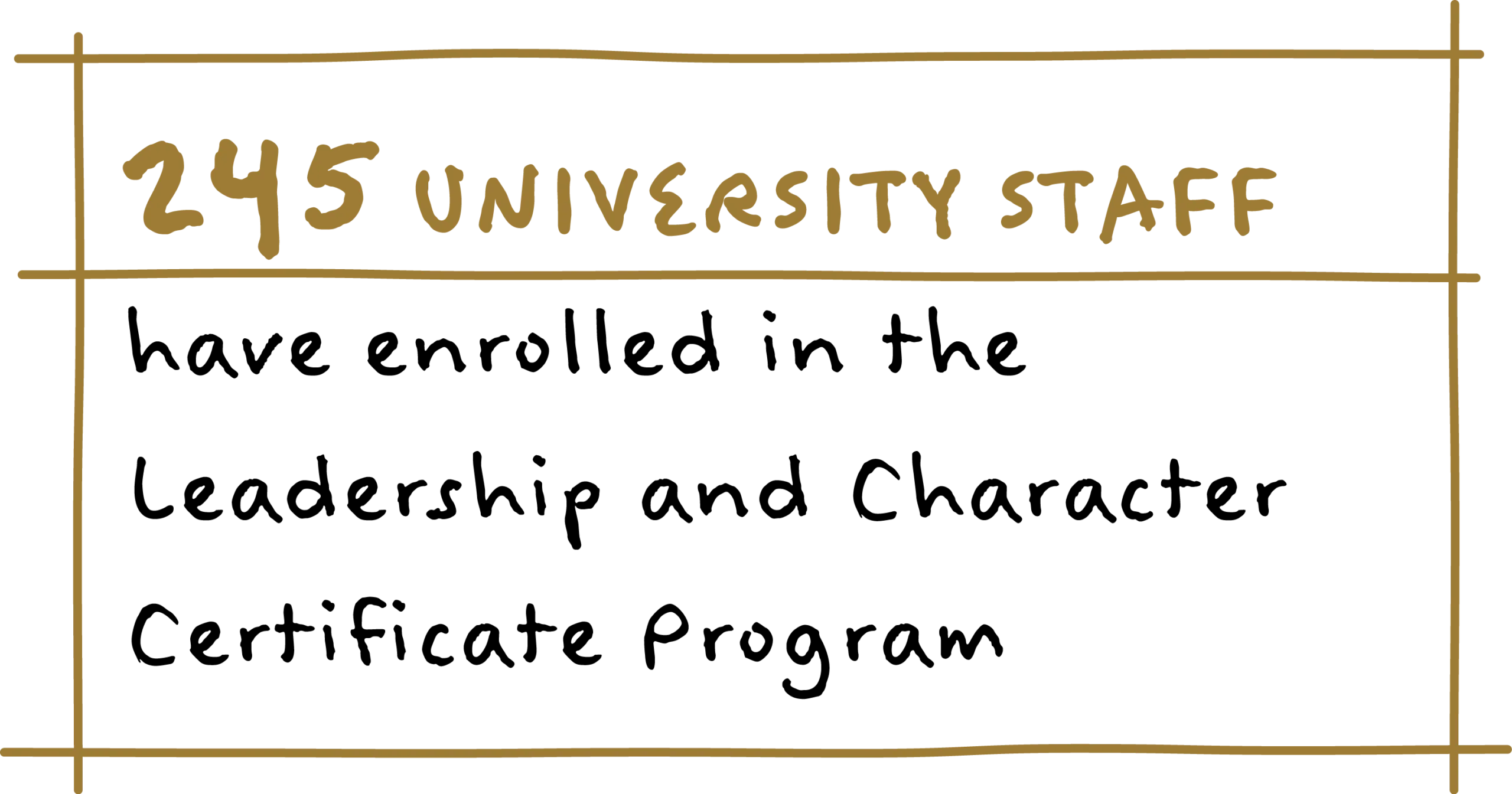
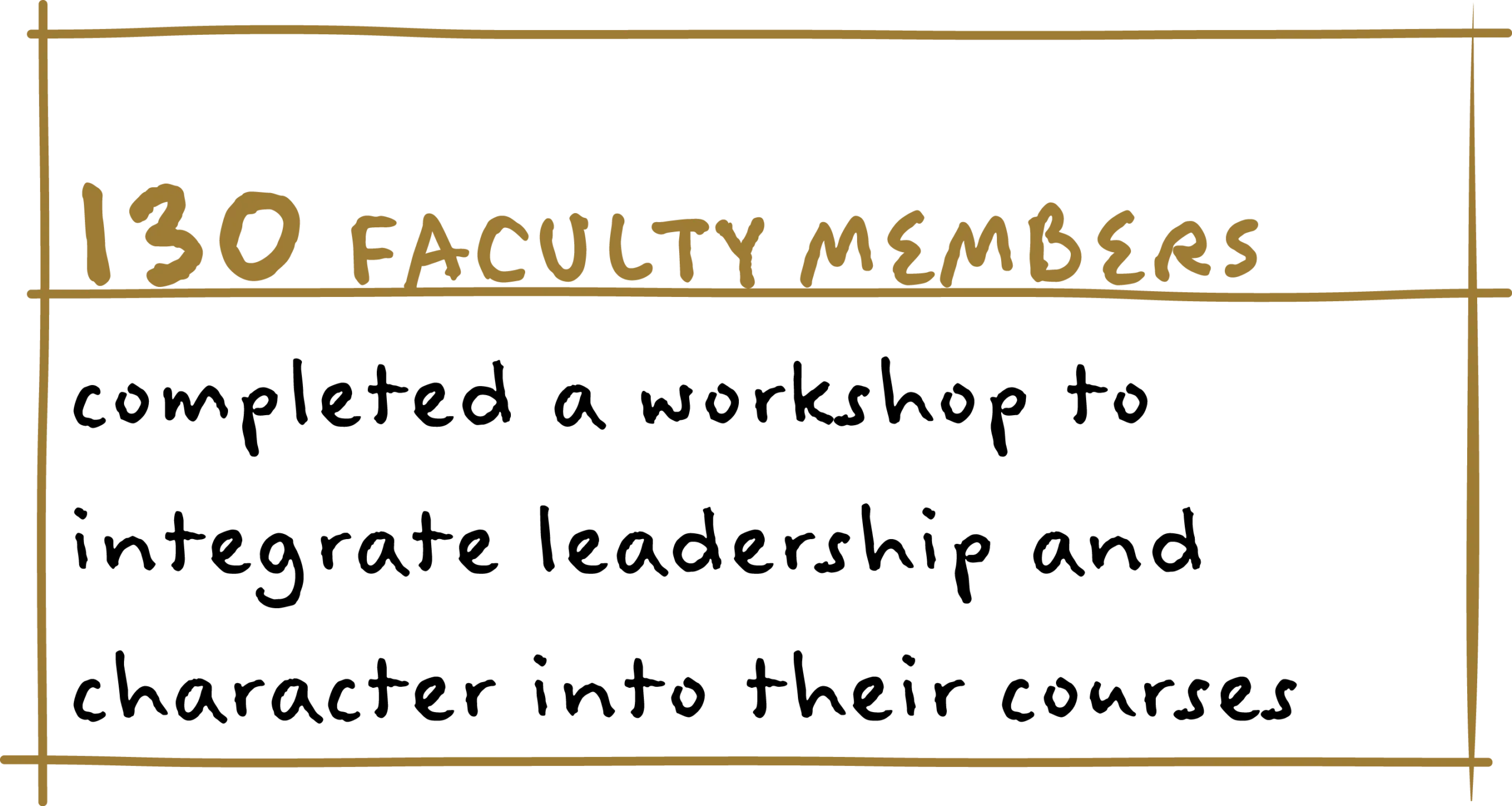
As the program flourished and word spread, colleges and universities across the country began looking to Wake Forest for guidance on how to bring character education to their own institutions. With major support from national foundations including the Lilly Endowment Inc., Kern Family Foundation and John Templeton Foundation, the program has extended its impact far beyond the Reynolda campus. The Educating Character Initiative has distributed $58 million in grants to other institutions of higher education to advance character education nationwide and facilitate cross-institutional communities exploring character in higher education.
This past summer, Wake Forest received a grant from the Kern Family Foundation to expand character-based legal education and establish a network of law schools focused on leadership and character. Support from alumni, parents and other individuals continues to sustain the program’s work.

“The Program for Leadership and Character is proof of what happens when commitment to a good idea is matched by the capacity to realize it,” said Wake Forest President Peter Rodriguez. “The program has become an integral part of the Wake Forest experience that gives students tools to act out our motto, Pro Humanitate. And the program’s Educating Character Initiative is allowing us to export that ethos. This work has already reached thousands of students and will reach many more.”
The program got its start in 2016 when then-President Nathan O. Hatch (LHD ’21) recruited Michael Lamb to explore starting an initiative that drew from the Oxford Character Project, which Lamb helped kickstart as a postdoctoral fellow at the University of Oxford.
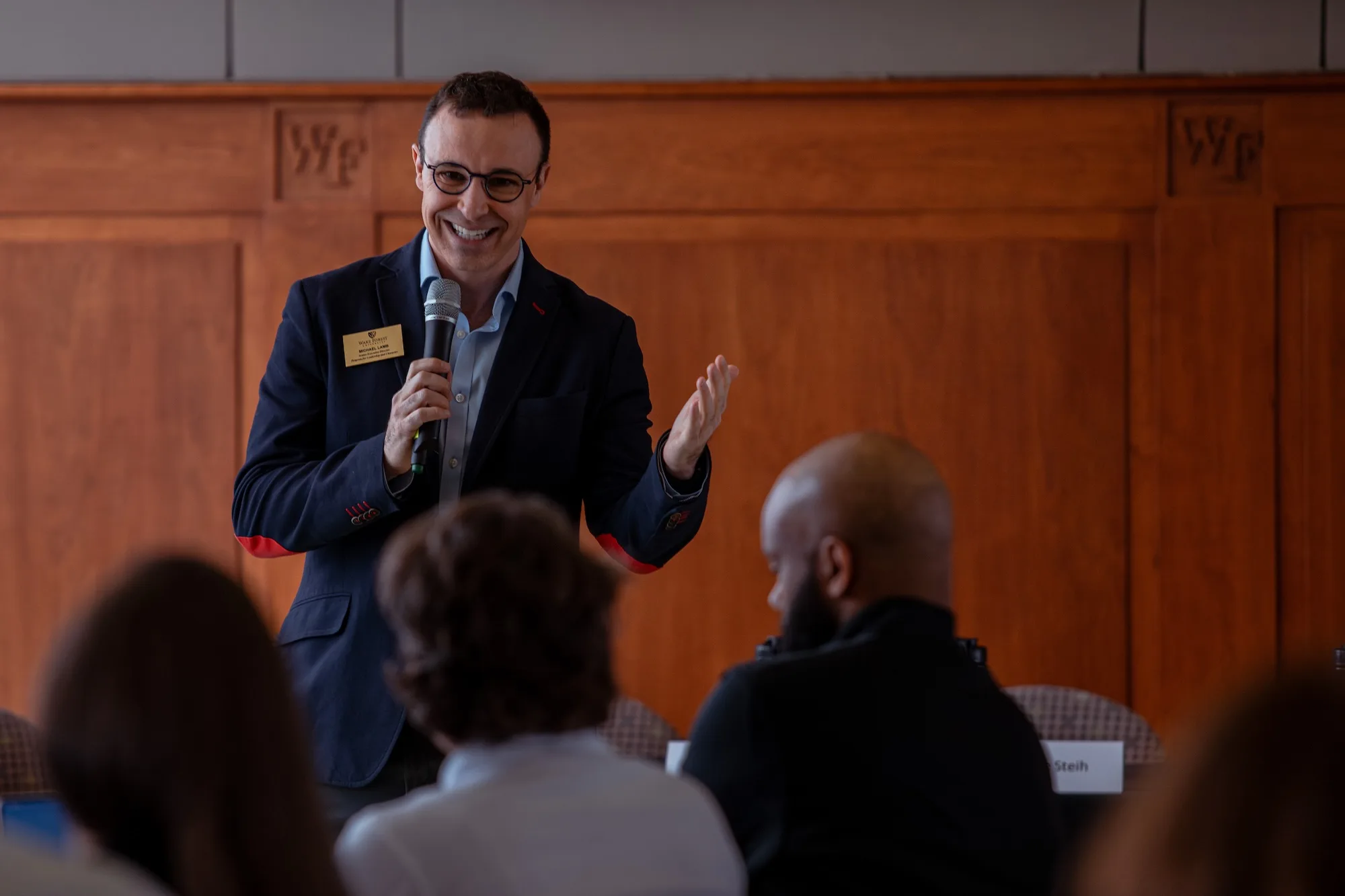
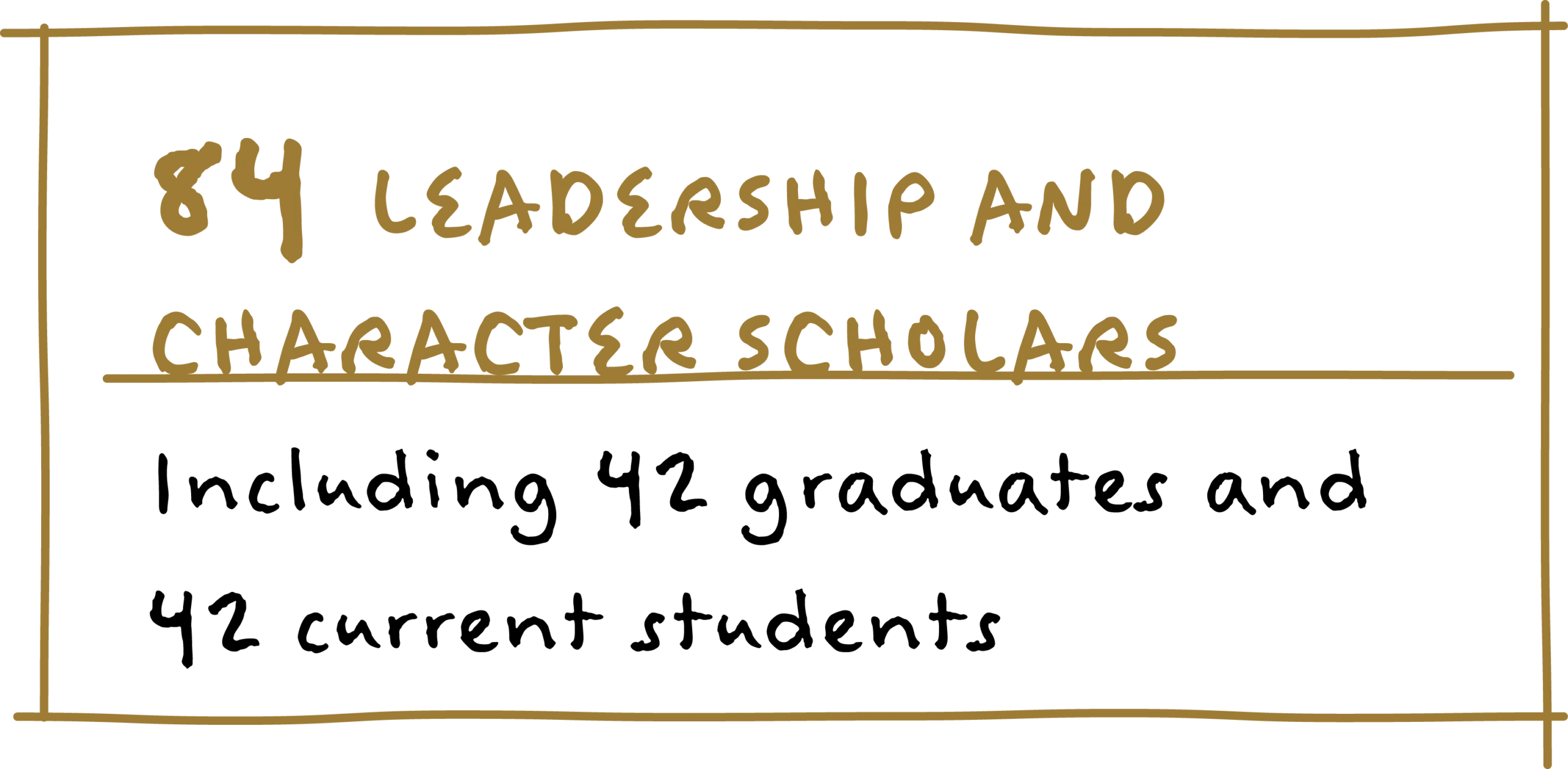
Lamb spent a year meeting with faculty, staff and alumni, creating pilot programming and building support. He noticed what Wake Forest alumni already knew: The University is an unusually supportive community with a tradition of friendliness and honor and an eagerness to develop leaders for humanity. In 2018, the fledgling Program for Leadership and Character introduced undergraduate discussion groups and, a year later, selected the first class of 10 Leadership and Character Scholars, who receive merit-based scholarships.
“Wake Forest has been focusing on educating leaders of character since our founding, so the Program for Leadership and Character seeks to make what has been implicit explicit,” says Lamb, who is now the senior executive director of the program and F. M. Kirby Foundation Chair of Leadership and Character. “Since we started in 2017, we’ve worked with campus partners to nurture a community where character is core to who we are.”
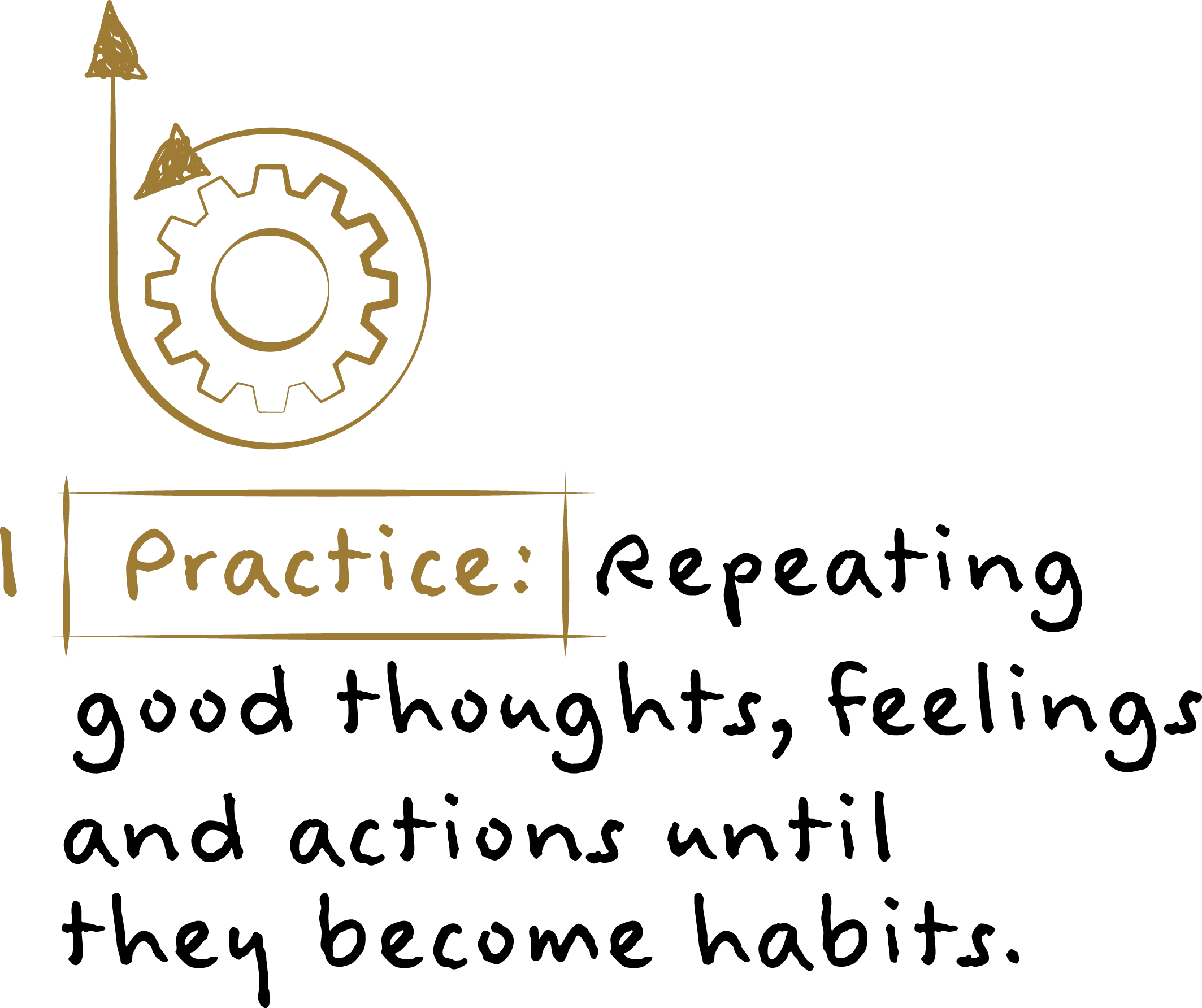
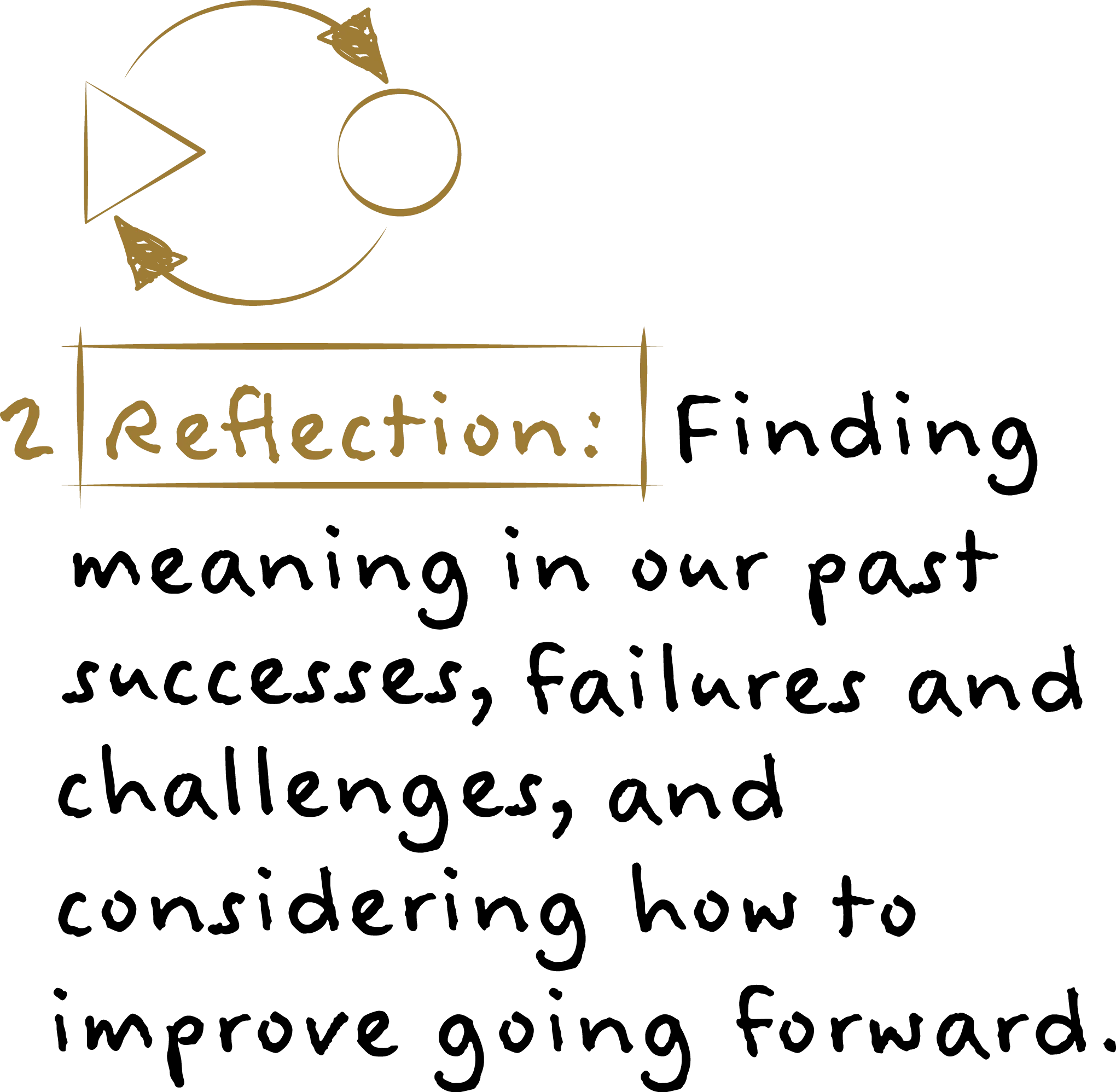
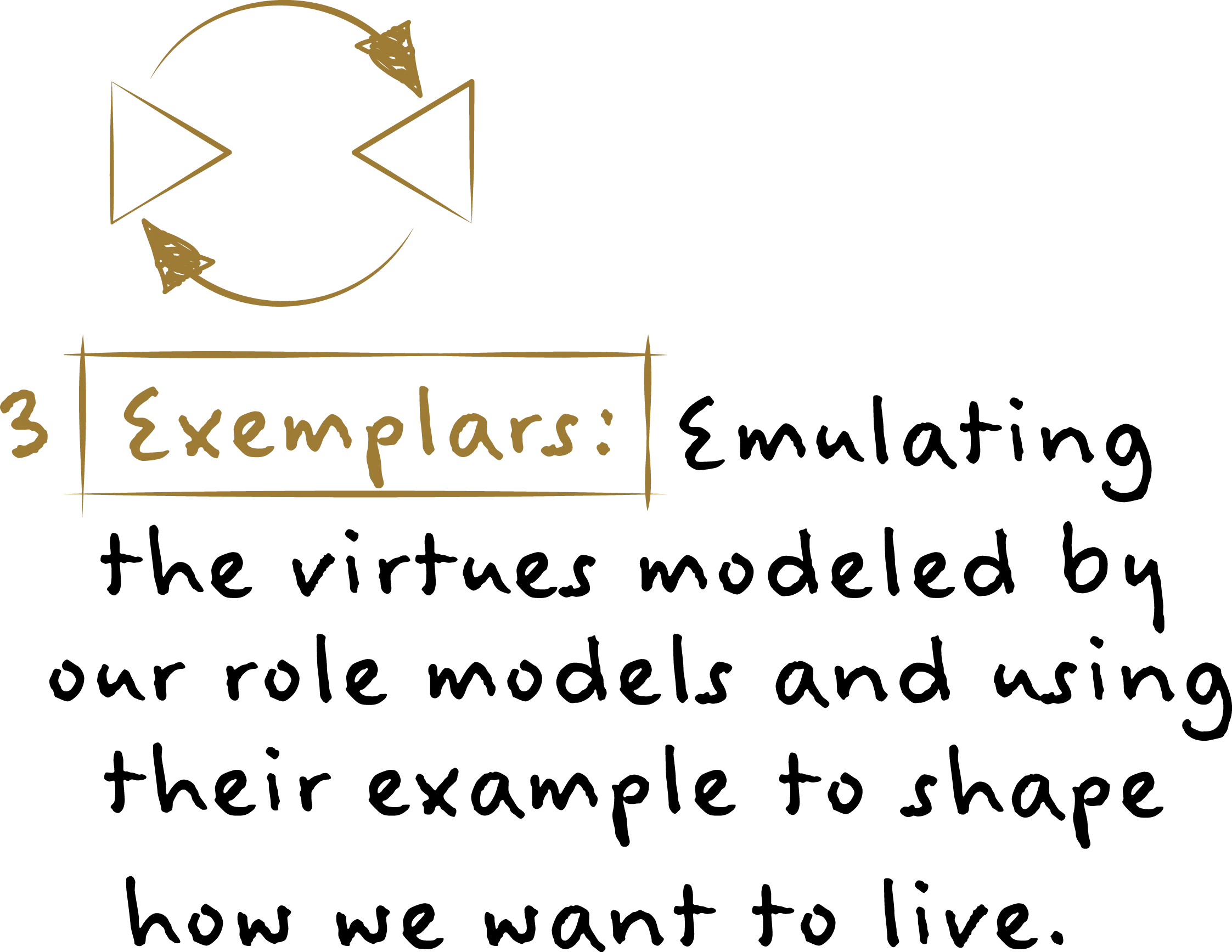
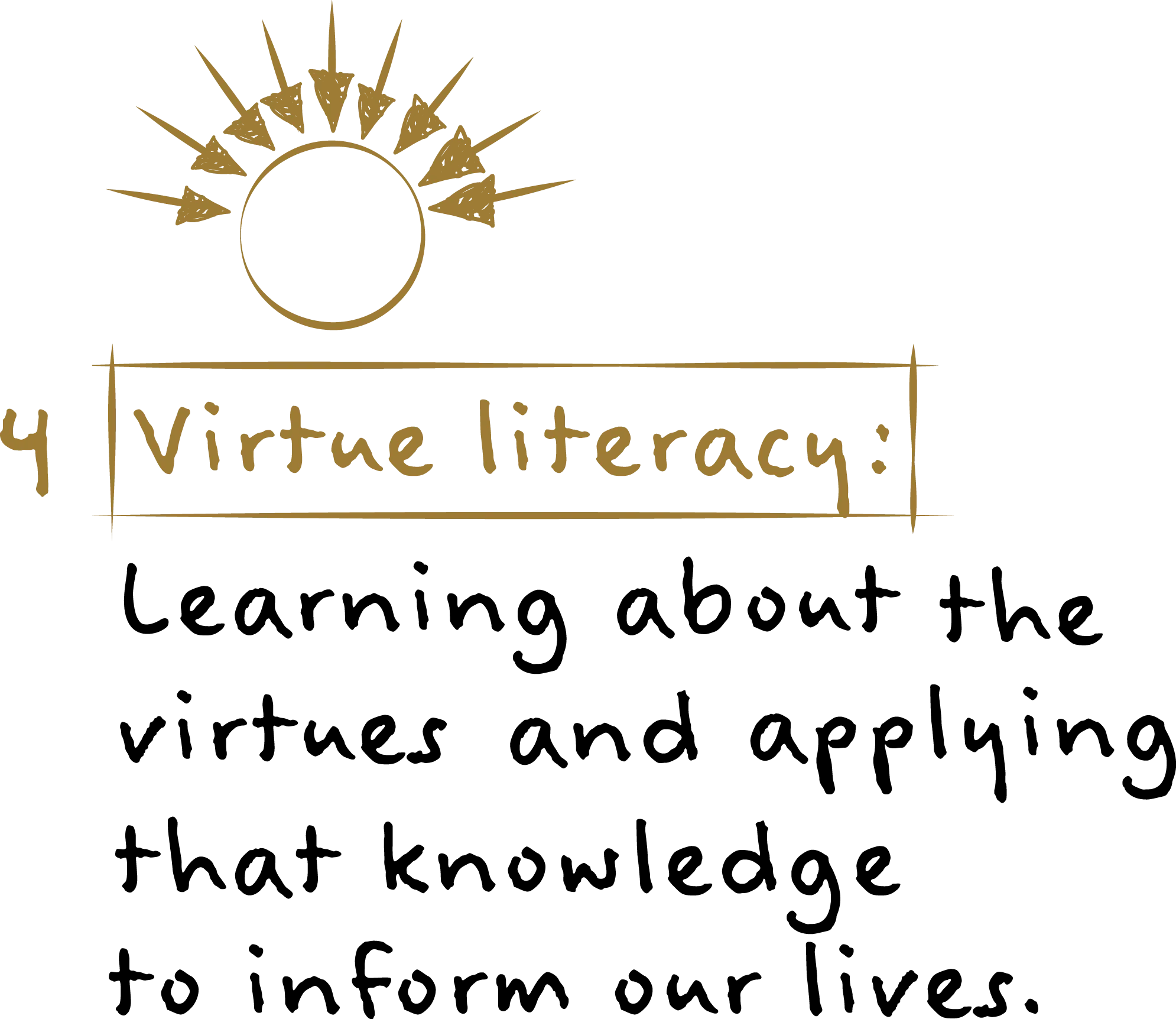
The program applied the seven strategies for character development, which Lamb developed with colleagues at the Oxford Character Project, to Wake Forest education, creating a framework whose influence has rippled through classrooms and campus life.
“Our program works directly with students, and hundreds of faculty, staff and administrators across campus have opted in as well,” Lamb says. “We pursue research to make our work better and to share our knowledge with the field, and we’ve been entrusted to offer grants and steward a national community of colleges and universities who are educating character in their contexts. It’s really exciting to see this movement take off.”
The scholarship program provides mentoring, retreats and opportunities to hear from leaders and visiting speakers. “Once you learn enough of virtue ethics, it’s like a light gets turned on, and you can’t turn it back off. It was hard not to apply it everywhere in my life,” says Alfredo Diaz (’26), who was a Leadership and Character Scholar and now works in the program’s office as a University Fellow.
After a summer internship in finance, Diaz decided against a career in that field. “I ended up choosing this job instead of going back and working for a bank, because what I have learned here changed how I make my decisions.”





As the program has grown, so has the need for professors. Daniel Henry, assistant teaching professor in African American and African Studies, was hired specifically to teach courses grounded in leadership and character. His recent class, Organic Leadership: Lessons from the Black Freedom Struggle, explores the Civil Rights Movement and what it means to lead a democratic life. It focuses on virtues including sacrifice, hopefulness, self-determination and love.
When he taught elsewhere, “I did talk in class about questions of citizenship, certainly, but it was emphasizing the students’ familiarity with different conversations about these questions. [It wasn’t] grounded in questions of practice or the personal dimensions of character,” he says. “Because we’re focused on character specifically here, it allows me to have conversations with students and design projects that are much more about practicing the things we’re learning.”
Faculty like Rebecca Gill, now the Larry J. and LeeAnn E. Merlo Presidential Chair for Communication and Entrepreneurship, and students like Kal Wuor are now studying leadership and character in ways they never expected. “The way they run the program, it doesn’t make it seem like you have to already be a leader in order to be a part of it,” says Wuor. “In my high school I never really got involved in leadership capacities, because I didn’t see myself as someone who could be a leader, but it’s different here. It’s definitely taught me that being a leader is more than just what you do — it’s also how you do it.”
More on Leadership and Character
For nearly a decade, the program has given students, faculty and staff a way to put Wake Forest’s Pro Humanitate ethos into words and actions, and has inspired a growing number of character education initiatives across the country.

Tradition reimagined
The Program for Leadership and Character is a powerful example of what can happen when tradition and innovation come together in the hands of a creative leader.

Learn about yourself
What is it like to participate in character education? Try this exercise from a workbook used in the Program for Leadership and Character’s seminars and workshops