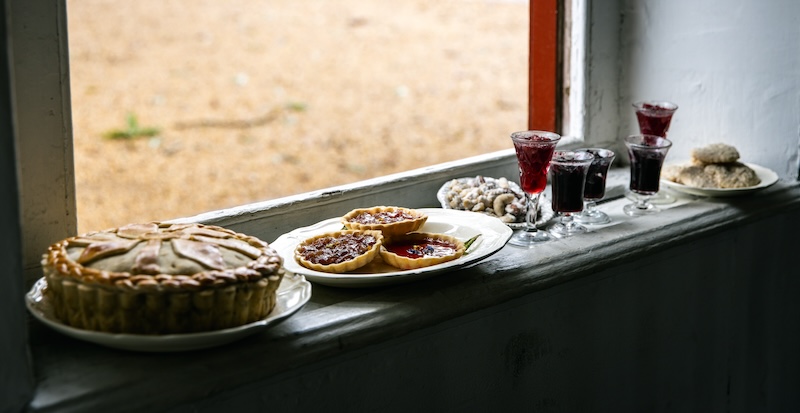
President George Washington proclaimed Nov. 26, 1789, a day of thanksgiving for the end of the Revolutionary War and prayer for heavenly aid in establishing a constitutional government.
“It wasn’t meant to be an annual event,” says Katharine McEnery Pittman (’07), who knows something about the matter. For almost 11 years, Pittman has portrayed Martha Washington at Colonial Williamsburg in Virginia, the nation’s preeminent living-history museum town. This year, she’s watching the Macy’s Thanksgiving Day Parade with her family — then heading off to work.
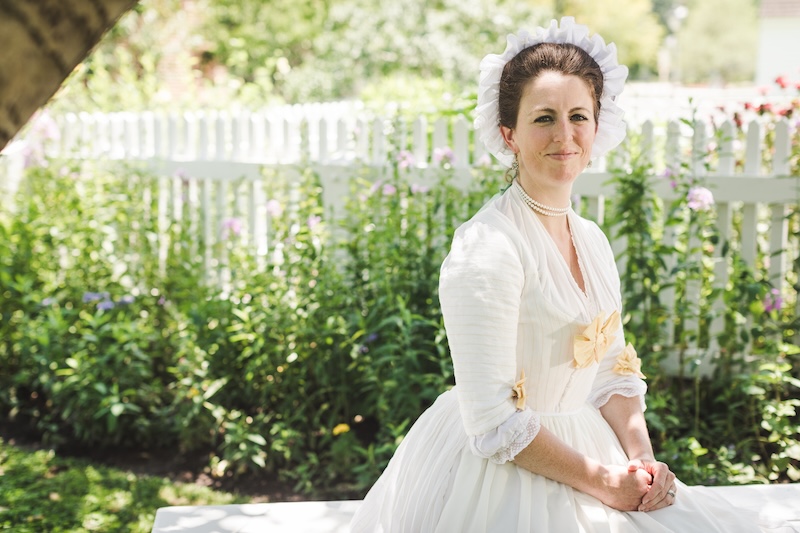
Through Pittman’s depiction of the wife of George Washington, “I can teach them the reality,” she says. “The real woman that she was in the 18th century, who was strong, who was very independent, who was very smart.”
Using theatre lessons every day
Pittman’s livelihood goes back to her undergraduate work. “I use the lessons of the theatre department at Wake Forest every single day, whether researching abilities, writing abilities, education, talking with children or adults, or just basic history,” she says. She credits Professor of Acting and Directing Cindy Gendrich, also department chair, and Professor of Acting Brook Davis (’90, P ’23), saying her career is built on what she learned from them and other faculty members.
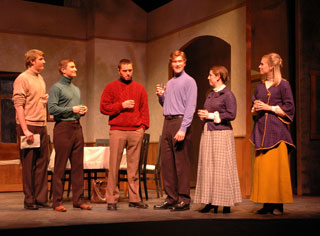
“I remember when she wrote me with the news that she had gotten a job as a full-time actor there; she was so excited, and we knew then that working in that world would be perfect for her,” Davis says. “One of the memories that stood out to me immediately was working with Katharine as Mrs. Stockman in WFUT’s production of ‘An Enemy of the People’ in 2006. She was one of the strongest actors in a very challenging, heavy show.”
After majoring in theatre and minoring in history, Pittman worked as an actor in New York, Maine and Colorado before earning a paralegal certificate at Duke University in Durham, North Carolina. To celebrate, her parents took her to Williamsburg, where the family of history buffs had vacationed often.
A performer there mentioned a job opening. Days later, Pittman applied. An audition and offer soon followed. In June 2011, she started as an actor/interpreter — essentially a townsperson, playing multiple roles as well as leading 18th-century dances.
Four years later came this inquiry from a director: “What do you think of Martha Washington?” Colonial Williamsburg donors wanted to fund a young Martha, which prompted Pittman to check out a portrait of Martha Dandridge Custis from 1757, the year the future first lady was widowed for the first time. “It was revelatory to consider (Martha Washington) as a younger person,” Pittman says.
She was given six months to do full-time research before debuting in March 2016. The rest is history — with a twist.
Cramming on the couple
“The trick to portraying a woman is I have to know not only all about Mrs. Washington but also all about Mr. Washington — or General or President or whatever,” Pittman says. “I am asked so many domestic, personal questions about our relationship, the home and George’s work. The men are not asked nearly as much about their domestic situations — just themselves, their politics, their military experience.
“It wouldn’t make sense for a first-person interpreter not to know what her husband was doing,” she continues. So, Pittman pores through Martha’s surviving letters, George’s many papers and the histories of both.
Pittman appears alone and with colleague Ron Carnegie (usually as Colonel or General Washington) or others. With colleague Kurt Smith, who plays Thomas Jefferson, she co-writes, co-directs and co-produces scenes being performed this year and next as the United States approaches its 250th anniversary.
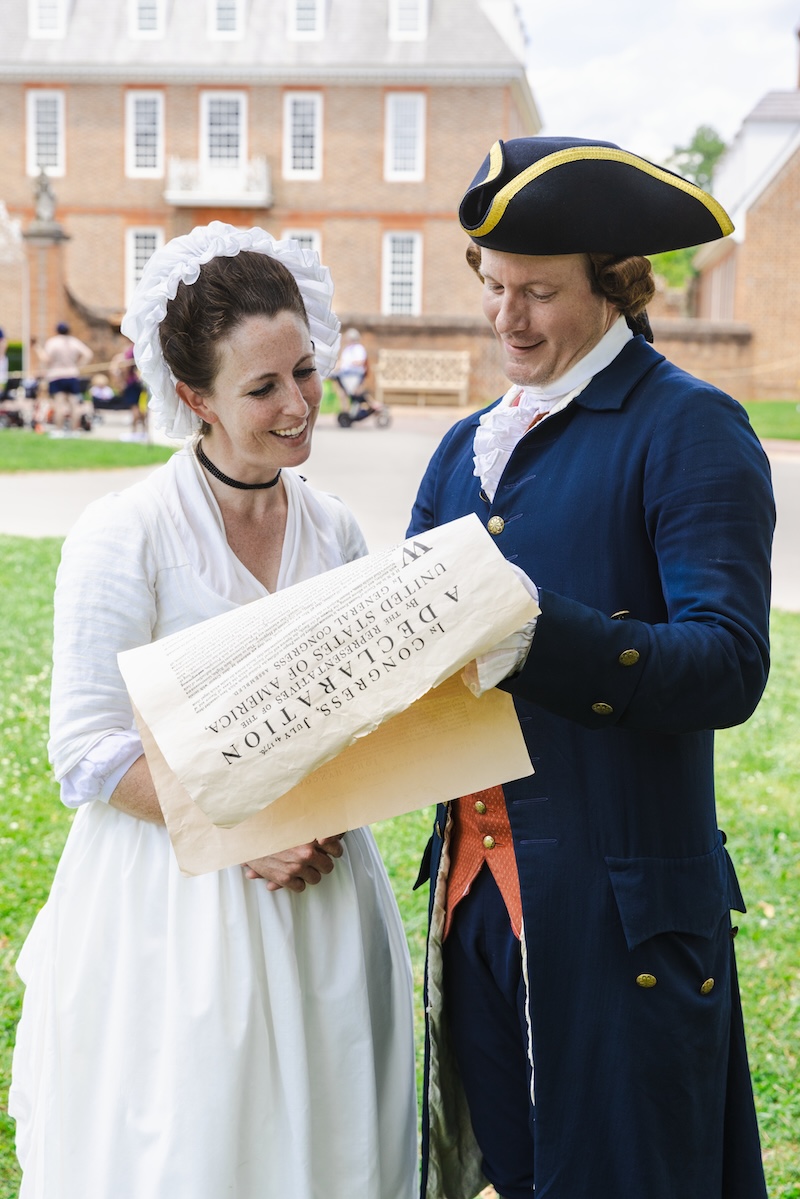
One scene involves how Virginia lawmakers came to agree on their vote to separate from England. Another shows differing reactions when the royal governor removes the gunpowder from Williamsburg’s public stores, leaving the town defenseless. They are left to wonder: Was this the royal governor’s prerogative? Would enslaved people revolt and run?
The creative swirl from researching to writing, casting to blocking makes Pittman’s eyes light up. Bringing history to life for visitors provides a challenge for interpreters, scene builders and costumers.
Keeping it real
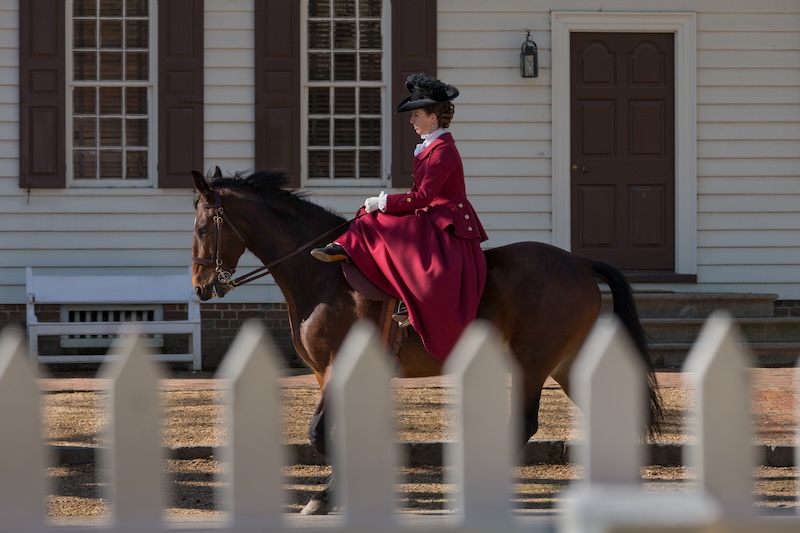
Pittman already knew how to ride when she took the role, a skill that has allowed her version of Martha Washington to sometimes arrive, impressively, on horseback.
“Katharine also has a unique ability to not only adopt 18th-century thought but to synthesize those primary sources to create relevance for a 21st-century audience,” says Smith (who plays Jefferson).
Pittman works to convey little-known aspects of the Washingtons’ lives: George and Martha were very much in love, she says. During the Revolutionary War, Martha traveled to every winter encampment to stay with her husband. “Always at the nucleus of his social life,” she smoothed his way, Pittman notes.
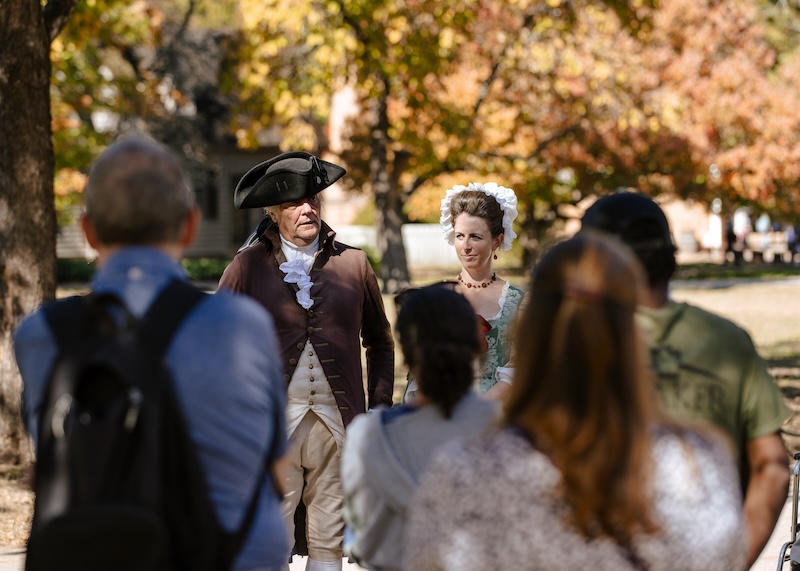
If you look past the elaborate 18th-century dresses and language, “you’ll find a normal woman living an ordinary life in extraordinary times,” Pittman says of Martha. “I’ve met so many women who come to understand her from a mother perspective, a daughter perspective, a widow. … (First-person portrayal) makes her story of resilience more accessible and digestible for a modern audience. (She’s) not just an old woman in a cap from an ancient time.”
Sometimes, Pittman finds a need to defend her role. When a visitor blamed the nation’s founders for its current ills, she stayed in character and snapped back. “Ma’am,” Pittman recalls saying, “I am long dead. … This country was built to change and adapt and amend. There was no expectation that you were going to abide by the Constitution that we left you almost 250 years ago. We have given you the authority and the power to make the changes you want to see.”
Questions for Martha and George are often influenced by wars, political shifts and court cases of the day, Pittman says. “I think that means that our history is still relevant.”
The nation’s founders knew that the Declaration of Independence and Constitution were imperfect documents, she says. “They weren’t crafting a perfect union. They were striving for a more perfect union.”