This excerpt is part of America From the Forest, Wake Forest Magazine’s series marking America’s 250th anniversary.
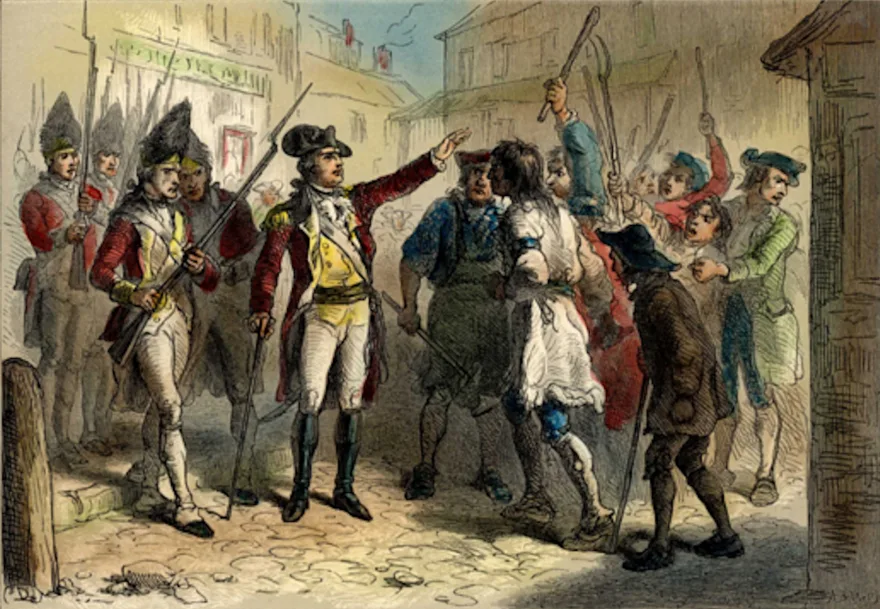
A new book about a pre-Revolutionary uprising by backcountry settlers in North Carolina offers a window into the political and cultural tension that helped to shape not only the American Revolution, but the state’s path toward independence.
A new book, “Regulator Movement in North Carolina, Prelude to the Revolution” by Marcia Phillips, spotlights this lesser-known chapter of the state’s history. Phillips is a metadata specialist in Z. Smith Reynolds Library’s Special Collections & Archives.
The Regulator Movement was a grassroots effort, made up of settlers in colonial North Carolina in the late 1760s and early 1770s. Its members challenged local British authorities for less taxation and a fairer system of government. The term, “regulator,” Phillips writes, describes “someone who made sure laws were kept, what would be called a watchdog today.”
In “Regulator Movement,” Phillips posits that this political and social tension stoked the desire for self-government that would shape the American Revolution.
Phillips shared the following excerpt with Wake Forest Magazine. It takes readers into the aftermath of the 1771 Battle of Alamance (south of present-day Burlington) between Regulators and the colonial British government, led by William Tryon, the appointed colonial governor of North Carolina. The British won the battle, which was the final large-scale conflict between the two groups.
Following the defeat of the Regulators, Tryon was seeking out surviving Regulators for further punishment for the settlers being in “a state of REBELLION against [their] king.”:
Reckoning
Governor Tryon’s quest for revenge was not satisfied. He took his troops west in search of participants who had escaped, even offering generous rewards for any information but finding no takers. He confiscated supplies for his troops, targeting the supporters of Regulators. Apparently, he favored flour from the Quakers and beef from the Baptists. Every action was intended to show that the governor was in control of the colony.
Tryon’s troops first targeted the Sandy Creek community, where it was believed the revolt had begun. He offered pardon for those willing to sign an oath of loyalty and intimidated many into doing so. Word about the ruthless nature of the battle at Alamance had spread. An open letter to Governor Tryon published in the Virginia Gazette read, “There was no necessity, Sir, when the people were reduced to obedience, to ravage the country.…You occasionally amused yourself burning a few houses, treading down corn, insulted the suspecting and holding courts-martial.”
Tryon’s troops first attacked the farm of James Hunter, an outspoken leader who had signed petitions and written in an open letter,
You say, if any person has been unjustly dealt by, let him apply to the law, and he shall be redressed. Alas! Sir, some of us have attended court, court after court, this two years, and upwards, with our complaints, and to your knowledge, and have almost brought ourselves to the brink of ruin by attending court, and paying the cost of malicious prosecutions; and are no nearer redress than we were at first.”
For his persistence and appeals, this peace-loving Presbyterian had his fields, house and barns burned down. He also had a price on his head, preventing him from defending his land. Tryon offered one hundred pounds and one hundred acres as a reward for his capture, dead or alive, but no one took him up on the offer. It was obvious that many had the chance to because it was reported that Hunter wandered toward the mountains for four days looking for safe shelter. Many Regulators were too afraid to give him protection but left out by the road or even threw bread to him for sustenance.
Then Tryon made a further example of Herman Husband (who was long gone), camping on his farmland and destroying his wheat crop, renowned for its quality. Tryon’s men left his land “without a Spear of Corn, Grass, or herbage growing, and without a House or Fence standing,” according to Tryon’s bragging account. Undoubtedly, the members of the close-by Sandy Creek Baptist Church witnessed the smoke.
Tryon was far from done. Within days, his troops had moved west to the Jersey Settlement (in present-day Davidson County), which was centered on Jersey Baptist Church, earlier pastored by John Gano. Their plan to arrest church deacon and well-known innovative millwright Benjamin Merrill (he had devised a way for his water mill to power a machine that bored out gun barrels overnight) was done to strike fear in the hearts of the whole area. According to family accounts, Merrill was yanked from his bed and taken, while his horses were confiscated and even his beehives overturned. This was scorched-earth tactics before the term existed. It made no difference that Merrill had not even been at the Battle of Alamance. He had organized a group of three hundred Regulators, and they were traveling to the protest when they learned it had turned into a battle, at which point Merrill led them to turn back.
While some Regulators were whipped where they were found, the most serious prisoners were tied together and forced to march with the troops, fulfilling Tryon’s intention to make a “deep Impression in the minds of the Inhabitants,” according to a letter by a Regulator that was unsigned. Such was the fear among them.
On June 9 Governor Tryon offered a reward for four leaders, brought into the camps “dead or alive,” of one hundred pounds and one thousand acres of land in North Carolina (according to the Tryon Proclamation in the North Carolina Colonial and State Records). There were no surrenders, perhaps because Husband and Hunter had fled and probably also Howell and Butler.
Two days later, Governor Tryon offered a pardon to all Regulators who would make an appearance at his troops’ campsites, surrender their weapons, take an oath of allegiance, pay their taxes and obey the law. The penalty for not doing so was very fresh on the minds of their families. A lot of tough discussions around kitchen tables saw men doing the only thing they could to save their family home and livelihood. Records indicate that over six thousand men (nearly three-fourths of the male settlers known to be living in the region at the time) eventually swallowed hard and signed oaths, something they took very seriously. Those who did not had other fates. Many saw their fields and houses set on fire. Others fled for the hills with nothing but the shirts on their backs rather than surrender their arms and rights. Lives and futures were unalterably changed by one man’s brutality.
Phillips will have a book discussion at 4 p.m. on Sept. 22 at the Special Collections & Archives Research Room (ZSR Library Room 625). More information about her research is available on her website.