This story is part of Living Proof, a series of profiles of alumni who got to Wake Forest on scholarships and are now giving back in their professions and communities.
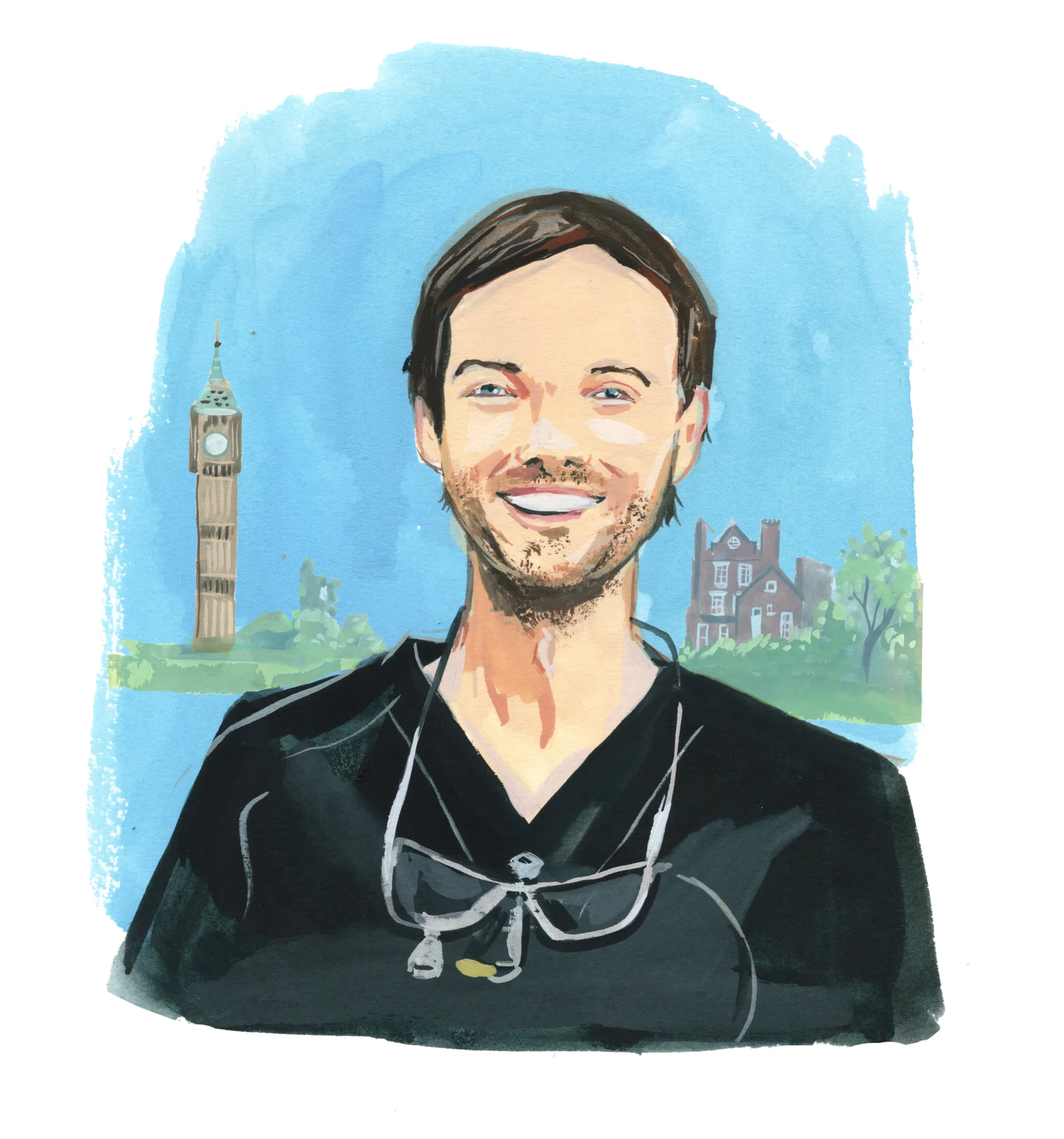
Bryson Rominger (’15) grew up in tiny Granite Falls, North Carolina, northwest of Hickory, where “a lot of kids never applied to Wake Forest, because they couldn’t pay for it,” he says. “I debated it heavily. I visited campus when I was a junior, and I wanted to go there, and then I saw the price tag.”
His high school guidance counselor urged him to apply anyway, telling him, “You never know.” She was right: Most of Rominger’s costs were covered by scholarships for first- or second-generation students or those from North Carolina. Now, as a dentist in Hudson, the town next door, he’s making sure his employees know about the North Carolina Gateway, and he’s encouraging their children to apply.
For him, the advice and mentorship he received sets Wake Forest apart. Even before Rominger set foot in a classroom, a pre-orientation program tailored for students with need-based scholarships pointed him to opportunities he otherwise might have missed, he says. He learned that he could study abroad for about the same cost as a semester in Winston-Salem. So he signed up quickly for the Worrell House in London, expanding his horizons while knocking out three required classes. “I was 19, and I had never been out of my little bubble,” he says.
Next, a professor revolutionized the way he studied. After Rominger made the lowest score on an early test in a genetics class, he went to Pat Lord (Ph.D. ’86), a teaching professor in biology who has since retired, for help. “She basically said, ‘If you can’t teach it to somebody else, you don’t really know it,’” he recalls.
Rominger took her advice to heart and revamped his studying strategy, using whiteboards from then on to draw what he was learning, essentially pretending he was leading a class. On the next test, he earned the highest grade.
He recalls moments of awkwardness along the way: Meeting the family who provided one of his scholarships — and realizing their son was his freshman hallmate. “I remember not even knowing where to put your napkin and your silverware,” he says. “There’s a bunch of donors in the room, and you’re feeling like, ‘Am I saying the right things? Am I wearing the right thing?’ … But we were grateful to be a part of it and grateful that we could share our story,” he says. “Just having those different perspectives and different backgrounds helps a ton, and it’s motivating, in a way.”
He briefly debated between dentistry, which he saw as a way to provide care while using his hands, and teaching, which would allow him to coach basketball. When Nate French (’93, P ’23), a teaching professor and executive director of First in the Forest, pointed out that Rominger could become a dentist and coach nights and weekends, the decision was made.
French also suggested that Rominger study something he enjoyed along with his pre-dental science requirements. Rominger gravitated to sociology, which led to his spending his senior year researching Medicaid access, including for dental care, in North Carolina counties.
And he discovered another scholarship, the Golden LEAF program. That paid for him to spend his summers shadowing doctors and dentists close to home — which he found much more rewarding than his previous summer job, harvesting blueberries.
He liked how the local dentists he assisted were involved in the community, treating patients from childhood through later life. One dentist he shadowed, J. T. Barker, even joked that when Rominger finished dental school, he should come back and buy Barker’s practice in Hudson, next door to Granite Falls.
That’s exactly what happened. When Rominger graduated from East Carolina University School of Dental Medicine in 2019, he joined Barker Family Dentistry and bought the practice the following year.
Rominger’s doing his part to increase access to care, sparked by his sociology research, through annual mission trips to Guatemala and volunteer work at free local clinics, including in the aftermath of Hurricane Helene.
The best part of his job, he says, is watching his patients grow up. “I don’t feel like I’ve been doing it very long, but there’s a little girl who’s not so little anymore — she’s like 14 or 15 — and she was such a sweet patient,” he recalls. “We had to do a couple of fillings on her, and she was brave. She just came in, and she’s in high school. And her brother, who started with me in high school, is a teacher!”
At the other end of the spectrum, a 90-year-old patient recently told him, “‘I’m just happy to have the teeth I have,’ and he had 30 of his 32 teeth,” Rominger says with a laugh. “It’s a fun job, and it’s really good to get to know entire families.”
In dental school, Rominger met his wife Ashley, who grew up in Raleigh. Her grandfather, Bob Northcutt (’58, P ’82), gave tours of Wake Forest’s original campus and was thrilled to have a new Demon Deacon in the family. Ashley now practices in nearby Hickory, where they live with their 1-year-old son, Tate, whose nearby grandmother takes care of him most afternoons.
After Tate’s bedtime, Rominger often spends winter weeknights helping to coach basketball with his former coach, now leading the team at his high school’s archrival. Rominger spent more time analyzing film from home last season than at workouts, but he still managed to make it to most of the games.
And now that Wake Forest has expanded its financial aid for North Carolinians, he’s cheering on more players to apply.
Read more about our alumni scholars:
The architect who came home
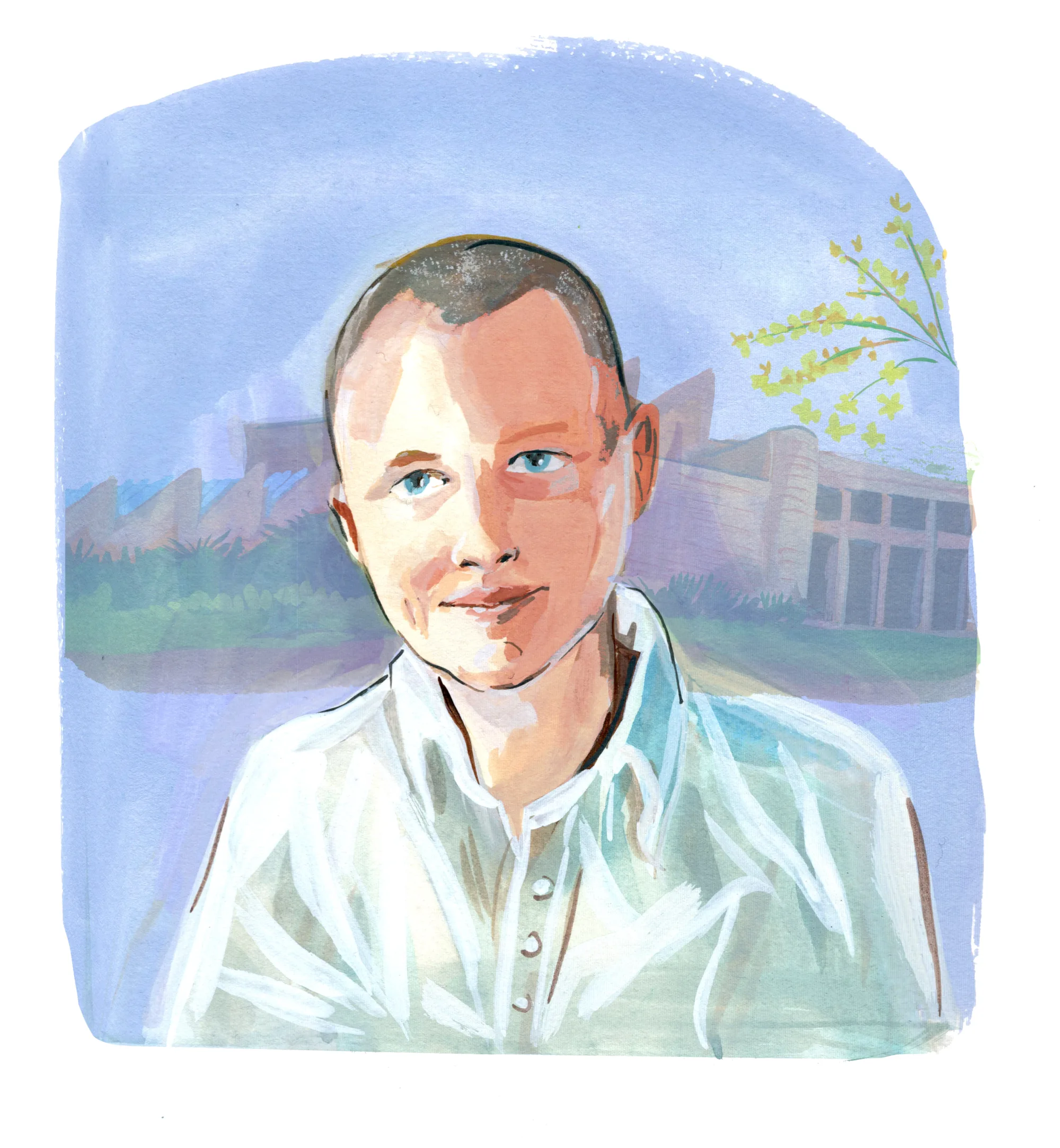
Robert Cox (’09)
The mentor
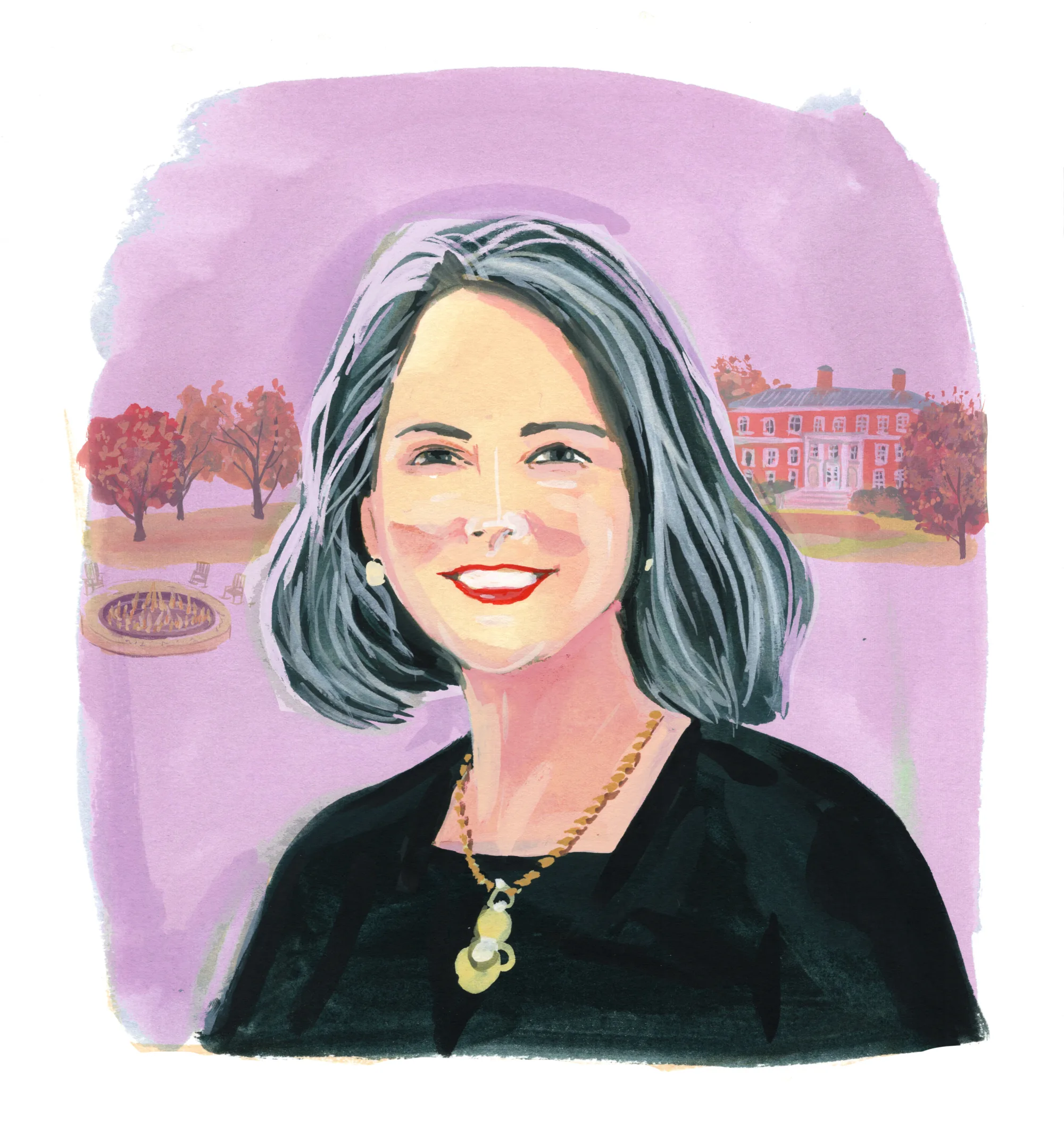
Marybeth Torbet Hays (’90, MBA ’94)
The debater turned lawyer
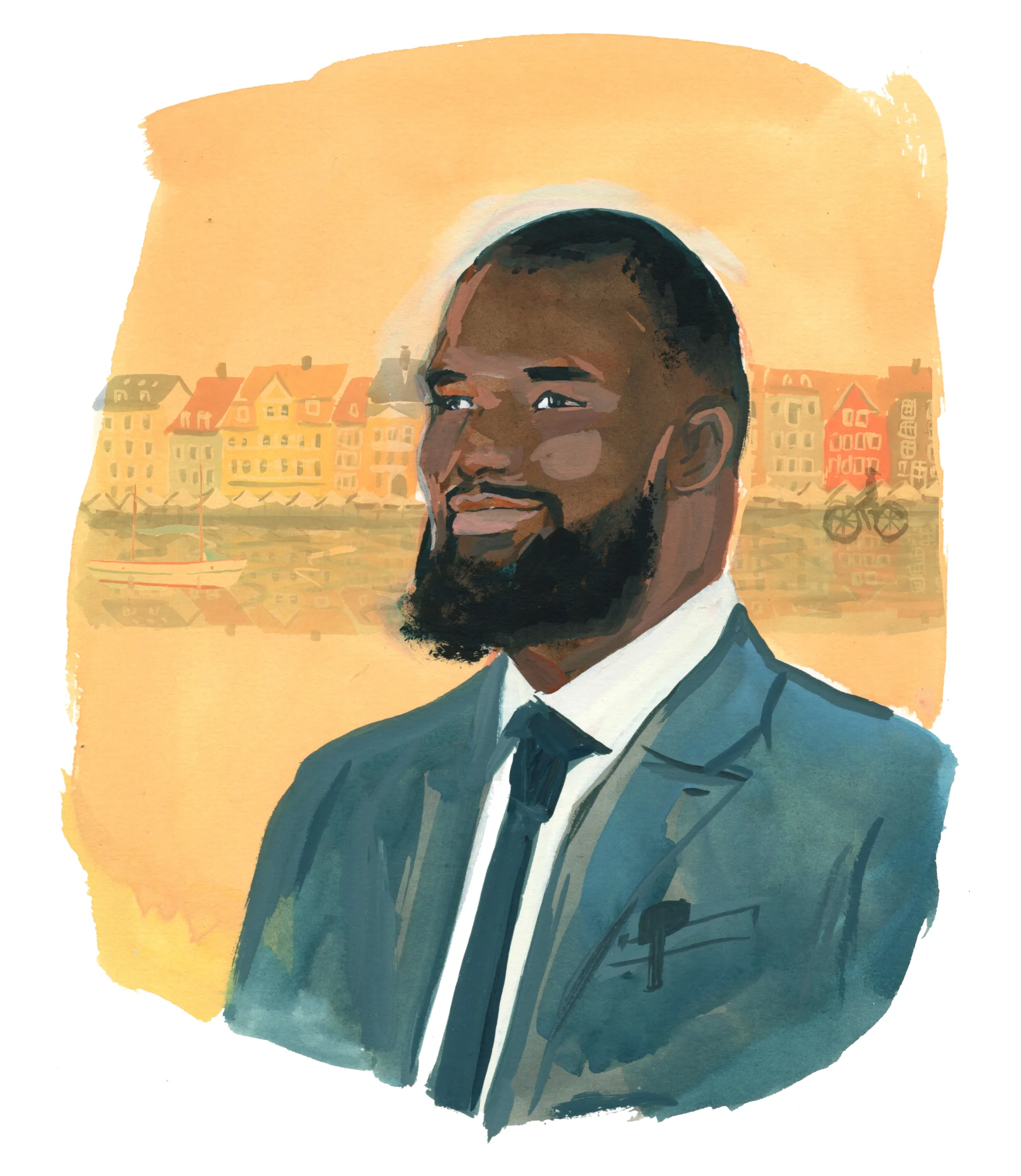
Alex White (’22)
More Stories
Fit? Check.
President Peter Rodriguez has landed at a university that is “congruent” with his background and his values.
Shining a light on Wake Women
Wake Forest is not a single story. It is the sum of every individual experience of those who have passed through this institution.
Back to School
These four Deacs see big opportunities for Wake Forest and its new president.