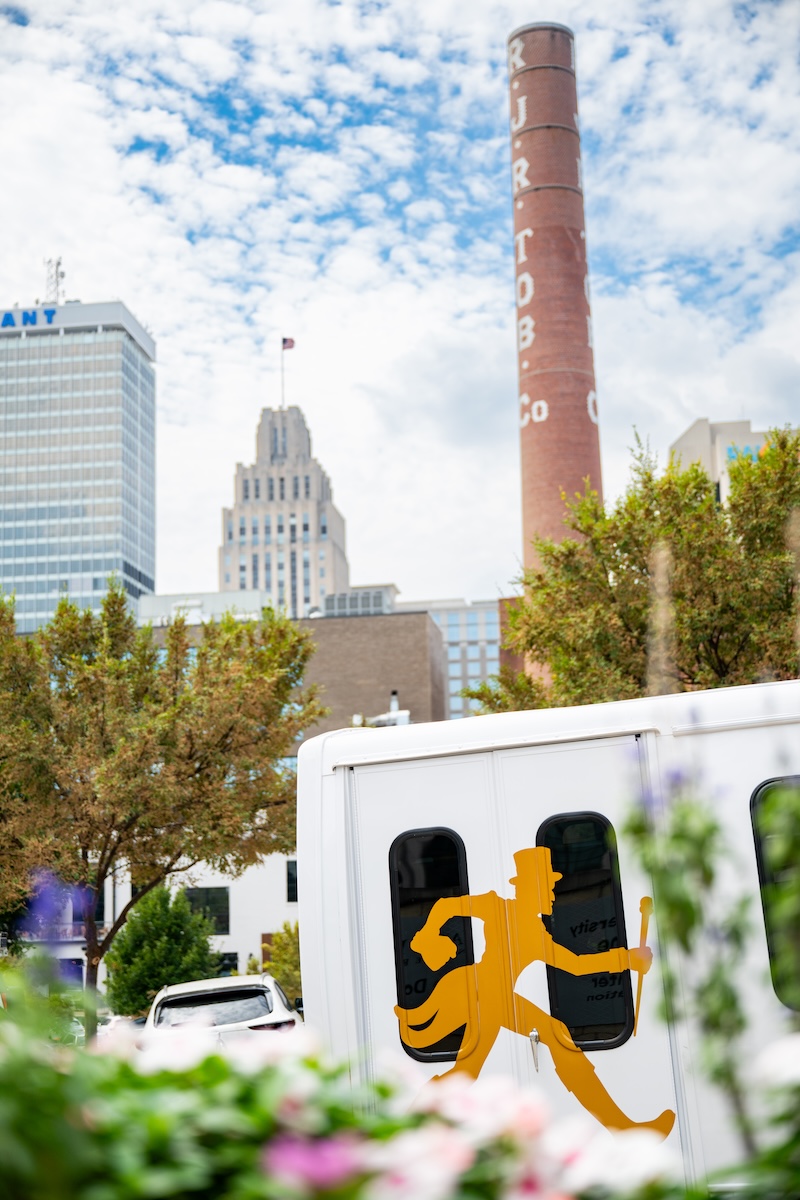
09/24/25 1:40pm
Debate competition at Wake Forest is almost as old as the institution itself, and today’s team is doing its part to uphold the Demon Deacons’ reputation as champions.
On Wednesday afternoon, debate team members enter Carswell 101, filling the room with excited chatter until Communication Professor of the Practice Justin Green (’99), head coach, calls the group to order. He starts with shoutouts, their ritual of appreciation: One student thanks a friend who helped him prep for an argument; another recognizes new team members who recently debated for the first time. They turn to logistics for the coming weekend’s trip to the University of Kentucky for their second tournament of the school year. Packing lists include water bottles, energy drinks, protein bars and extension cords (lifelines for laptops full of notes and research).
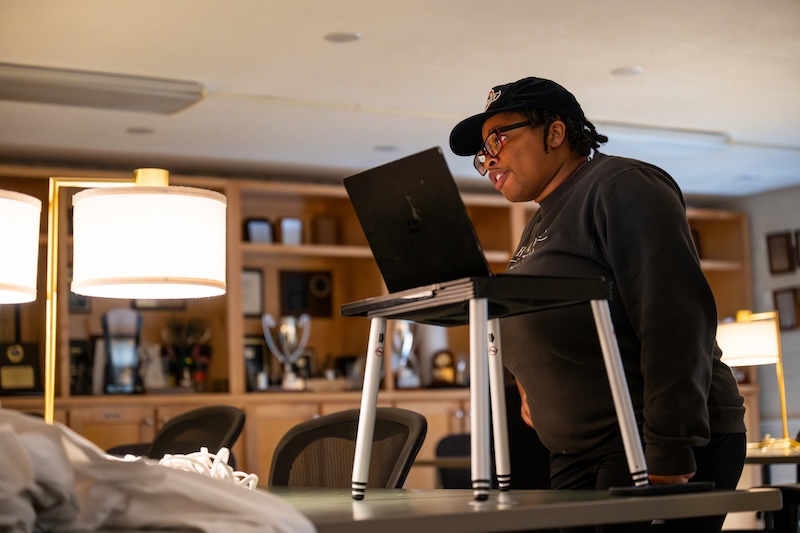
09/24/25 5:03pm
At Green’s cue, the debaters break into small groups and quickly scatter throughout the building to keep cramming; in two days, they will hit the road. In one room, Dimarvin Puerto (’24, MA ’26), a graduate assistant coach, marks up a whiteboard while his group outlines arguments. In another, students circle up to talk through strategy. Back in Carswell 101, more debaters are heads down, typing vigorously into their laptops, most of which sport “Think Hard, Talk Fast. Yikes!” stickers. At the podium, a student runs through a speech, speaking with fervor as he packs as many words as possible into a few minutes.
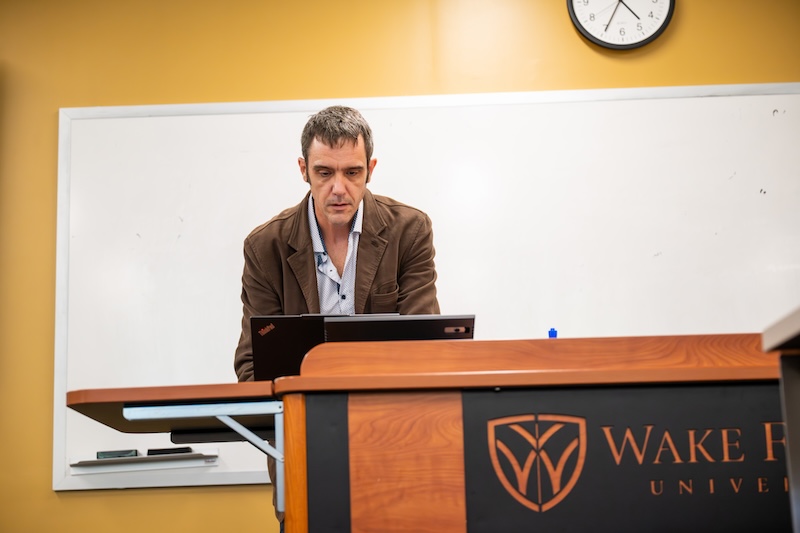
09/24/25 4:35pm
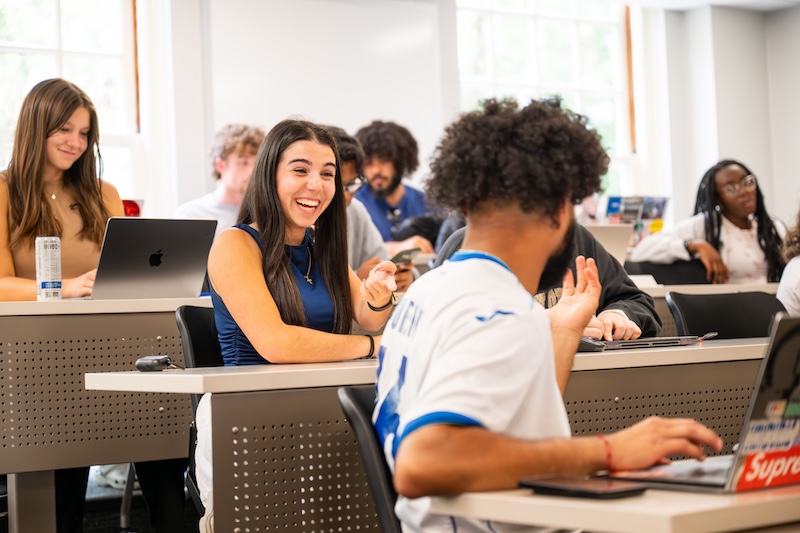
09/24/25 4:32pm
These students have a legacy to uphold: Carswell Hall, the debate team’s home, is stuffed with gleaming plaques, trophies and dog-eared photos documenting 190 years of victory. The oldest extracurricular activity at Wake Forest, debate started on Feb. 14, 1835, with the Philomathesian Society and the Euzelian Society. The late Edwin G. Wilson (’43, P ’91, ’93), provost emeritus, once said, “Long before we played football, edited publications, acted, or sang, in fact almost before we studied, we of Wake Forest talked.”
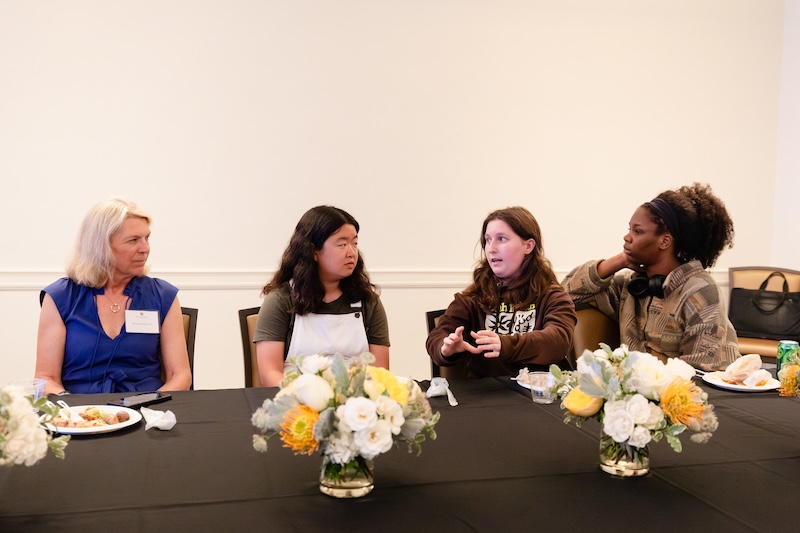
Sophomore Harper Lindsay considers debate “fun and frustrating in the best way.”
(Update: Two first-year students, Grant Kinghorn and Will Porter, add to the collection of hardware by finishing as novice-division semifinalists in Kentucky.)
09/24/25 7:10pm
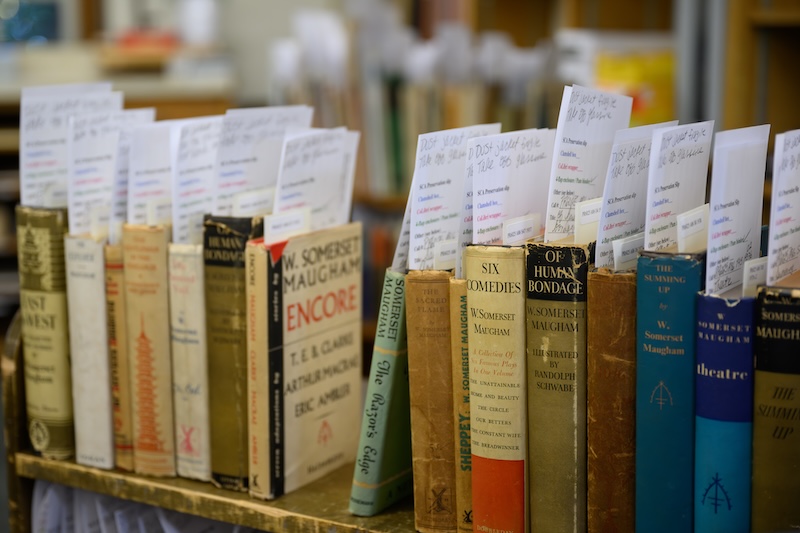
Earlier on Wednesday, across the Mag Quad and Benson Courtyard, senior psychology major Chloe Patz is tucked away on the third floor of Z. Smith Reynolds Library, meticulously creating archival boxes during her work-study shift. These boxes will protect the library’s rare books, a growing collection of around 70,000 items from the 13th through 21st centuries.
Stepping into the library’s Preservation Room feels like walking back into an analog world. Except for one desktop computer, the room is lined with stacks of books, letterpress prints, framed photos and vinyl records, wooden and paper boxes and jars of paste. Worktables and machinery, including a giant paper cutter, dominate the room.
09/24/25 9:30am
09/24/25 9:59am
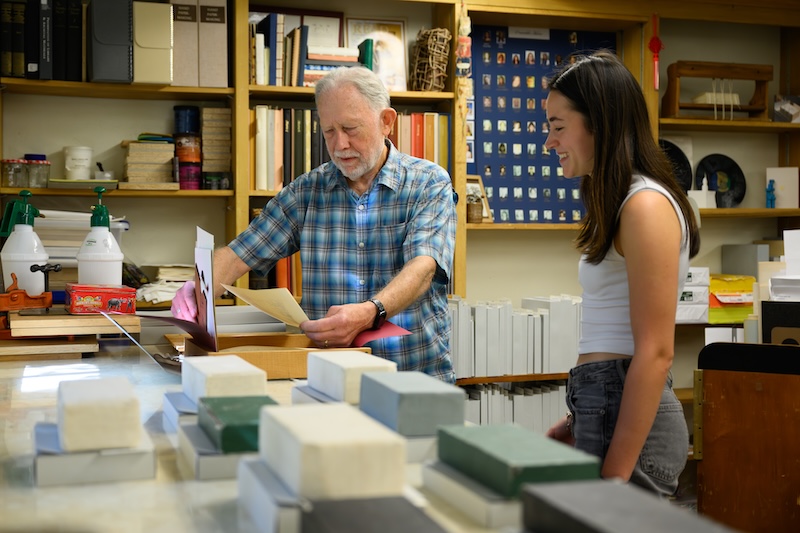
Craig Fansler, preservation librarian in the library’s Special Collections & Archives, taught Patz how to create the boxes, cutting them precisely to fit their contents, rounding the corners, scoring folds and gluing them together with a barcode label. (OK, one tiny digital intrusion.) Patz calls the work “therapeutic.”
Fansler has mentored dozens of students during his 32 years in the archives, and he displays many of their photos in the Preservation Room. “I’ve met so many good people through the years,” he says, naming where some of his student assistants ended up in their lives and careers. “Like Chloe. She’s going places!”
09/24/25 3:43pm
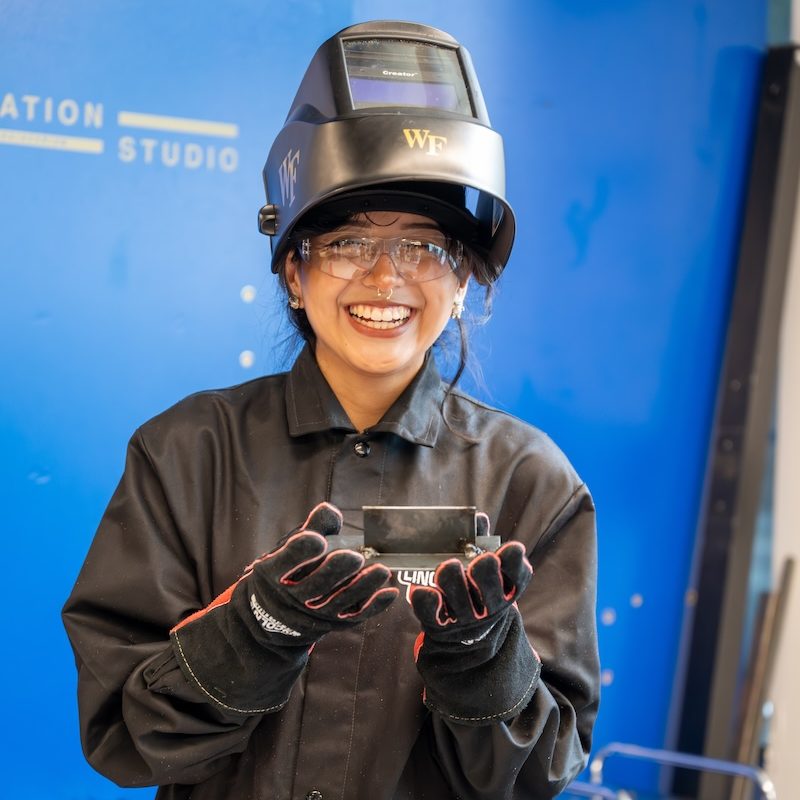
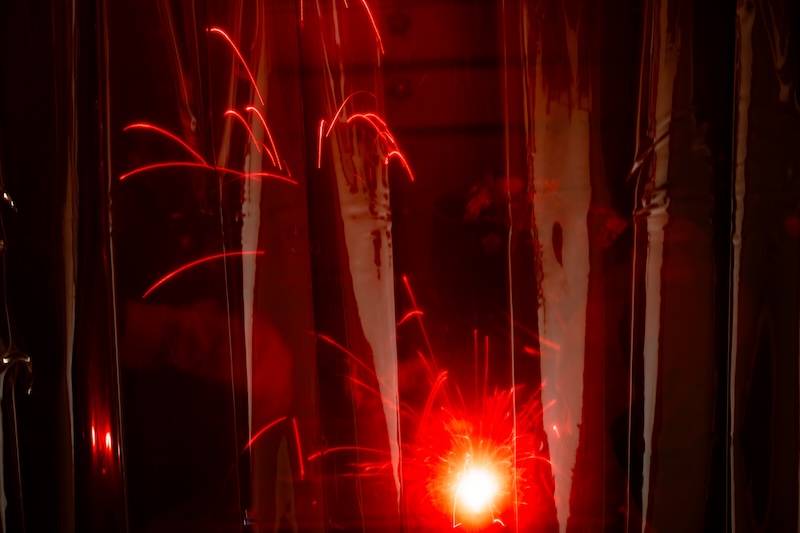
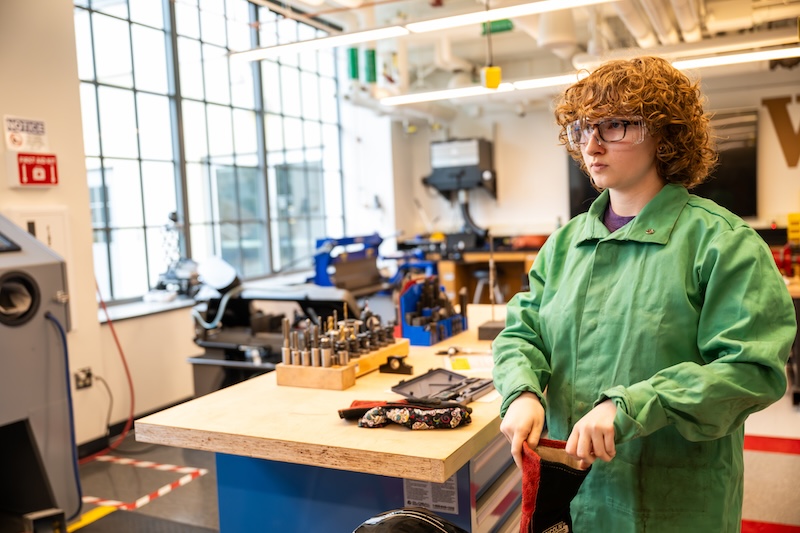
Rocio Saucedo, a junior majoring in studio art and politics and international affairs, holds up a freshly welded creation in the engineering department’s Innovation Studio at Wake Downtown. Alongside other students and a faculty member at Welding Wednesdays, she has suited up in a flame-resistant jacket, gloves and helmet. Sparks fly in the welding booth as they work on their creations. Several students are taking an art class creating linear sculptures — and now they can weld their works together. As the students push a puddle of molten metal along, they’re uniting the disciplines of engineering and art, which have more similarities than some may think: a good weld means the finished product is strong and beautiful.
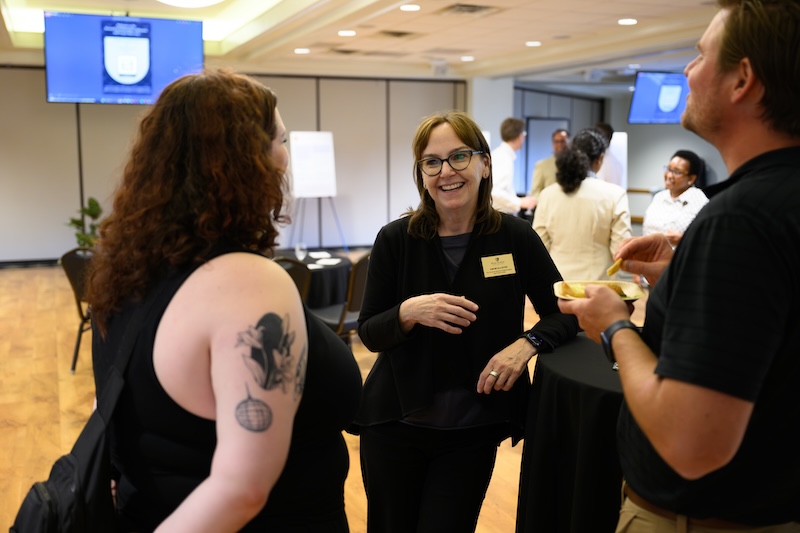
Faculty have many of their own traditions, including a new one started just last year by Kimberley McAllister, the University’s first Vice Provost for Research, Scholarly Inquiry and Creative Activity.
In fall 2024, she gathered faculty and staff to celebrate the University’s being awarded more than $18 million, a record amount of outside funding for research and scholarly activities. This year, she is hosting another celebration, adding a challenge: Seven research rockstars have been asked to share their teams’ projects in four minutes or less.
09/24/25 4:40pm
McAllister leads off by sharing that, in a challenging year in which researchers watched grant opportunities get delayed or disappear, Wake Forest still received $14.1 million. Although the amount dipped from last year, it was higher than two years ago, “and I think that really deserves a round of applause,” she says. “This community has been incredibly resilient and persistent in your attempts to do wonderful research and to navigate the changing world of research that we’ve been facing over this past year.”
Some phrases that stand out from the researchers’ short-and-snappy talks:
“This project was initiated by stressing out bacteria over several generations and forcing them to adapt to their environment in ways that an ancestral strain did not have to adapt to.”
—Rebecca Alexander (P ’22, ’25), Professor of Chemistry and Senior Associate Dean of Research and Community Engagement, introducing “Why does inactivating a bacterial gene help the organism?”
“We hope to understand whether or not females who are 50 or older with obesity may be able to prevent that development of knee osteoarthritis if physicians are able to also identify if they have low muscle power earlier on. Because ultimately we want folks to live not just longer, but to also live better.” And as she wraps up just under the wire, she adds: “Whew, as a pregnant person, that was really hard!”
-—Paige Rice, Assistant Professor of Health & Exercise Science, sharing “Muscle Power as a Predictor of Knee Osteoarthritis in At-Risk Females, NIH”
“The next time you see a pretty purple flower, think about more than just how pretty it is, how that is probably a plant trying to protect itself from climate stress. And identifying more … purple-
pigmented plants can help us protect our food supply.”
—Gloria Muday, Charles M. Allen Professor of Biology, explaining “Revealing the Dynamics of F-Actin in Tomato Pollen Tube And Its Response to Temperature and Ros Biology”
09/24/25 6:59pm
09/24/25 6:59pm
09/24/25 12:04pm
09/24/25 10:28am
09/24/25 2:39pm Wake Downtown
Up Next…

More stories like this one
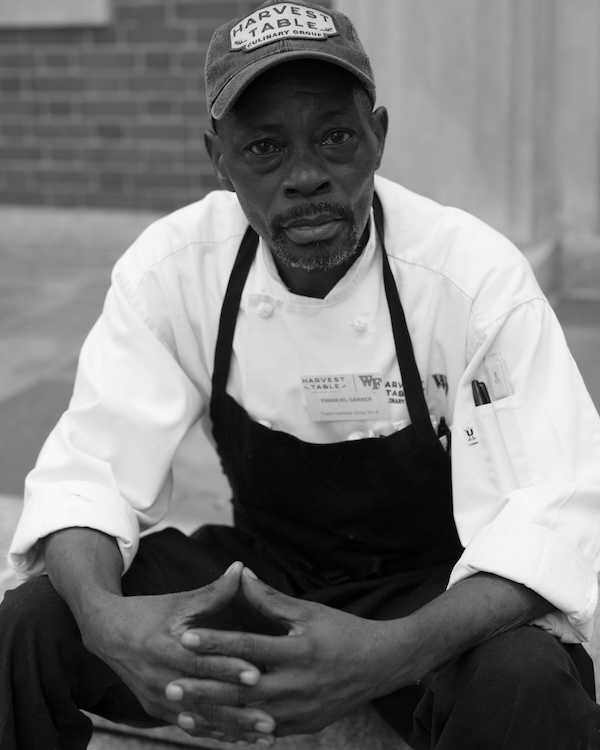
The Art of Seeing Anew: Kovi Konowiecki (’14)
Wake Forest Magazine invited five professional photographers who are alumni to return for 48 hours. They zoomed in on the Wake Forest they want you to see.
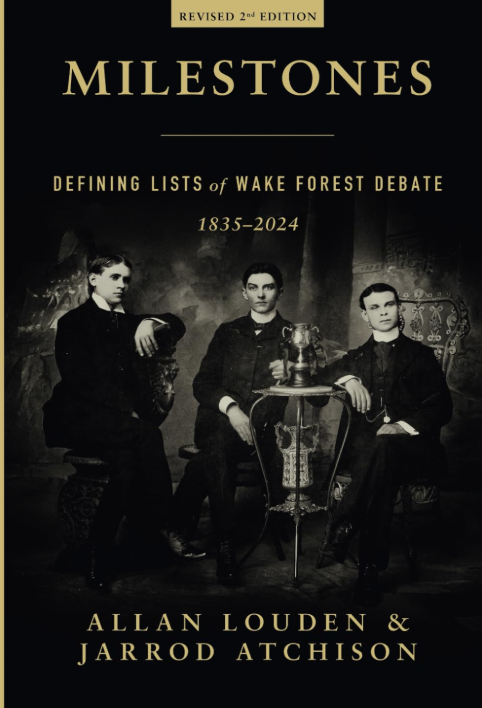
Golden Gavels
With an assist from Wake Forest students and faculty, a nearby retirement community has started a debate society that’s embracing research and divergent points of view.
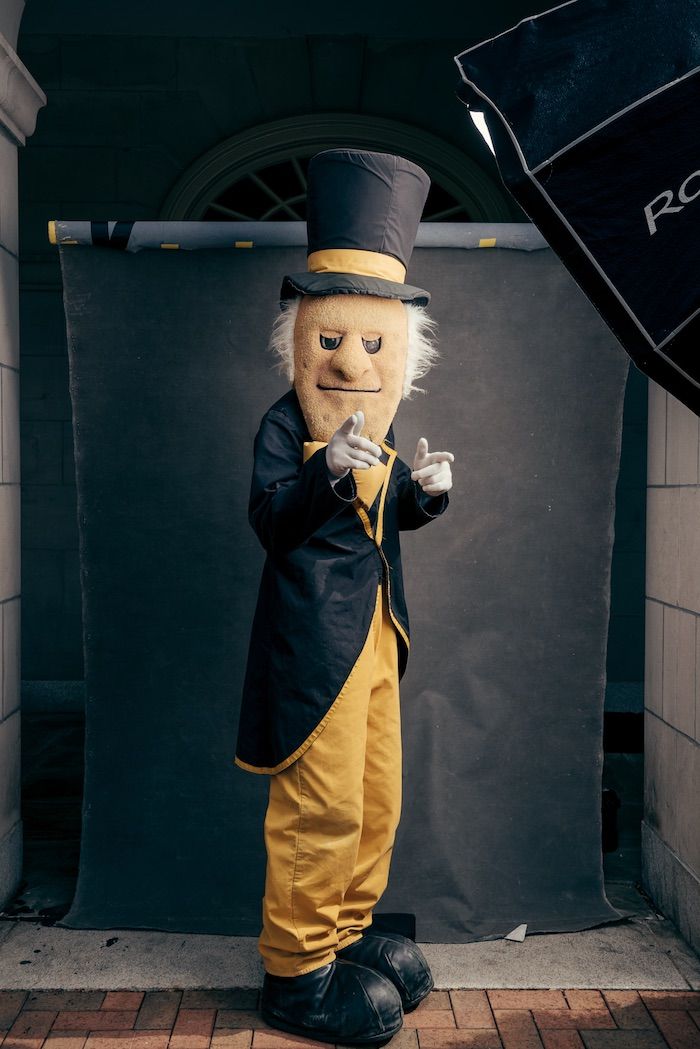
Life Into Art – Joe Martinez (’06)
Wake Forest Magazine invited six professional photographers, who are alumni, back to campus last spring for a challenge: RAISE THE CAMERA AND SHOW US YOUR VIEW OF WAKE FOREST.