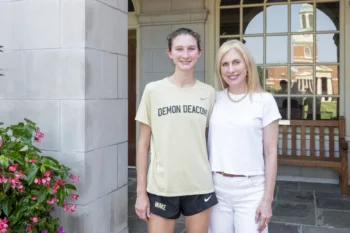
MILLIE, A WONDERFULLY PLAYFUL 9-month-old Goldendoodle, jumps into the lap of her mom, Allie Kleinman Lowe (’17), to insist on some attention before Lowe starts talking about the professor who inspired a special gift.
“Mary Dalton shaped my Wake Forest experience,” says Lowe. “She wasn’t just a professor. She was a mentor, a guide — someone who really saw her students and supported them.”
So, within just a few months of graduating, Lowe committed $100,000 to create the Mary M. Dalton Fund for Excellence in Communication, an endowed vehicle that will benefit the academic department that defined the donor’s education and the honoree’s work. Lowe is one of the youngest alumni to make a statement of this magnitude, which includes more than money: It will deliver perpetual honor to an exceptional teacher-scholar.
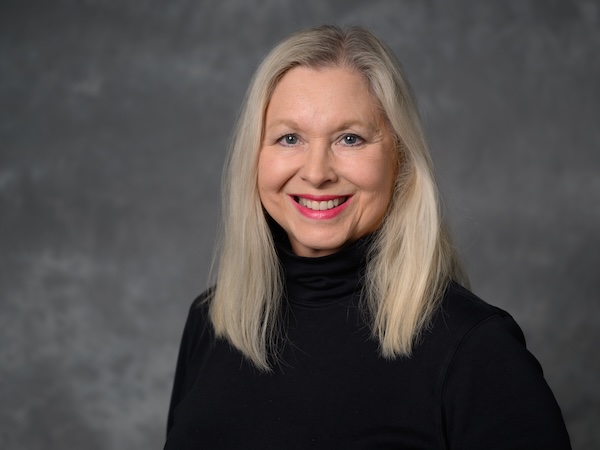
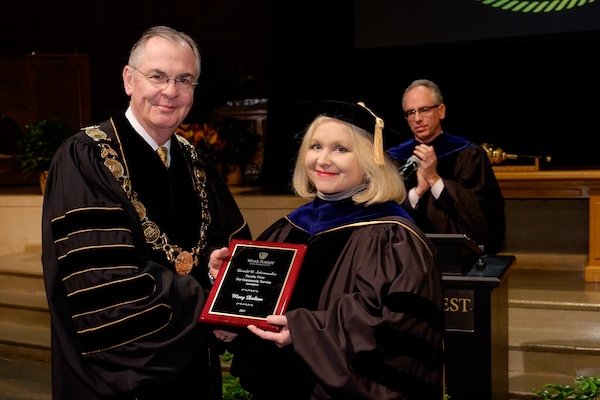
The gift continues the chain of what Provost Emeritus Ed Wilson (’43, P ’91, ’93) called “our greatest tradition,” the bonds of scholarship and mentorship between faculty and students. Dalton (’83) got hooked on communication studies in the classroom of Julian C. Burroughs (’51, P ’80, ’83), now deceased, a professor emeritus of speech communication who taught everything from public speaking to play production to radio and television from 1958-94.
She learned everything she could from Burroughs, who hired her as an adjunct instructor while she earned a master’s degree and doctorate at the University of North Carolina Greensboro. Dalton soon became a full-time faculty member and would attract the intellectual curiosity of her own generations of Wake Foresters.
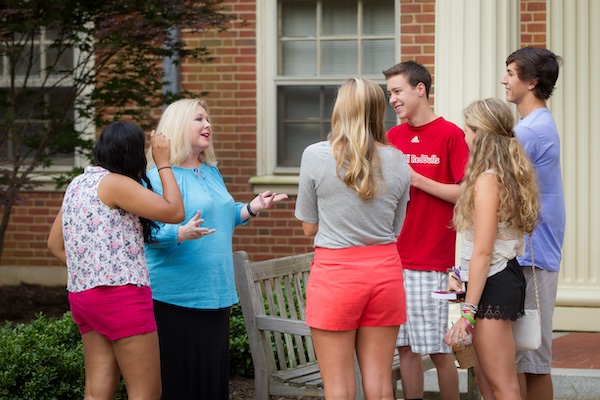
Lowe, who grew up in Greensboro, North Carolina, didn’t know what she wanted to study — until she found something called media studies in Carswell Hall.
“That would have never been on my radar if not for Mary Dalton,” Lowe says. “It was just starting out back then. But I could see how deeply she cared and how much thought she put into her teaching — in and out of the classroom.
“There is a warmth to Mary Dalton. I took as many classes as I could with her. Everything she taught, I wanted to take. I often found myself staying after class, eager to talk with her about all kinds of things.”
Dalton’s classes are heavy on student participation and other personal touches. For example, she requires students in COM 120 (Introduction to Critical and Creative Media) to write observations in notebooks and turn them in for periodic review. That way, they’re not spending every moment in front of a screen of some sort.
As for the subject matter — whether film or TV or written communication — Dalton believes the courses provide benefits beyond proficiency in trivia contests. They make you think and feel, not just absorb information. And she suspected that Lowe was a good fit for any assignment that required students to put their hearts into it.
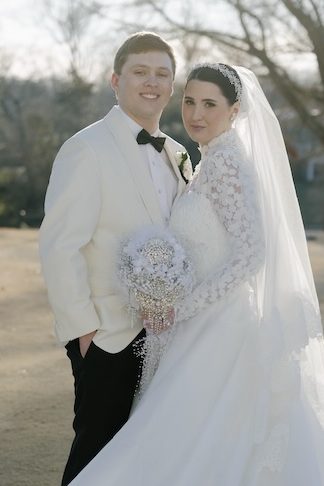
“She was quiet but determined,” Dalton says. “She was a dedicated student. Even more important to me, she is steadfast and kind. I value both of those qualities highly. Kindness most of all.”
Lowe says she reaps the benefits of Dalton’s interactive classes every day. Her communication major, in conjunction with minors in entrepreneurship and journalism, prepared her for a series of multi-faceted jobs in Greensboro-based family businesses in commercial and residential real estate development, hospitality and related fields. She has worked in business management, recruiting and human resources for Daly Seven, which builds, owns and manages more than 45 hotels in the Carolinas and Virginia. She now works for PARC Cos., which has a portfolio of commercial and multi-family development projects.
Lowe earned a master’s degree in hospitality from New York University and holds Professional in Human Resources (PHR) and Certified Hotel Administrator (CHA) certifications. The hard work is paying off, putting her in a place to consider expressing her appreciation in the form of an endowed gift. Lowe put no limits on how the department can use the funding to enhance its offerings and student experiences. But she did have one requirement: The name had to honor Dalton and not the donor.
“It goes back to my parents, who have done most of their donations anonymously,” Lowe says. “My faith has always guided me to give quietly and with purpose. My intention wasn’t recognition; it was gratitude.”
Lowe agreed to waive her anonymity in the hope that her gift will inspire others.
Departmental funds are vital to the health of a broad academic experience because students have a deeper pool of interests than previous generations. In 2003, half of Wake Forest’s graduates declared the requisite single major — and nothing else. In contrast, 85% of the Class of 2025 graduated with a second major or at least one minor. That means all departments have more students needing to take multiple courses.
And Dalton’s specialty has become Wake Forest’s most declared major in the past decade. “Communication is an incredibly versatile field because it connects to everything we do. It can be applied to any career or setting,” Lowe says.
These days, she works remotely from the Ann Arbor, Michigan, home she shares with her husband, Dr. Matthew Lowe, an oral and maxillofacial surgery resident at the University of Michigan. Theirs is a good life rooted in strong values, backed by higher education and enhanced by Millie and a 3-year-old Goldendoodle, Remy.
They don’t take it for granted.
“I chose an endowed fund because of the impact it could have not just for that time but for generations to come,” Lowe says. “I wanted my story to be woven into the ongoing Pro Humanitate narrative of Wake Forest — not just as an alum but as someone who contributes to its future.”
To learn more about endowed funds, please contact
This story originally appeared at giving.wfu.edu.