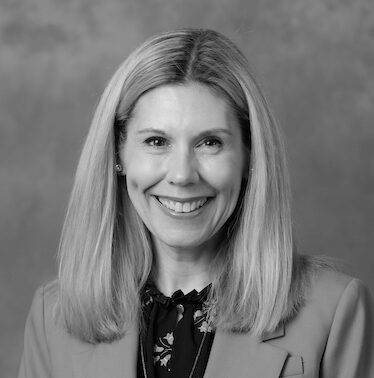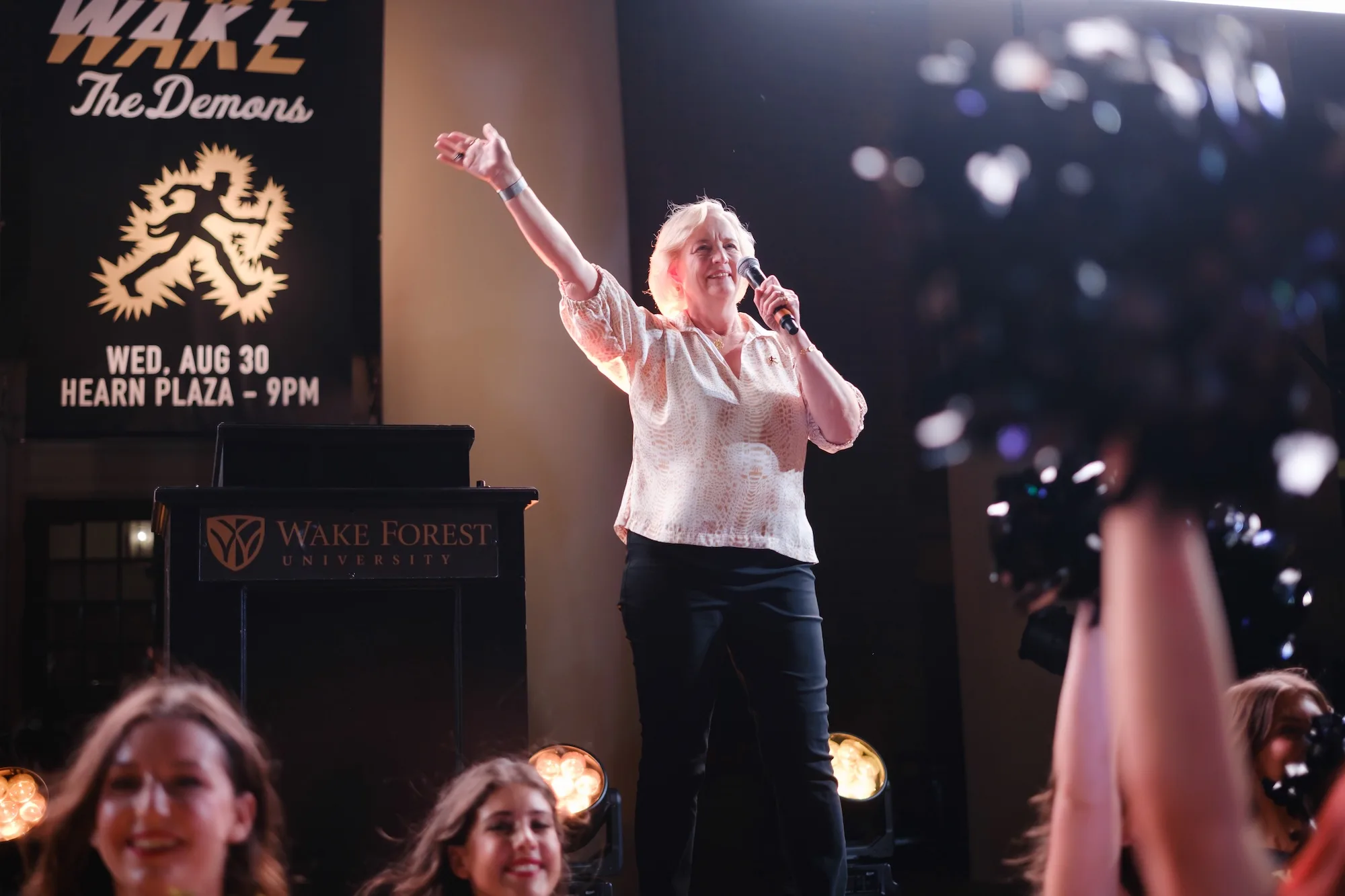
Throughout Susan R. Wente’s tenure as Wake Forest’s 14th president, she has kept the University’s focus on increasing access and opportunity for students with financial need.
It started with her inaugural address, when she rolled out the For Humanity scholarship initiative, raising more than $160 million for student financial aid. Next in her tenure, the University launched an “early action” pathway for first-generation students. And in September, Wente announced the North Carolina Gateway to Wake Forest, which waives tuition for North Carolina students whose families’ incomes are less than $200,000 a year — making it possible for nearby parents who thought the University was too expensive even to consider to send their children here.
For Wente, also Distinguished University Professor of Biology and Biochemistry, the mission is personal. A scholarship tipped her decision to enroll at a four-year university instead of community college. A caring faculty adviser steered her to work in a research lab. She went on to become an acclaimed scientist studying the pathways between the nucleus and cytoplasm of cells and is the author or co-author of more than 100 peer-reviewed research articles. And in 2021, she became Wake Forest’s first woman president.
Kelly Greene (’91), managing editor of Wake Forest Magazine, sat down in February with Wente, who finishes her presidency June 30, to hear more of her reflections on the importance of access to opportunity in her own life — as well as her hopes and dreams for what it could mean for future generations of Wake Forest students.
KG: Tell me about your own college experience and how it shaped your view on the importance of access and opportunity.
SW: I grew up in a small town, and being able to go to the University of Iowa was not necessarily something that was a given. My dad was an educator. He was the only one of 11 (children) to get a college education and did it on the GI Bill. And so (he was) a nontraditional college student. And my mom went to a hospitalist-based nurses’ training program. It was always that we were going to go to college, but there were many different paths that could be.
I was either going to go to the community college, or I was going to go to the University of Iowa. Those were really the only choices that I was considering when I ruled out that I wasn’t going to be a nurse. But getting a scholarship convinced my family that this would be obtainable. I never thought about private schools or private colleges. It just was not even on my radar as an option because of knowing that I would be paying for my education. So I had a scholarship to Iowa that opened that door. I then had Pell grants; I had loans. I worked multiple jobs the whole way through college.
And because it had become possible for me, I’m very passionate about ensuring that we at Wake Forest make it possible for students to see Wake Forest as an option, to see it as something that they can, no matter what their family’s financial background or their family’s educational background, see as an opportunity. I think that I would’ve had great opportunities no matter where I went, but that opportunity, the University of Iowa, really opened the door for me.
KG: What were some of your jobs during college?
SW: Oh, the first job I had was in dining. And so I would get up at 4 o’clock in the morning to chop iceberg lettuce. It was the largest garbage can you can imagine, on wheels, full of iceberg lettuce heads. And then there would be another garbage can lined with a clean bag and a chopper on top of it. So you take each head of lettuce in your hand, slam it down, take the core out, peel off the outside leaves, rinse them off, and then put them in the chopper and chop it. That went into the salad bars for the whole day. And then I would transition from that to doing toast at 7 a.m., where you were in front of this big toaster that went around like a carousel, and you loaded the bread in there, and then it would come out and you’d swab it with butter with a brush. (After that I would go to) 7:30 a.m. Physical Chemistry or 7:30 Organic Chemistry.
When I was in the second semester of my sophomore year, I met with undergraduate major advisers from many different science departments. When I was meeting with the undergraduate biochemistry adviser, he told me all about the biochemistry undergraduate major program, but then he also took time to ask me about myself and kind of saw me and asked me what I did. And I told him, “Oh, I have a job in dining.” I had some other activities I was involved in, too. But he looked at me, he goes, “We can get you a job in a lab.” And he got up out of his chair, went outside to the bulletin board, pulled off the little paper tab with a phone number on it, called that phone number and said, “Hey, Jeff, do you still have that part-time technician position open in your lab? OK, I’m sending somebody over for you to talk to.”
I quit my dining job, and I started working as a part-time research tech in the lipid core lab for a professor named Jeffrey Field. That was my first opportunity to work on a research project in a lab, and I got paid for it. It was great. So that was my sophomore spring and summer, and I continued doing that. Also, my junior and senior year, I was an RA. And so that got me free room and free board and was wonderful.
I grew up where there was a very strong work ethic. I worked at the A&W restaurant from ninth grade on, detasseled corn, walked soybeans, babysat, mowed lawns. There was nothing you didn’t do. It was both that very strong work ethic as well as serving others, with my mother being a nurse and my dad being an educator. It was all to benefit the community, too.
KG: You unveiled the For Humanity scholarship initiative in your inaugural speech. Why did you lead off your presidency with access and opportunity as a priority for Wake Forest?
SW: One, it’s my own personal passion. Two, in terms of my listening and learning about Wake Forest throughout that fall semester, and thinking about how Wake Forest could best position itself to continue competing for the very best students and offering them the very best opportunities, we needed to raise more scholarship funding.
It was something that I heard from listening to others — the passion to increase our representation across the socioeconomic landscape so that we were offering students from all different incomes the opportunity. From all my talks with alumni, from my talks with families, from my talks with students, from my talks with board members, there was such a tremendous enthusiasm for scholarship fundraising. And that’s been true at Wake Forest for many, many years. We attract students who have the talent, the potential, the drive to do good. And we know that the opportunity is not equitably distributed in access to higher education.
KG: You announced the North Carolina Gateway initiative in September. Why did you consider it important to focus on North Carolina students specifically?
SW: We’ve been talking about a program like this for several years. I’m a scientist, so we’ve done a lot of data collection analysis, kind of testing the model in regards to what’s referred to as an income-guarantee program. We knew other institutions had launched these. We looked at those models to see what impact that had had.
Focusing on North Carolina, it is our home. … I think we have this responsibility to our hometown, our home state, first. Because North Carolina’s been so important to Wake Forest, it was very logical to start it here and ensure that it is successful. … It’s my sincere hope that we continue to raise scholarship fundraising dollars, and we’d be able to offer (this program) to students from any part of the country.
KG: What has the response been like so far?
SW: If I were to choose three words, it’s really amazing. It’s also very humbling and moving. There are just these really highly talented students with remarkable potential who never would have applied to Wake Forest, who had crossed Wake Forest off the list because the perception was that, from the sticker price, they would not be able to find a path here. And so with the transparency, with the income guarantee, they know immediately what type of aid and what type of scholarship they’re going to get.
The application numbers have been through the roof, but it’s more the stories that you read in their applications. (Vice President for Enrollment) Eric Maguire shared with me 28 pages of different excerpts from applications where students talked about how learning about the North Carolina Gateway played that key role in terms of having them think about Wake Forest further and then apply.
Applications from North Carolina have increased over 80% over last year. We are incrementally growing enrollment with a strategic plan for thoughtfully expanding, so both of those things are combined.
KG: Were there any stories in the applications from future biochemists that struck you?
SW: I didn’t see any in the sciences specifically, but I have met multiple students over the last several years who have said they learned that the president was a woman scientist, and that encouraged them, and I have had parents tell me that they encouraged their daughters to apply.
KG: How do you see need-based scholarships making a difference to the University as a whole?
SW: They’re contributing to all the voices on campus, their diversity of perspectives, making the classroom conversations even more meaningful and more vibrant, and really pushing us to think differently about so many aspects of everything that we do.
Outstanding students from any background are what we’re seeking to bring to our campus. And I’ve long said, “You make the best discoveries, you are in the best learning environment, when all those who are gathered around the table are from a variety of different experiences.”
By having that body of learners, you’re going to be even more creative. And there’s lots of research that shows teams that are made up of people from very different lived experiences are more creative teams. So one, we’re putting those more creative teams in our classrooms and in our residence halls and across everything we do. But also, the faculty get to interact with those students and engage them in research and scholarship and creative expression. And that results in this ecosystem of creativity and innovation that would not be the same if everyone was from the same lived experience and the same background.
KG: How does the need for access and opportunity tie into your focus on expanding research at Wake Forest?
SW: The faculty want a classroom that is vibrant and engaged in many different ways. They’re energized by that. Also, our students are partners with our faculty in the research and scholarship work. Some of the very best discoveries I’ve ever made were (from work) done by students in my research lab. …
And so as we expand the talent pool from which we are recruiting our students, we are going to be really expanding that opportunity to do the best scholarship and the best research. The two are intricately connected.
KG: Tell us about the other unique parts of Wake Forest that you have come to love. I’m told you’ve been a huge fan of the debate team.
SW: I do love the debate team. I think that participation in debate specifically, when you think about it, helps students continue to build so many skills that are fundamental to leading their future lives where they’re going to be collaborating (and doing) critical thinking. (It provides) civic preparation. And we have an amazing debate program here. We’ve had the winningest team in school history during my time here as president. It’s also not a secret that I was a high school debater, and it shaped so very much of who I was able to become. That was integral to my making that leap to college.
But I want to be sure that I also say that I love all our teams. I do think Wake Forest is very team oriented, whether that’s in athletics or in academics, or even in philanthropy in terms of how we tackle so many challenges as a team, because we’re focused on the greater good and the success of the greater good. And I think of Hit the Bricks and the teams that are organized around that. One of my favorite qualities of this community is bringing people together to really be catalysts for good.
KG: Turning to your immediate future, what are you looking forward to in the next year?
SW: I am really looking forward to taking a sabbatical. I plan to do some travel with family, but I also want to find time to really engage on topics that I haven’t had as much time to dive into. For example, how to build trust in science and research. What are new partnerships that could be engaged in to ensure a new generation of discovery happens? I’m not going to go back and restart my research lab, which I had transitioned when I moved here to Wake Forest, because I sincerely believe that we should be expending our resources on the next generation, so our assistant professors. But I’m looking forward in that sabbatical time to really thinking about how to really help the next generation of scholars and really think about the current context of trust in science and society.
I’m also very, very committed to helping, as needed, the University leadership transition, wanting to ensure that is as smooth as possible and that our momentum continues. That’s been a high priority for me currently, but then also as I think about that road ahead, and then ultimately returning as a faculty member focused on mentoring, on leadership development and continuing my life’s passion, which has been to create environments where others can thrive and discover their passions. And so I’ll be focused on how I can continue to play a role in doing that.
KG: What is your hope for future generations of Wake Forest students?
SW: I really hope that every generation of Wake Forest student takes what they learn here and uses it to not only pursue their individual passions, but to live a life of purpose-driven excellence. And that is always underlined by Pro Humanitate — that we graduate leaders with care for integrity and courage.
— The interview was edited for clarity and brevity.
More stories like this one
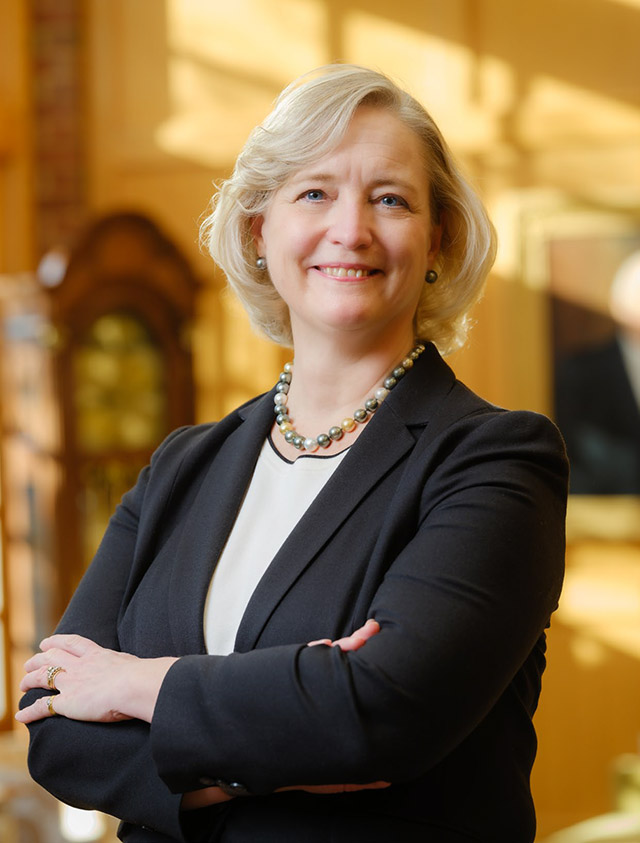
Susan R. Wente
Wake Forest’s new president has embraced serendipity in science and in life.
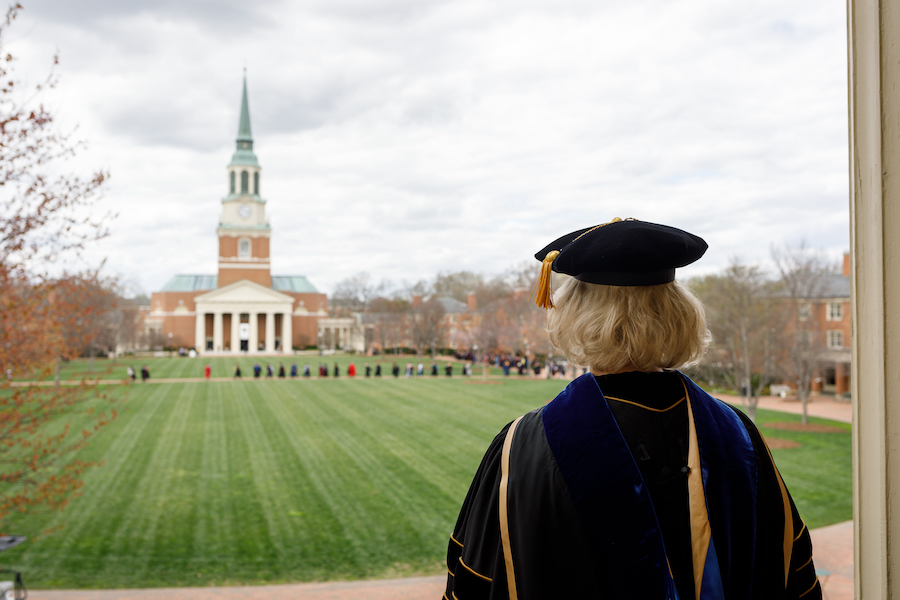
Highlights from Inauguration Week
From a Day of Service on Wednesday to the Inauguration Worship Service on Sunday, inaugural events fostered a communal spirit that defines Wake Forest.
Entrusted to Lead
Dr. Susan R. Wente is installed as Wake Forest’s 14th president, sharing her transformative journey and charting a historic course for the University.