We drove up the western coast from Galway, my sons Dylan and Roan and I, to arrive in the maze of wind-blown, winding streets that comprise Sligo, Ireland. It was 4 p.m., when darkness descends in late November, and we had no time to lose. We continued on into the gloaming, growing quiet, watchful as the flatiron silhouette of Benbulben rose before us in the distance, and just beyond it, a flash of the sea.
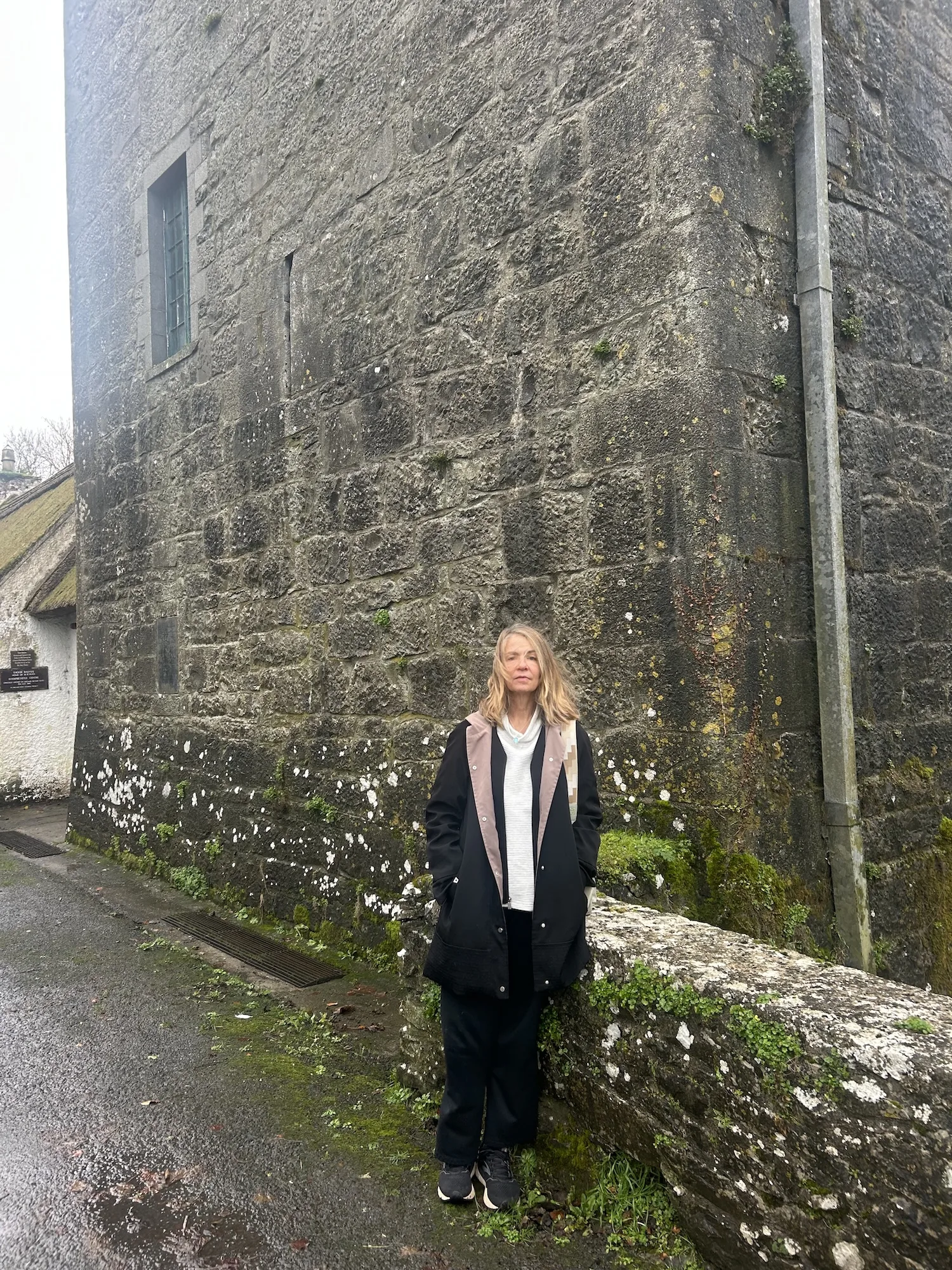
Then suddenly, a sign, an exclamation from Roan, and we were there — the graveyard of St. Columba’s Church, the burial site of the Irish poet W.B. Yeats.
It had taken me 40 years to arrive.
In the rural North Carolina county where I grew up, my English courses heavily favored the classics of American and British literature, with only a smattering of poetry: “Beowulf,” a bit of Shakespeare, a few verses of Dickinson and Frost. My single foray into writing poetry itself occurred at age 9 when, deeply moved by an “ABC Afterschool Special,” I wrote a four-line poem that I promptly hid in my mother’s ornamental teapot — so overwhelmed was I by this “spontaneous overflow of powerful feelings,” as Wordsworth defined poetry. When I entered Wake Forest years later, haunted by and in love with words, I became a member of an increasingly vanishing species: an English major.
I signed up for then-Provost Ed Wilson’s (’43, P ’91, ’93) course on the poetry of W. B. Yeats my junior year, and I still remember the moment when Wilson first walked into the room. A hush descended over the class as he moved to the podium. He had a presence both commanding and suffused with what I can only describe as a pure and quiet delight that he seemed to take in us. When he began to read the words of Yeats aloud, the only other sound to be heard was a bird trilling outside the windows of that classroom in Tribble Hall. I was stilled. I believe we all were.
I became so enthralled by the poetry of Yeats’s painfully unrequited love for Maude Gonne, an Irish Republican revolutionary, that I snuck my long-distance boyfriend into class one day so he could also “partake”; Provost Wilson looked to the back row where I had tried unsuccessfully to hide him and gave me only a single raised eyebrow and a slightly bemused, yet I believe understanding, smile. I remember, too, his sharing with us how, as a student himself, his own Yeats professor had thrown a young man out of class in a rage when he had made a disparaging comment about Maude Gonne’s beauty — and I had the sense Provost Wilson sympathized with the professor, not the student.
Then came the afternoon a classmate arrived to share the news that the spaceship Challenger had exploded. Provost Wilson had recently read to us Yeats’s remembrance of his dear friend Robert Gregory, a fighter pilot who crashed during World War I, in the poem “An Irish Airman Foresees His Death.” The poem, and Wilson’s reading of it, offered both beauty and solace, a pathway to a depth of meaning.
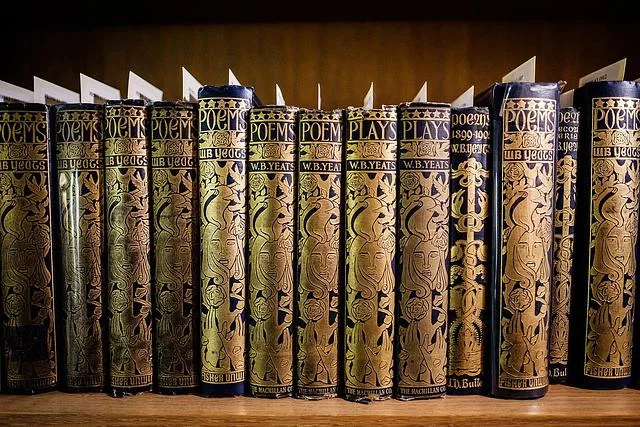
Ed Wilson transmuted the visions and mythology and histories of a man from County Sligo into a touchstone in my own life’s journey that continued beyond college. After I graduated and moved to New York City, I bought a thick collection of Yeats’s poems — the word “tome” comes to mind — which I took refuge in during that often turbulent chapter of my young adulthood.
Later, after I followed my longing for the beauty of creation to western North Carolina, I would sit on my front porch in the evenings, reading aloud to the mountains from my increasingly dog-eared Yeats poetry collection. Later still, I read his Irish lullabies over my sleeping sons and to soothe myself to sleep — and “The Lake Isle of Innisfree” to wake myself up, when life turned gray and complacent. In 2020, the year my elder son Dylan began his first year of college, I wanted to give him something of immense value, of wisdom, as he began his own life’s journey as a young man. My Yeats collection, now more than 30 years old and my most prized possession, was my gift.
Forty years after my introduction to Wilson and Yeats — 40 years after I made a vow that one day, I would visit Yeats’s grave — I stood at the foot of it, in the fading light. The epitaph on his grave marker read “Cast a cold Eye / On Life, on Death. / Horseman, pass by!” And I heard Wilson’s voice as it was those many years ago, filled with clarity and wonder and, yes, delight. I wasn’t able to attend his memorial service in May 2024. But now by the grave I listened, and remembered his teaching, his presence and the legacy that had brought me thousands of miles to the quiet and stillness of this place to honor a poet whose life has filled my own with immeasurable richness, meaning and joy.
As Yeats wrote: “What other could so well have counselled us … and all he did done perfectly.”
Karen Richardson Dunn (’86, MDIV ’11) has worked for Wake Forest’s Food, Health and Ecological Wellbeing program and as a wellbeing counselor and meditation teacher in the Office of Wellbeing. She lives in Winston-Salem, but her heart remains in Ireland.
More stories like this one
Excerpts from Ed Wilson’s Speeches
‘The Heritage of Wake Forest.’
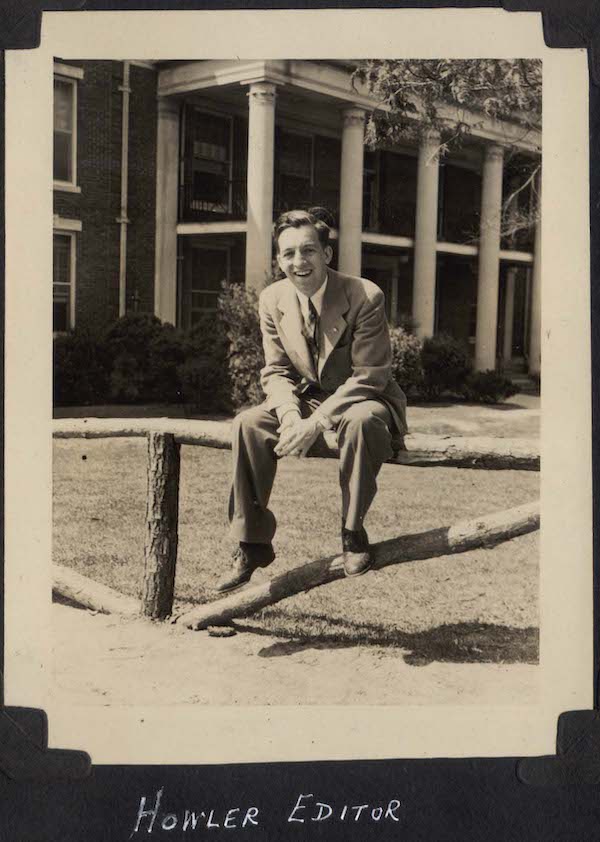
Ode to Edwin Graves Wilson: 1923-2024
For nearly a century, he elevated hearts and minds at Wake Forest and leaves a legacy of goodwill toward all.
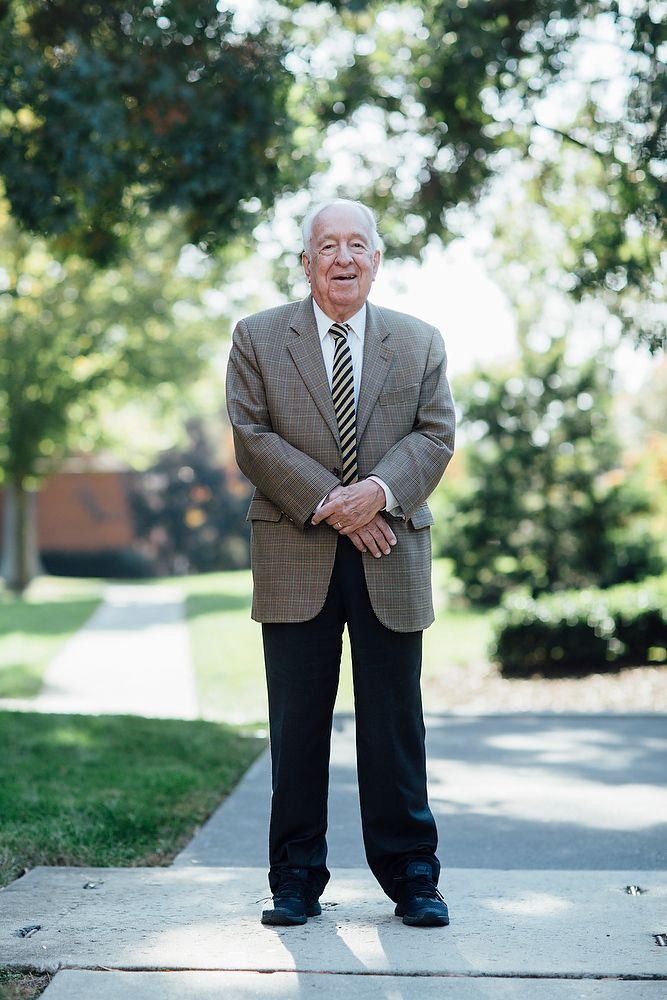
10 Things You Might Not Know About Ed Wilson
What happened when we asked Dr. Edwin Graves Wilson (’43) questions about himself? He answered every one. Graciously and delightfully, of course.