The day Wake Forest felt real for me came a few weeks after I was accepted, when I noticed an unassuming white envelope on the kitchen island. My hands shook as I opened the financial aid offer. I did the math, and a wave of relief washed over me. My door to Wake Forest had opened.
Generations of deserving high school students have had versions of that moment — when scholarships unlocked the opportunities that come with a Wake Forest education. Sometimes, their scholarships help them contribute even before they graduate.
I met five scholarship students this spring whose passions and experiences run the gamut. But they share a sense of gratitude for the gift of time: With financial burdens relieved, they can explore future professions, afford graduate school or give back. The MVPs below have invested their time in nonprofit work, volunteering with cancer patients and deepening relationships — all before leaving Wake Forest. Click on the cards below to learn more about each student.
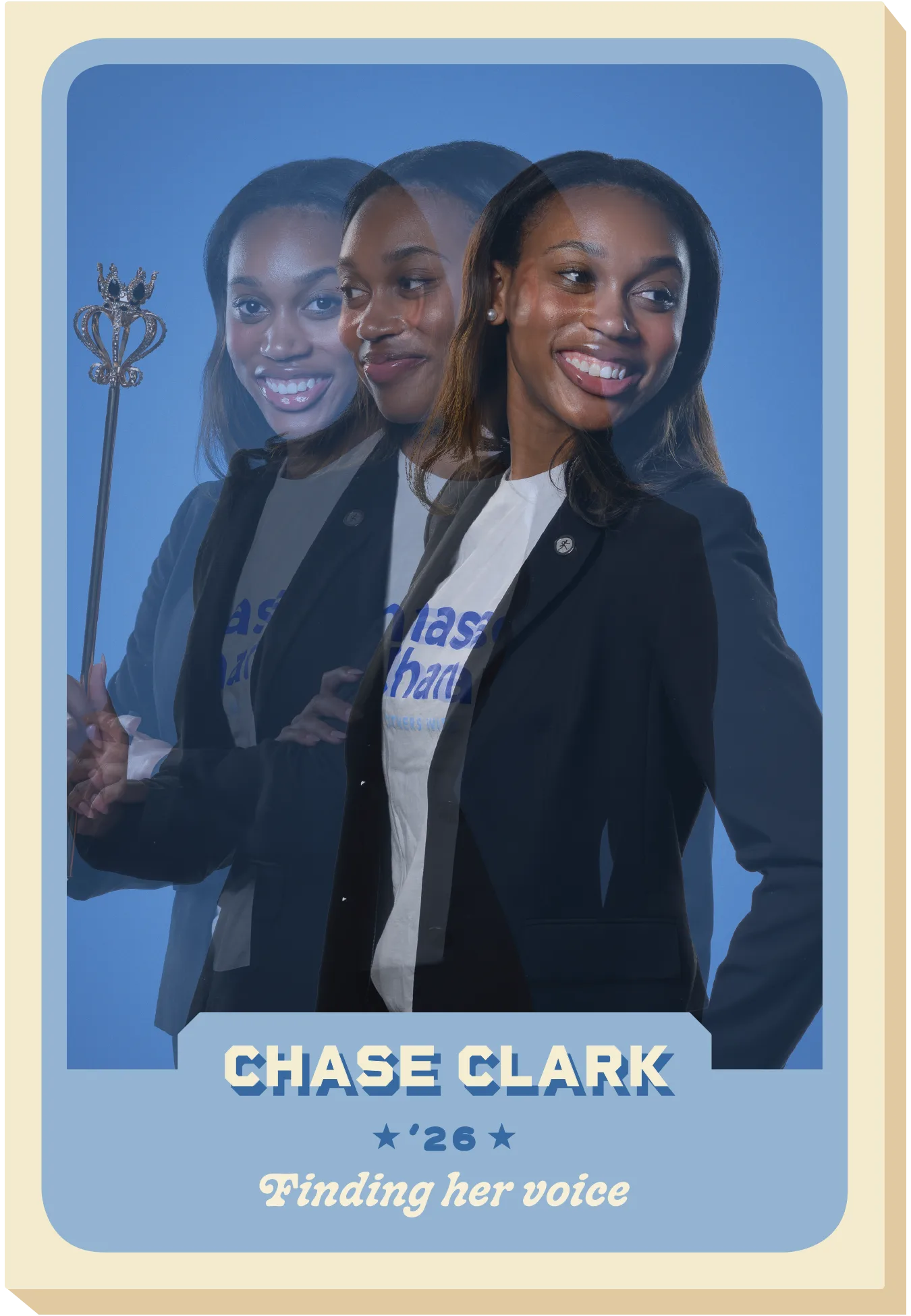
Chase Clark (’26)
HOMETOWN: Colfax, North Carolina
MAJORS: African American Studies and Communication
BEFORE WAKE: A second-grade project about “the mouth” made her realize that many children lack basic necessities, like toothbrushes. So she started Chase’s Chance, a nonprofit that helps young people.
SCHOLARSHIPS INCLUDE: Porter B. Byrum and Zachary T. Smith Leadership scholarships
BECAUSE OF THE SCHOLARSHIPS: She graduated from college debt-free.
ON CAMPUS: President of Black Student Alliance | President’s Aide | Tour Guide | Residence Adviser | Homecoming Queen | Studied in London and Greece | Host, “chase@wake” podcast
HIGHLIGHT: Clark had no idea how many students she had reached through her “chase@wake” podcast until several Black first-year women stopped her at an orientation event last fall. One told her: “I just wanted to say thank you, because I don’t think I would have looked at Wake (without the podcast).”
WHAT’S NEXT: A summer internship with Tiffany & Co. She also wants to revamp her podcast, continue her nonprofit work and apply to graduate school in hopes of becoming a professor.
“From the questioning first-year student walking across the Quad, unsure of herself and her place at this University, to the woman standing before you today, I have found my voice, and I have used it to create a space that I now hold dear.”
Chase Clark’s winning Senior Colloquium oration, an adaptation of Maya Angelou’s (L.H.D. ’77) “I Know Why The Caged Bird Sings”
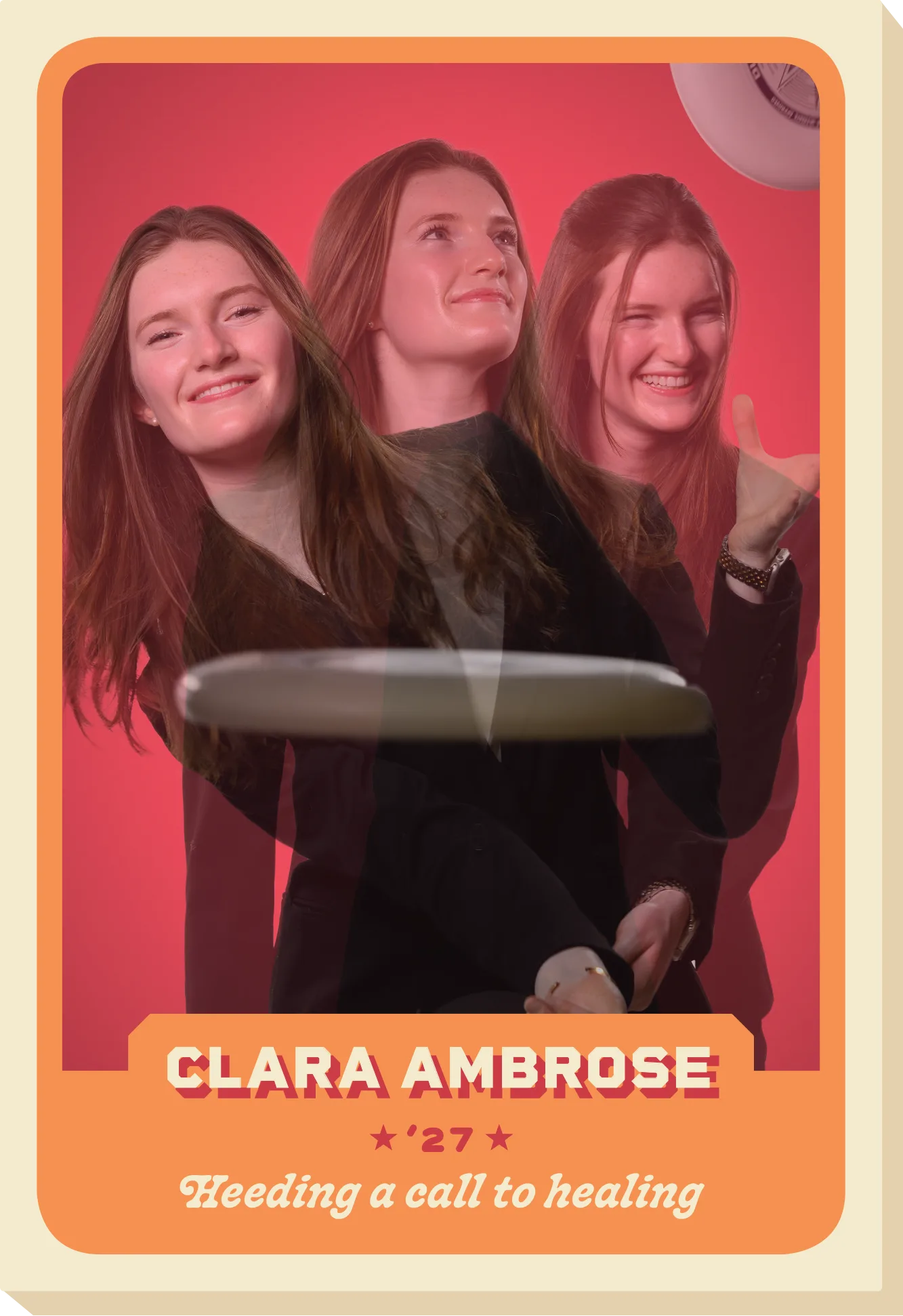
Clara Ambrose (’27)
HOMETOWN: Nashville, Tennessee
MAJOR: Interdisciplinary Studies in Medical Humanities and Bioethics; minor in Chemistry
BEFORE WAKE: At age 10, Ambrose accompanied her father, a minister, to perform last rites for a woman on her deathbed. It helped spark her interest in a healthcare career. “There’s just something powerful about being in a place where someone is suffering,” she says. “I just felt called to be in those spaces again and just try and care for people.”
SCHOLARSHIPS INCLUDE: Porter B. Byrum Scholarship
BECAUSE OF THE SCHOLARSHIPS: She can apply to medical school with less stress about how to pay for it.
ON CAMPUS: Philanthropy chair for American Cancer Society’s CARES program at Atrium Health Wake Forest Baptist | President of Women’s Club Ultimate Frisbee | Leads “Dining Dilemmas” campus discussions about bioethics | Studied at the Flow House in Vienna | Researching Christian institutions’ belief statements on divisive health issues
HIGHLIGHT: Through her work with the CARES program, Ambrose finds rides and meals for cancer patients. Sometimes, she accompanies them to medical appointments to help ask questions and take notes. That means she’s with them when they get both good and bad news.
WHAT’S NEXT: Someday, she wants to open her own practice with discounts for needy patients.
“From a young age I thought a lot about morality… and also about healing and the different forms that healing can take.”
Clara Ambrose on being a pastor’s daughter, something that connects her to Porter Byrum (JD ’42), her benefactor, who attended Wake Forest tuition-free as the son of a Baptist preacher
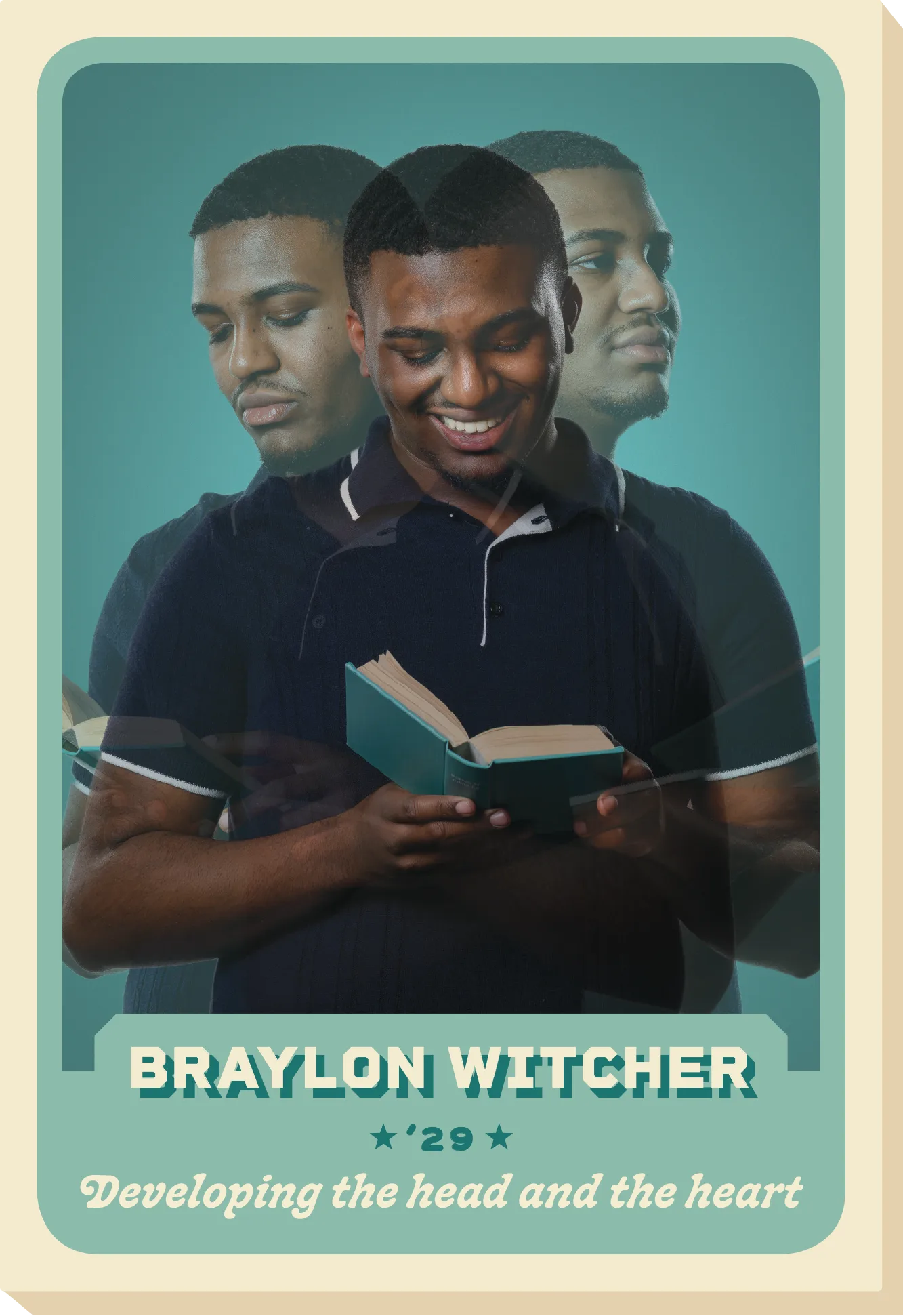
Braylon Witcher (’29)
HOMETOWN: Columbia, South Carolina
MAJOR (INTENDED): Biochemistry and Molecular Biology; minors (intended) in Creative Writing or African American Studies
BEFORE WAKE: Started watching YouTube videos to learn biology in fifth grade.
SCHOLARSHIPS INCLUDE: The 1834 Scholars Program
BECAUSE OF SCHOLARSHIPS: He could attend a school that lets him take the humanities classes he considers key to developing “critical thinking and empathy” alongside pre-med requirements.
ON CAMPUS: He writes short stories and poetry on the Z. Smith Reynolds Library’s eighth floor. Recent works include a short horror story inspired by the “Desperate Housewives” television series.
HIGHLIGHT: Writing 111. Teaching Professor Elisabeth Whitehead says she was struck by “Braylon’s flexibility and confidence as a writer. He approaches his writing as an exploration, giving his work great depth and nuance.”
WHAT’S NEXT: Shadowing doctors and researching with professors.
“I don’t want my impact in the world to just be like: I lived, I did the job, and then I died,” he says. “I want to have an effect on people’s lives, help others and do good to the world.”
Braylon Witcher on what keeps him working toward a healthcare career
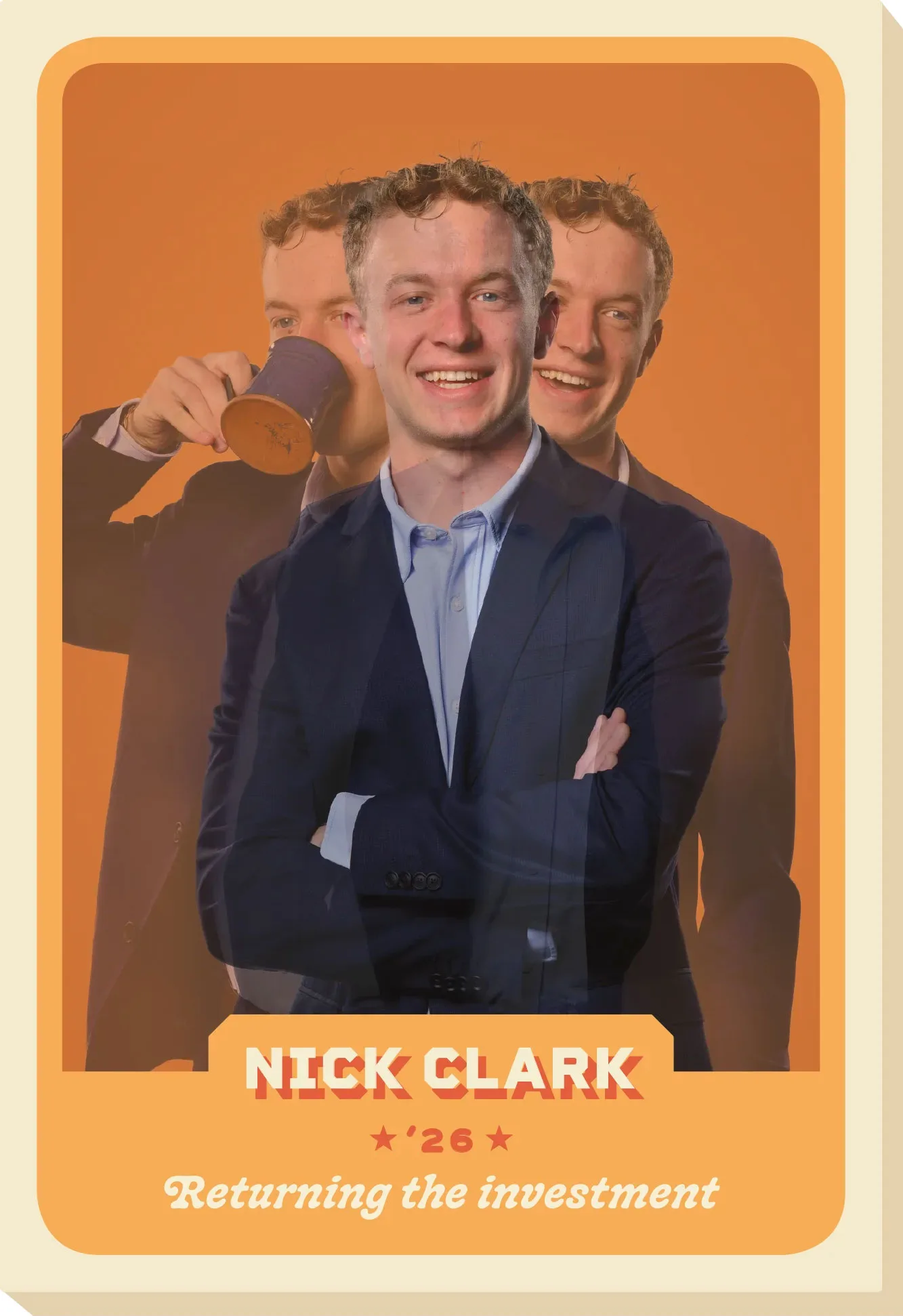
Nick Clark (’26)
HOMETOWN: Gibsonville, North Carolina
MAJOR: Finance; minor in Entrepreneurship
BEFORE WAKE: Clark grew up going to almost every home football game with his family: dad William Clark (’96, MAEd ’97), a Demon Deacons tight end; mom Holly Litten Clark (’97), a cheerleader; sister Emily Clark (’24) and younger brother Nathan.
SCHOLARSHIPS INCLUDE: Horton Family and Poteat scholarships
BECAUSE OF THE SCHOLARSHIPS: He spent a summer studying in Salamanca, Spain, and two weeks hiking the Camino de Santiago with an entrepreneurship course.
ON CAMPUS: At football games, he and his buddies developed a ritual of showing up early to cheer from the front row, often painting their chests gold and black. He regularly invited friends, mentors and younger students to coffee and lunch — something he says he had time to do since he didn’t have to cram a job into his day.
HIGHLIGHT: A weekly coffee group of mostly retired faculty and staff, hosted by Bob Baker (P ’00), a former senior associate vice president of University development. Clark soaked up their wisdom and stories of Wake Forest from decades ago.
WHAT’S NEXT: Working in Philadelphia for LLR Partners, the private equity firm he interned with last summer
“I’ve been able to be a part of really cool things on campus and off campus because people gave in order for me to be able to come,” he says. “My goal in life is not just to become the most wealthy ‘finance person’ I can possibly become, but also to use whatever gifts — if they end up being in finance or not — for the good of the world.”
Nick Clark’s take on Pro Humanitate in his career
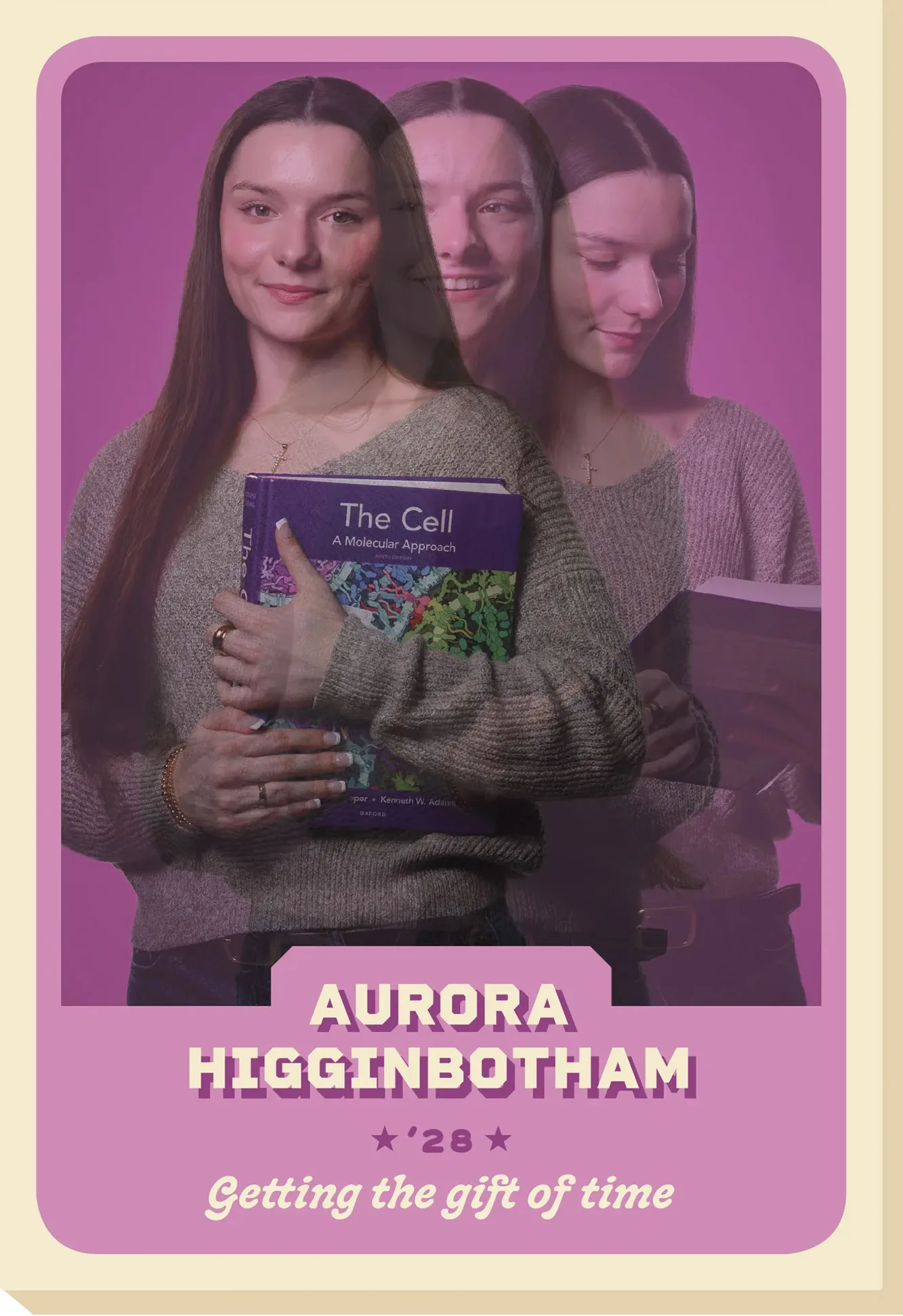
Aurora Higginbotham (’28)
HOMETOWN: Wilkesboro, North Carolina
MAJOR: Health and Exercise Science; minors in Biology, Chemistry and Psychology
SCHOLARSHIPS INCLUDE: Roena B. and Petro Kulynych, Albert and Elizabeth Butler and Vannoy Construction scholarships
BECAUSE OF THE SCHOLARSHIPS: Higginbotham worked for two years to save up for college and remembers the feeling of instant relief that she wouldn’t have to work in college to make ends meet.
ON CAMPUS: Alpha Phi Omega service fraternity. She has volunteered at the Habitat for Humanity Restore, built beds for local children, donated blood and more. She is also a CNA in a local nursing home.
HIGHLIGHT: When she sees patients’ faces light up when she walks in the room, it inspires her to keep working toward becoming a physician associate. “I just really want to be someone that people can rely on,” she says.
WHAT’S NEXT: Studying at Casa Artom in Venice this fall
“The scholarships that I’ve received are why I’m here and why I feel like I’m doing so well. …. (Without them) I think I would’ve straight gone to class, done my homework, gone to work, gone to sleep, woken up, gone to class.”
Aurora Higginbotham on how scholarships afforded her time
More Stories

Charting the course
How alumni are leading though turbulent times in their industries.
Fit? Check.
President Peter Rodriguez has landed at a university that is “congruent” with his background and his values.
Shining a light on Wake Women
Wake Forest is not a single story. It is the sum of every individual experience of those who have passed through this institution.