This story is part of Living Proof, a series of profiles of alumni who got to Wake Forest on scholarships and are now giving back in their professions and communities.
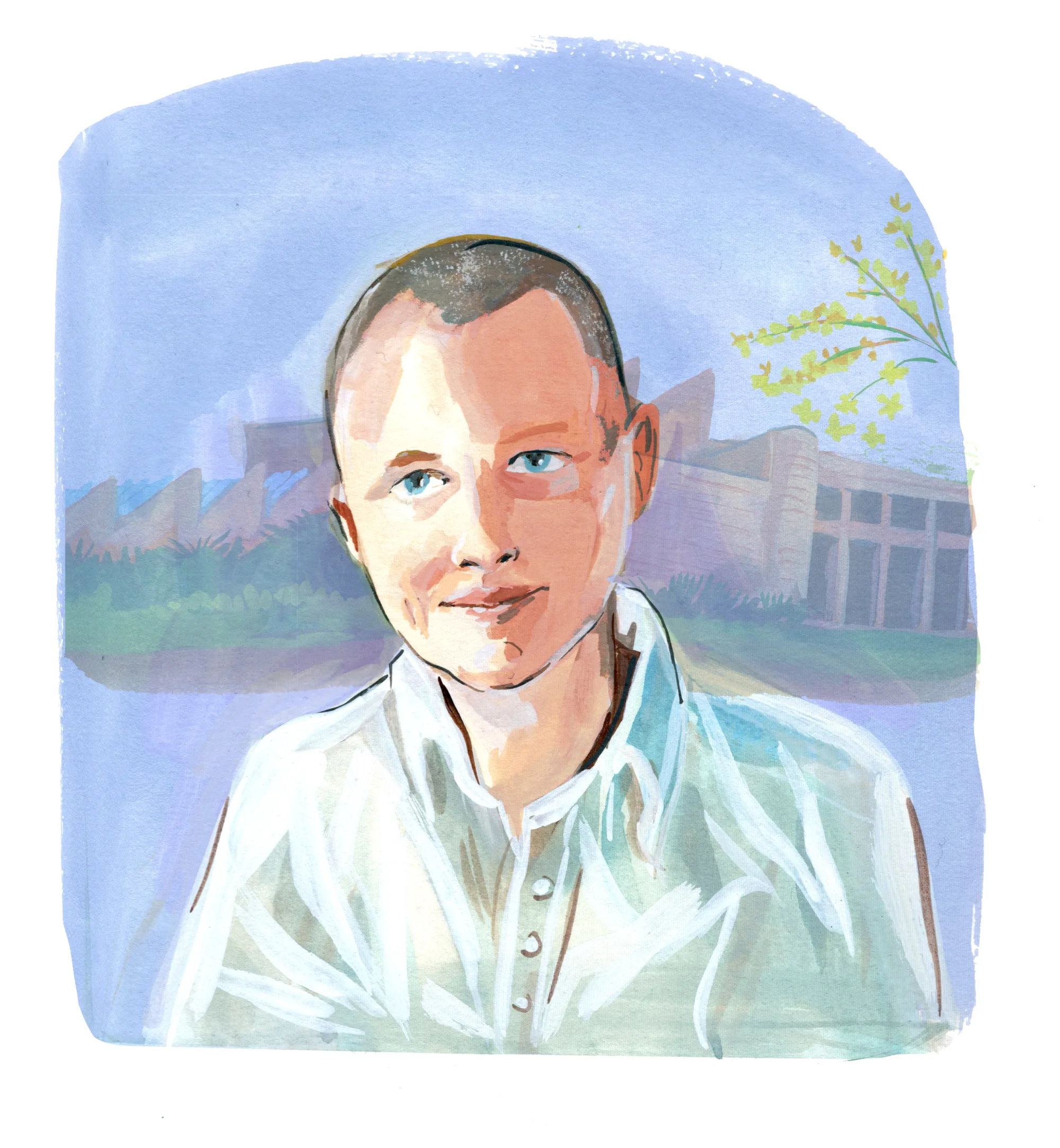
Growing up in Asheboro, North Carolina, Robert Cox (’09) says that Wake Forest “was always in my life.” His father, Ricky Cox (’76, P ’06, ’09, ’11), a first-generation student who grew up on a farm, came here, and Robert’s older brother, Richard Cox Jr. (’06), was already an undergraduate.
Even though Robert Cox loved Wake Forest, he had known “from a really young age that I wanted to do architecture.” (Wake Forest offered architecture courses, but no major.) Cox was so committed to the field that he had taken AP Art History as an independent study in his high school, reading the textbook on his own and meeting with his teacher once a week. So, Cox applied to Wake Forest, because he loved it, but also to schools where he could major in architecture.
The day his Wake Forest acceptance came, Cox remembers sitting in his family’s den, on the family computer, and getting a surprise: He had been chosen to receive the Robert P. Holding Scholarship, which is offered each year to one student from North Carolina showing strong academic talent and exceptional leadership — and would cover his tuition. “That made the decision for me,” he says. “It was an incredible opportunity.”
He also remembers the email from then-Dean of Admissions Martha Blevins Allman (’86, MBA ’92, P ’15, ’19) “just saying, ‘Please come.’ It was just a nice, simple, welcoming gesture, just a lovely email. And it made me feel really good about this already easy decision.”
Cox says he doesn’t have “the typical full-ride scholarship story.” His dad was a lawyer, and in Asheboro, they were comfortable. Still, “take that same income and plop it down somewhere else, and it would have been a very different story.” Plus, the scholarship meant he could follow his heart to Wake Forest — and still afford graduate school in architecture afterward.
“My parents were definitely ecstatic, and I was, too,” he says.
Cox threw himself into art history as his major, with studio art as his minor, quickly figuring out how to get to Casa Artom in Venice by the second half of his sophomore year and making a “business of art” trip to New York City, where he relished being there “as a grownup” and getting “to see behind all these doors of the art world,” he says.
Harold W. Tribble Professor Emerita of Art Margaret “Peggy” Supplee Smith (P ’86) remembers Cox well, starting with his first semester as the lone first-year in her modern architecture class. As she shared in his recommendation letter for graduate school: “He sat in the front row, raised his hand to answer questions at the drop of a hat, and displayed such evident enthusiasm for the topic that his classmates — older and more experienced in classroom reticence — rather quickly embraced him and decided, ‘What the heck, let’s have fun in this class and participate!’”
Cox also explored a wide range of subjects and interests, knowing that he would spend much of architecture school in studios. His favorite class, linguistics, was also the hardest, “but it was so cool and rewarding and fascinating,” he says.
After graduating, he moved home to spend a year applying to architecture schools, substitute teaching by day and working on his portfolio at night in hopes of returning to New York.
Cox describes his architectural style as “centered in being where I’m from. I have some pretty deep country roots and just sort of a fascination with what the South is, what North Carolina is, and outside of typical notions of what Southern culture is.”
He got into the Columbia University Graduate School of Architecture, Planning and Preservation, graduating in 2013 and joining Robert A.M. Stern Architects. He worked on designs for high-rise condos in Manhattan before transitioning to the firm’s single-family studio to design Hamptons mansions for the financial elite. He lived next door to his office on 34th Street in a 1920s apartment building originally meant for department store workers.
He soon married, and North Carolina came calling. In 2018, Cox’s husband was offered the chance to relocate to Raleigh with Credit Suisse. “They made it easy, and I was feeling a little homesick, as much as I love New York,” Cox says. He joined a mid-size local architecture firm that specialized in larger scale work and settled in.
Then the COVID-19 pandemic hit. The couple’s meanderings extended to nearby neighborhoods, “and we kept walking past this house that was really great but obviously needed a lot of love,” he says. When a “for sale” sign went up in June 2020, they bought the 100-year-old home and spent six months doing a full renovation that Cox designed himself.
As friends and neighbors saw his work and started renovating and building their way through the pandemic, too, they clamored for his design help. His portfolio includes magazine-worthy homes from historic Raleigh neighborhoods to coastal communities, many referencing his rural heritage.
Now a parent of two, he went full-time on his own earlier this year. “It feels good to have some ownership in what I do,” he says.
Read more about our alumni scholars:
The family doctor
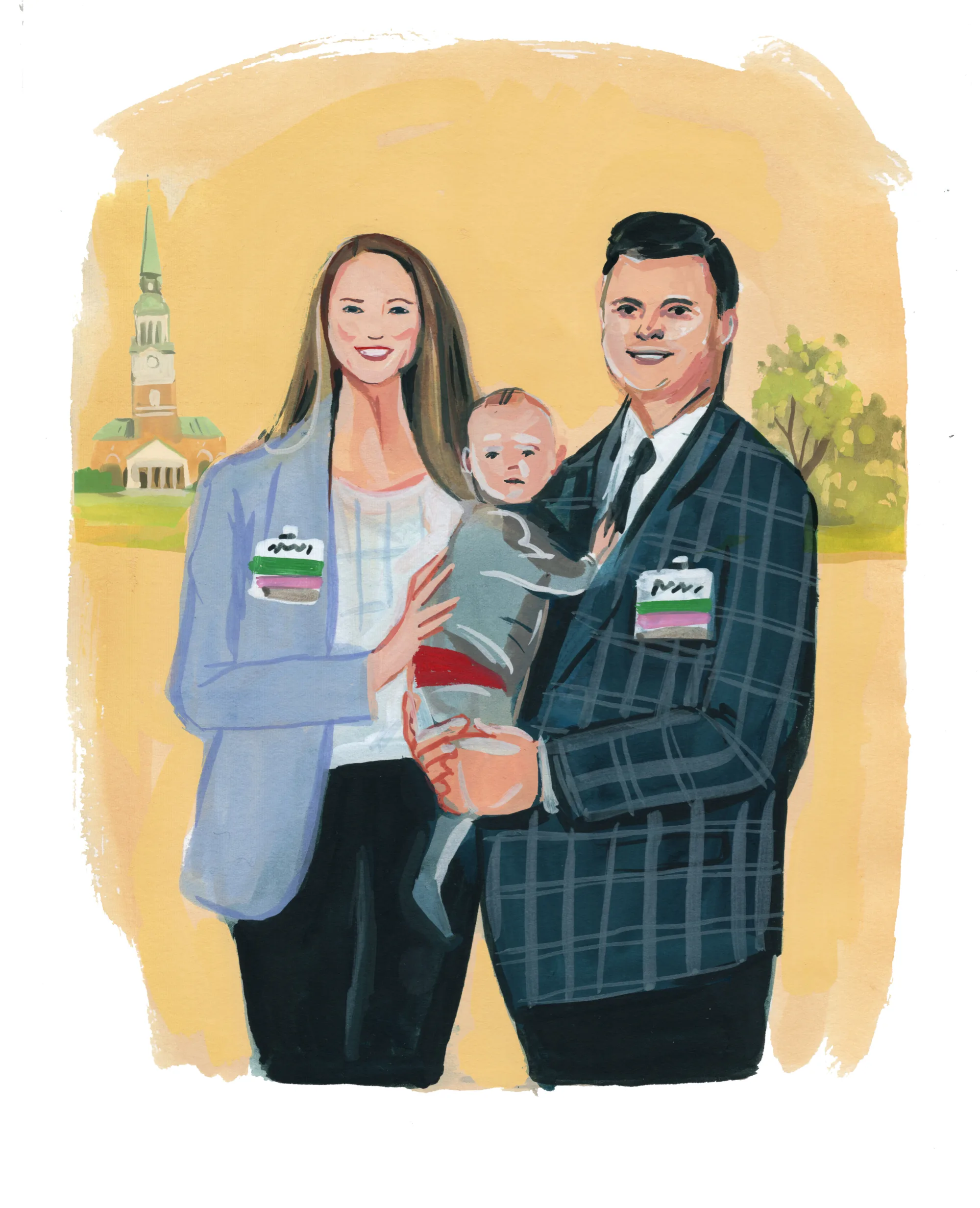
Cy Fogleman (’18) and Kandis McNeil Fogleman (’19)
The mentor
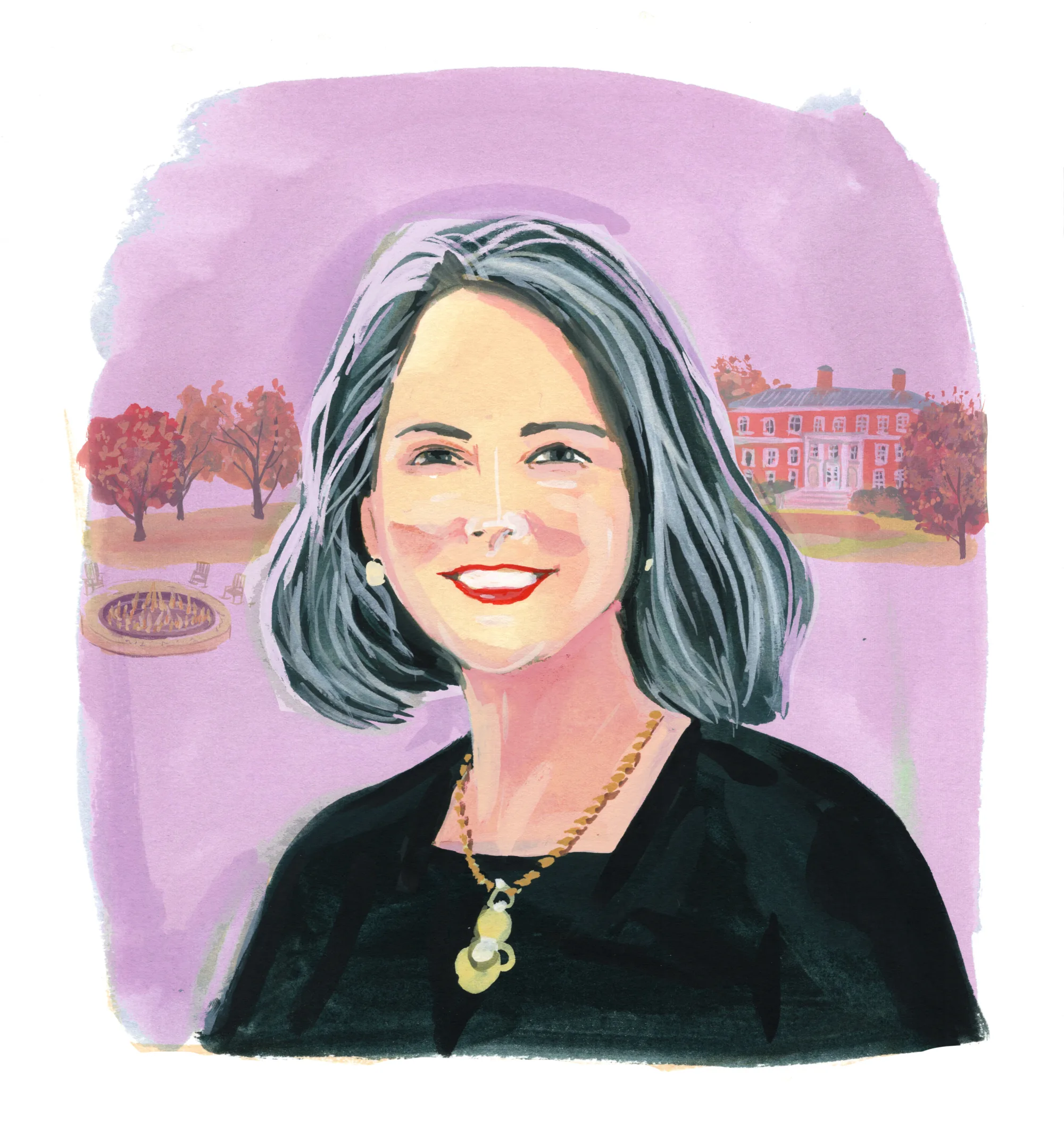
Marybeth Torbet Hays (’90, MBA ’94)
The small-town dentist
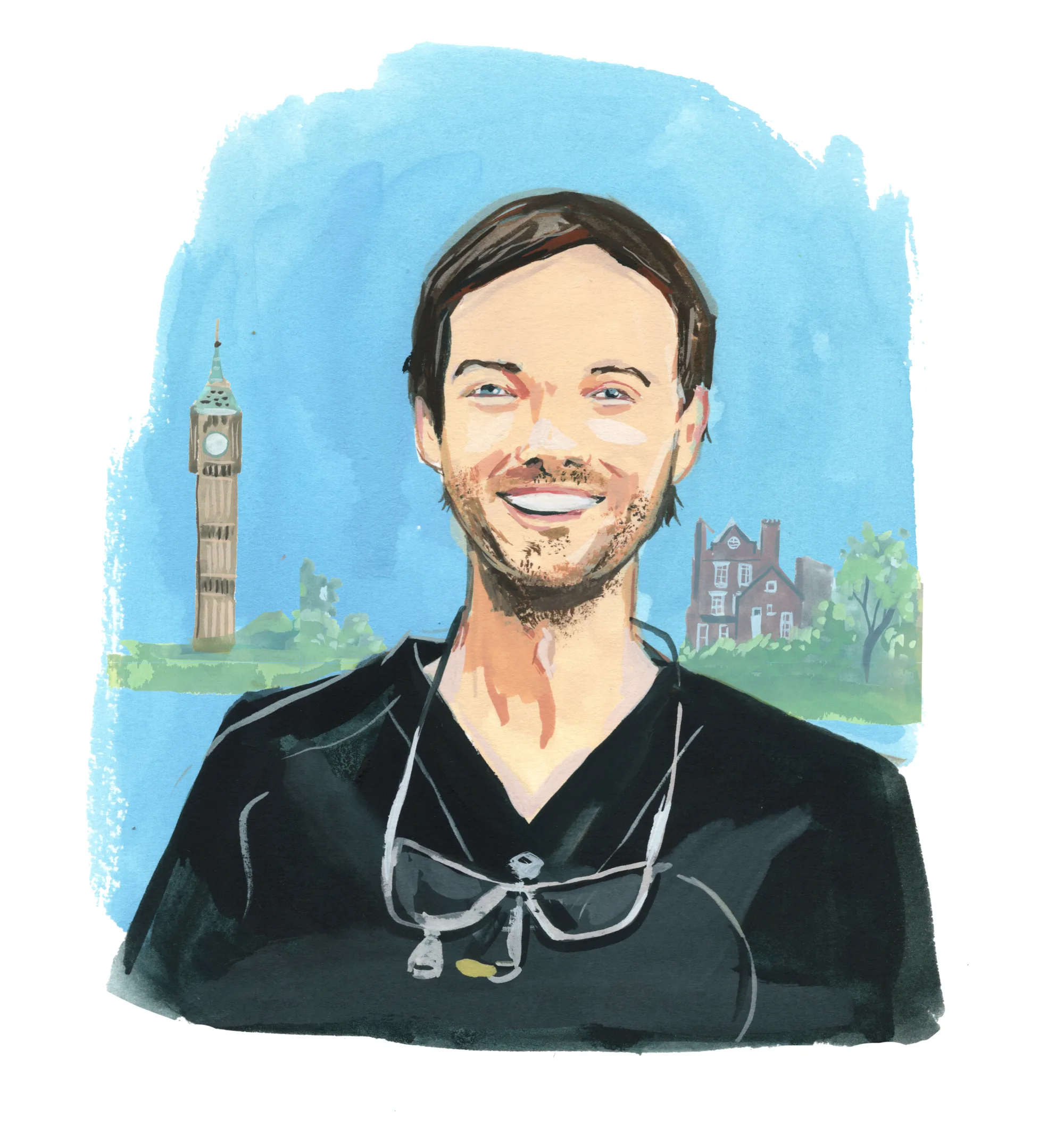
Bryson Rominger (’15)
More Stories
Fit? Check.
President Peter Rodriguez has landed at a university that is “congruent” with his background and his values.
Shining a light on Wake Women
Wake Forest is not a single story. It is the sum of every individual experience of those who have passed through this institution.

Back to School
These four Deacs see big opportunities for Wake Forest and its new president.