This story is part of America From the Forest, Wake Forest Magazine’s series marking America’s 250th anniversary.
If you are looking to round out your reading list for this semiquincentennial summer, English Professor Jennifer Greiman has you covered.
For her first year seminar, American Democracy in Five Novels, the students read and study works of American literature as a guide to the principles and challenges of democracy in the United States.
“I want students to find a way into American literary history in general, and the tradition of the American novel in particular, as part of a vibrant cultural archive that (they) may feel is somewhat inaccessible — novels are long — but that they have a right to access, to know and to enjoy,” Greiman says.
Greiman told Wake Forest Magazine that student responses to the course have been so positive, it’s become the class she teaches most frequently.
“If (students) are initially a little hesitant at the size and number of the books we’re reading, I’ve found that they consistently rise to the challenge,” Greiman says. “I’ve also had students tell me that the readings and discussions we’ve had in class not only connect to their other classes but help them think about other parts of their lives on campus — what it means for any group of people to decide how they want to organize to govern themselves.”
The books Greiman selects for her course were published at particularly intense political moments: around the time of the American Revolution and the ratification of the Constitution; the aftermath of the Compromise of 1850, which intensified the national debate over slavery; the overthrow of Reconstruction and the legalization of segregation; the Civil Rights Movement and the tumultuous first decades of the 21st century. Greiman notes that the novels, taken together across different eras, tell a broad historical story about American democracy, from its origins to its ongoing action and process.
“Putting each novel in the context of a specific political era and then into conversation with the others we’re reading gives students the tools to find their way into the tradition,” she says.
Here are five books Greiman has used often, and why she chose them:
Charles Brockden Brown, “Wieland; or, The Transformation” (1798)
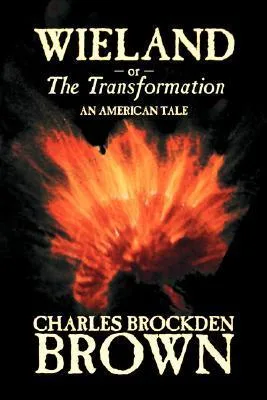
“One of the first novels written by an American and published in the newly constituted United States, ‘Wieland’ is a truly terrifying Gothic novel about a crisis of authority in every sense: the authority of religion and science, of parents over children, of the wealthy over the poor and of the person who takes up a pen to narrate a story over those who become mere characters. The central crisis occurs when a mysterious voice starts giving commands to an isolated, wealthy family on the outskirts of Philadelphia, and they cannot agree on what authority this voice has over them.”
Herman Melville, “Moby-Dick; Or, the Whale” (1851)
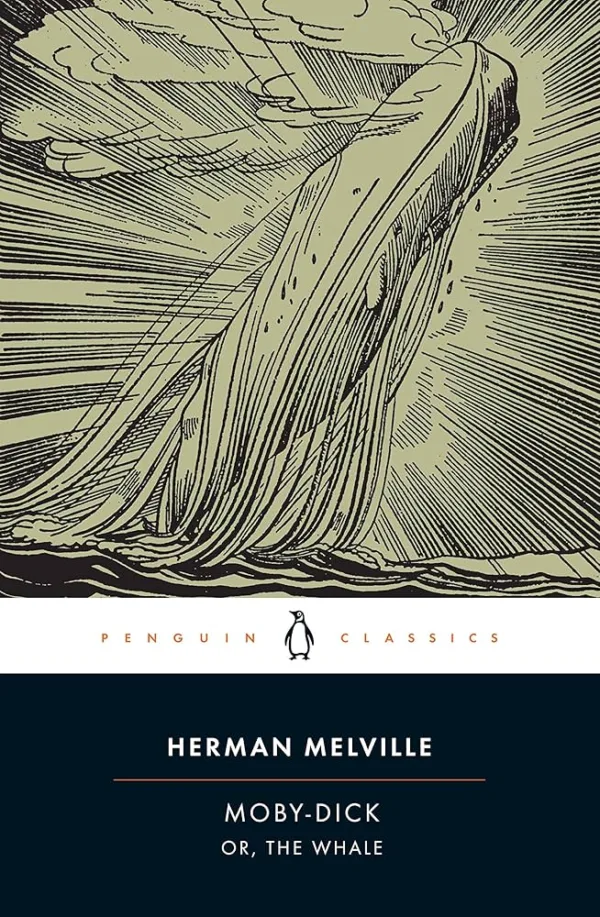
“In many ways, (this is) the centerpiece of this course. It is the book I most want students to linger over, attend to and feel that they can make their own, because it always speaks to whatever moment you pick it up — certainly to our own. It is, in one sense, a novel about an economy based on the extraction of oil, and its central ‘political’ plot begins when the crew takes a democratic oath to hand their lives, labor and power over to a leader who drives them to catastrophe. But beyond the central tragedy, the novel is very much an affirmation of all forms of life; it’s filled with chapters on love and faith and art and work and science and philosophy and, above all, WHALES.”
Charles W. Chesnutt, “The Marrow of Tradition” (1901)
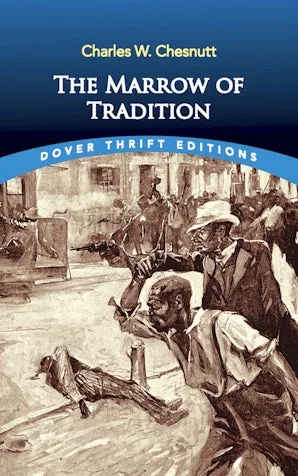
“I think (this is) the great North Carolina novel that far too few North Carolinians read. It is a rich, realist social novel set in a very loosely fictionalized version of Wilmington, North Carolina, which at the end of the 19th century was a vibrant, thriving and multiracial city before the violent coup and massacre of 1898 transformed it. Chesnutt examines how a conspiracy of media, party politics and corporate interests orchestrated a racist panic and violent massacre, while also telling the story of how intimately and deeply connected to each other the white and Black families of the city truly were.”
Ralph Ellison, “Invisible Man” (1952)
“(‘Invisible Man’ is) a masterwork of American literary modernism that both responds directly to earlier generations of American authors (Herman Melville, for one) and imagines new possibilities for the form of the novel. The unnamed protagonist travels through every stratum of social and political life in Jim Crow America to find a position in which he can be recognized as fully American and fully human. The novel is brutally honest in its depictions of how the segregation of people makes democracy impossible; at the same time, both the narrator and Ellison continue to see democracy as the only way forward.”
Claudia Rankine, “Citizen” (2014)
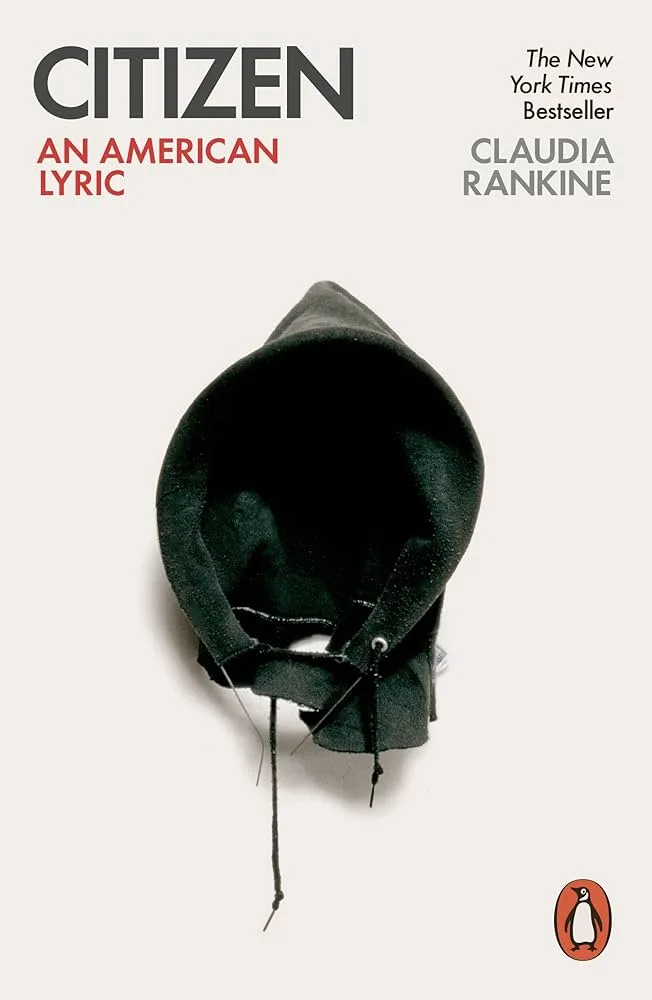
“(This is) the book on the syllabus that has the most tenuous claim to being a ‘novel’ because it could also be called a lyric poem, a work of visual art and a set of dramatic scripts for the situations of daily life for Black Americans in the contemporary U.S. The book includes short vignettes of everyday encounters as well as reflections on shared public spectacles — from Barack Obama’s inauguration to Serena Williams’ 2009 Wimbledon match to the murder of Trayvon Martin — to examine the ways in which the legal and political category of ‘citizenship’ is lived and felt.”
Greiman notes that seeing students discover how the books speak to one another in theme and structure, and how the authors address both contemporary and future readers, are her favorite aspects of the course.
Greiman asks her students to critically evaluate not only the novels and the America of the past, but the idea of American democracy in the present and future.
“We are in a moment when it is important to take a long view of American democracy. Everything that feels unprecedented, every political crisis, has a history,” Greiman says. “Democracy is more verb than noun, and as we mark the 250th anniversary of the Declaration of Independence, I hope students don’t consider that action of declaring to be frozen in marble or preserved under glass.”
More stories like this one

The Literary Maven of Hub City
How Betsy Wakefield Teter (’80) sparked a celebrated movement to nurture writers and cultivate readers in her hometown.
The Way of the Poet
Shy, poor and lonely, alumnus A.R. Ammons arrived at Wake Forest “invisible” but destined for greatness through the grandeur of words.

Professor Eric G. Wilson’s quest to create his ‘own sweet ruse’
Eric G. Wilson, the Thomas H. Pritchard Professor of English, is not himself these days. Or any days. Ever.