At just about every home game for Wake Forest, Elinor Starling can be found strolling around the Gold Lot visiting with decades-long friends, usually with one of her two children at her side, and then jumping up to cheer loudly for the Demon Deacons from her seat in Allegacy Financial Stadium.
That’s what she’s done for 68 straight years as a fan in the stands.
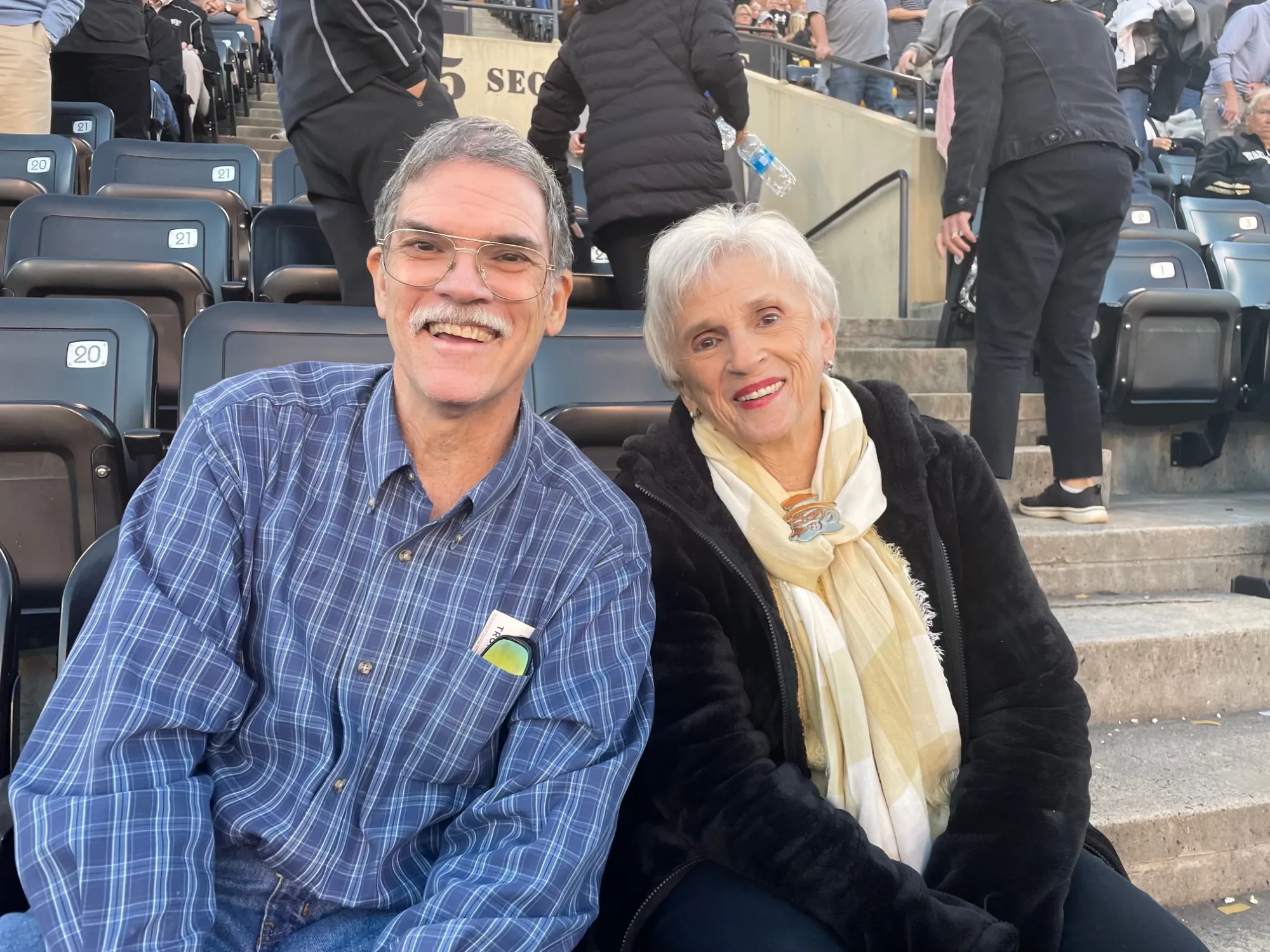
“I’m not a sitter,” Starling says. “[My family and I] do not sit there like good bumps on a log.” After shouting “Go Deacs!” all day Saturday, for many years she’d sing alto in her church choir the next morning without missing a note.
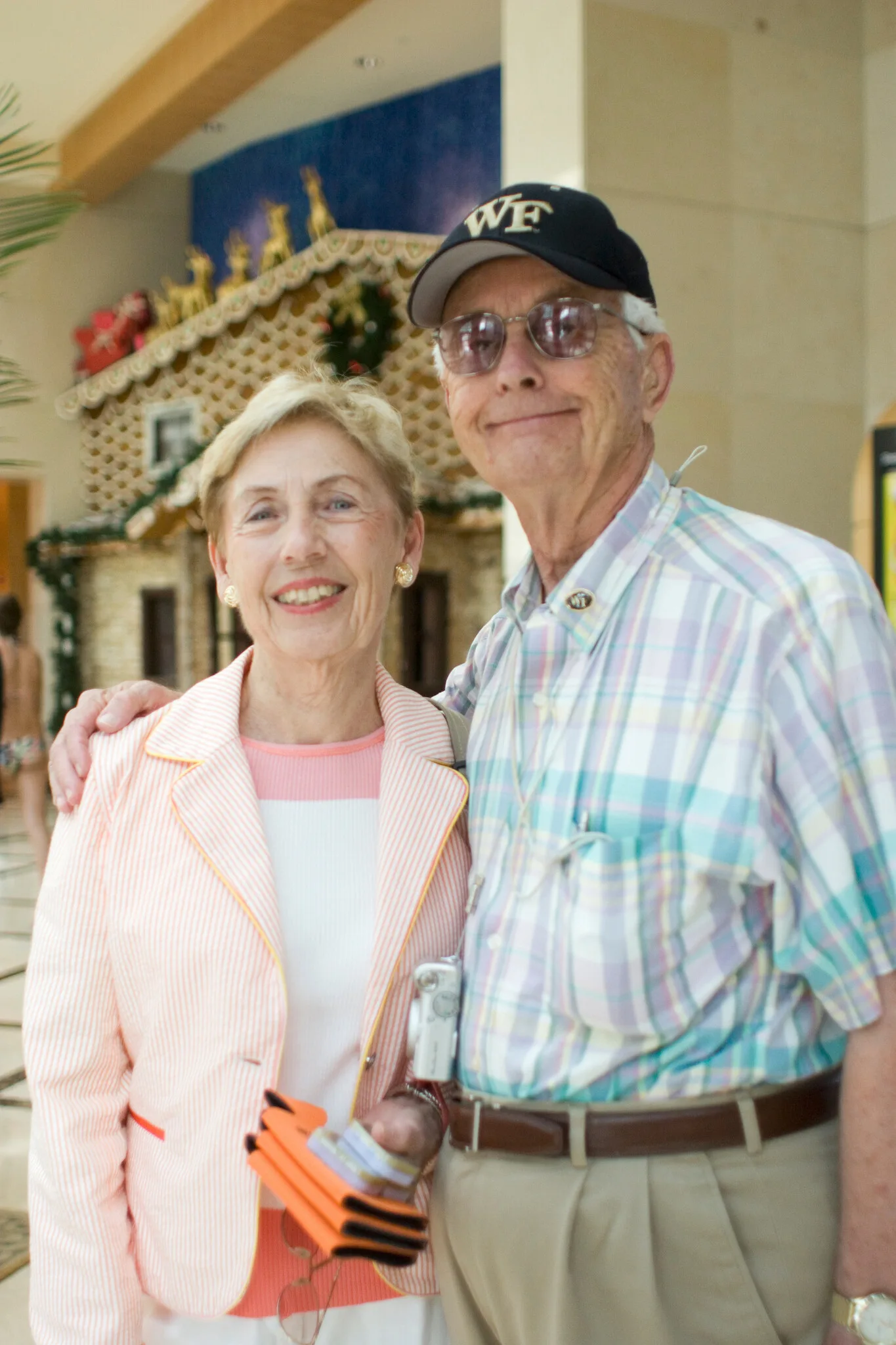
For 66 years, Jean Burroughs (P ’80, ’83) could be found a few rows away; a recent fall led her to start watching the games on TV instead. But as the longtime choral director at Salem Academy and College, she needed to save her voice, so Burroughs was more likely to be cheering on the inside. “I could be calm if I had to,” she says. “I knew not to let go and let myself get all out of whack.”
What they have in common is their Demon Deacon loyalty: Both became season-ticket holders in 1958, when their alumni husbands were hired by Wake Forest. William “Bill” Starling (’57) joined the newly created admissions office, where he worked his way up to dean of admissions and financial aid. Julian Burroughs (’51, P ’80, ’83) became a communication professor and station manager for WFDD, which he helped morph from a student-run outlet to North Carolina’s first NPR affiliate.
Their wives’ football fandom dates back to the original campus. Mrs. Burroughs remembers going to games with her friends as the dates of Wake Forest students while at nearby Meredith College, from which she graduated in 1952. Mrs. Starling regularly visited Bill, her high school sweetheart, initially in the town of Wake Forest, and then in his senior year on the new campus in Winston-Salem.
These proud grandmothers have seen the Demon Deacons through it all. From 1958 through 2024, Wake Forest football went 304-465. In 1962, the team didn’t win a single game. But Starling and Burroughs contend that the lows have made the highs that much more glorious. They both made the pilgrimage to the 1979 Tangerine Bowl in Orlando, Florida. And they traveled to the Orange Bowl in Miami Gardens, Florida, on Jan. 2, 2007, just weeks after the team clinched its first ACC Championship in 36 years.
Even the newest fans realize that the Demon Deacons are having a spectacular season, 6-1 when this story was written, under Head Coach Jake Dickert. After nearly seven decades of unconditional fandom, Starling and Burroughs feel like the sky’s the limit.
“One thing that really hasn’t changed is being a supporter,” Starling says. “I love the game. I love the sport. I love pulling for Wake Forest.”
“Jean and Elinor represent the best of Deacon Nation: families who have made Wake Forest football part of who they are, across generations and through every era of this program,” says Vice President and Director of Athletics John Currie (’93). “We are grateful to them for helping build the community that makes Saturdays here a family tradition.”
—
When the University moved to Winston-Salem in 1956, the football team shared Bowman Gray Stadium with a racetrack and Winston-Salem State University before moving to Wake Forest’s newly built field twelve years later.
Catherine Burroughs (’80) remembers her father taking her and her sister, Lee Burroughs Bradway (’83, P ’11, ’14), to see the “awe-inspiring pit of sloping red clay” that became Groves Stadium, renamed Allegacy in 2023.
“To have a great football stadium, it meant that Wake Forest had come into its own,” Catherine Burroughs says.
Gold metal benches lined the stands at what was then called Groves Stadium. The names of season-ticket holders, including the Starlings and the Burroughs, were emblazoned on the seats. Black chairbacks (without names) eventually replaced those benches, but the same spots still belong to these two families.
They’re in surprisingly good company. In 2008, when the Deacon Club introduced the football seat-rights program, season-ticket holders who had maintained their tickets since the stadium opened were grandfathered in, says Stephen Czarda, associate athletic director of communications strategy. A whopping 105 accounts qualified for that exemption. Eighteen years later, 46 of those original 105 families still have season tickets.
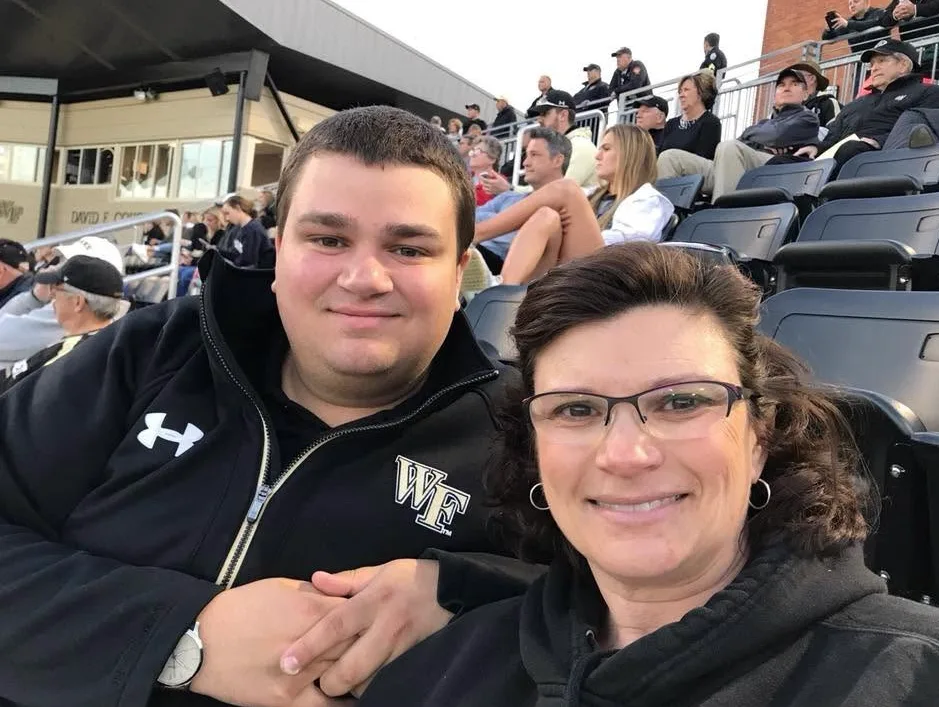
“We’ve had the same seats since I’ve been alive, so we’ve sat around most of the same people,” says Elinor Starling’s daughter, Jennie Starling Weekley (P ’18), whose son Ben Weekley (’18) was co-chair of Traditions Council. “You knew everybody’s name in your section. That was one of my favorite things about the games back then.”
—
The Starlings and the Burroughs also share their commitment to sticking it out for the entire game. “Our motto was if the players have to stay, we have to stay with them,” Elinor Starling says.
“The rule for the Burroughs family was: Never to leave a game until the very, very end, even if we were losing 50-to-nothing, or even if it was raining,” says Lee Burroughs Bradway.
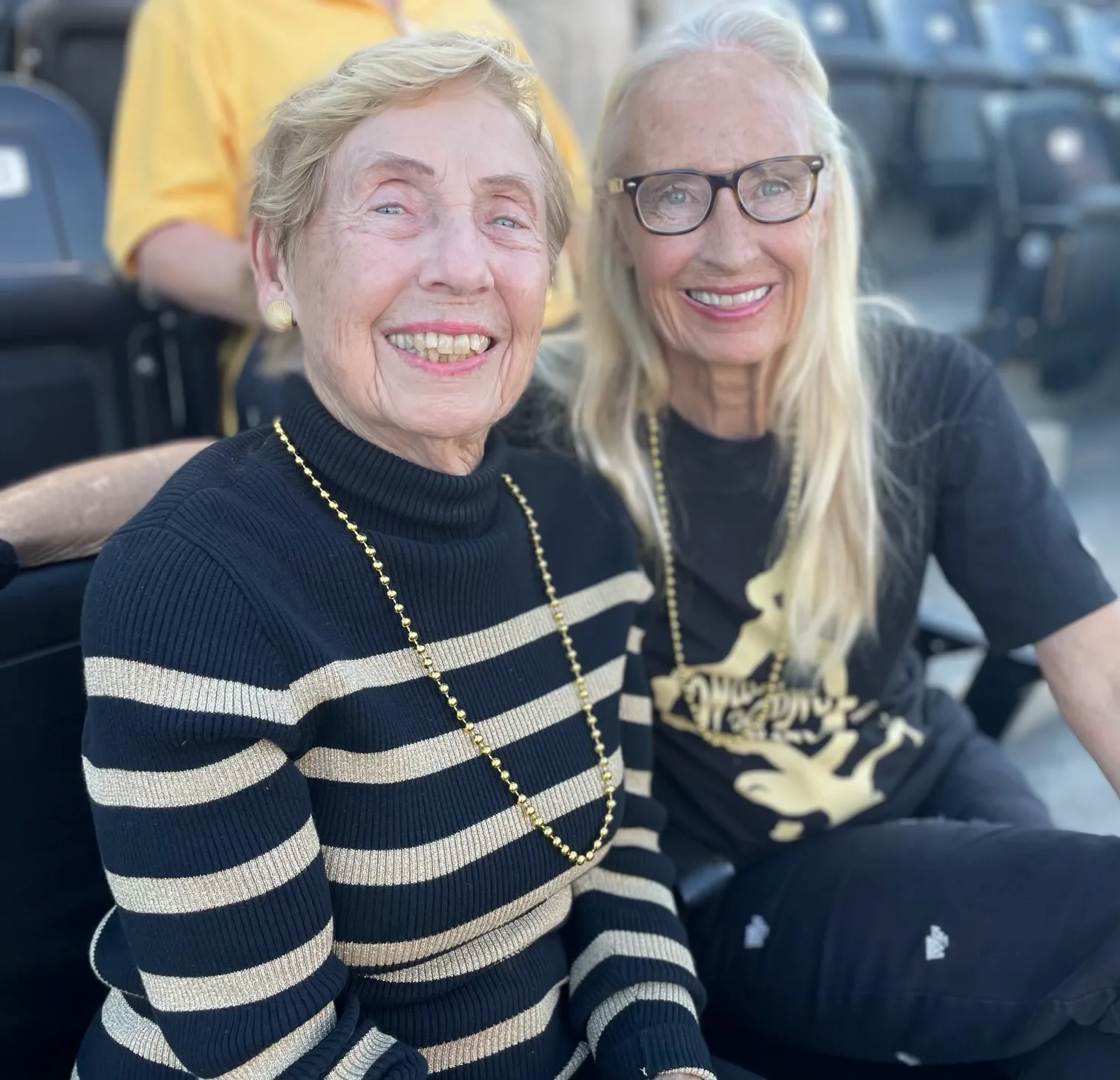
And she means never. That included every home game of several losing seasons, and even breaking the citywide curfew for the 1967 homecoming game, which was played even as race riots roiled Winston-Salem.
The mothers and daughters loved watching Brian Piccolo (’65, P ’87, ’89) play, cheering on the Deacs to their 1979 comeback win over Auburn University, and catching post-game performances from legends like comedian Bob Hope, country star Tanya Tucker and the Dallas Cowboys cheerleaders.
“Of course, anytime we beat Carolina, or even Duke or [N.C.] State, that’s always a great time,” Starling says.
—
Lee Burroughs Bradway says that her mother never really loved football the way her father did.
Jean Burroughs confesses: “Julian would be really upset on Sunday morning [after a loss]. It didn’t bother me that much, I’m sorry to say.”
What her mother loved, Lee says, is everything that went along with the game. Even for Elinor Starling, who loves the sport of football, it’s the extra sparkle — the camaraderie, the adrenaline rush, the time with family, the optimism that never dies — that will keep her coming “as long as my legs let me walk in.”
Both families use the tradition as a way to remember their late loved ones. Bill Starling died in 2001, shortly after being promoted to dean. Julian Burroughs died in 2008, 14 years after retiring.
In 2010, Parker Bradway (’11), was named Homecoming King. His brother, Brooks (’14), was there to see it. In the student section, the grandsons carried on the family tradition of staying till the end. “They just knew the rule,” Lee Burroughs Bradway says. “They have that [Deacon] blood in them.”
The Starling and Burroughs families have no plans to give up their tickets anytime soon. “I would like to stay in that seat as long as that stadium is there,” Jennie Starling Weekley says. “Maybe my grandkids will start coming.”
Bradway adds that going to games may persuade at least one of the five great-grandchildren in the Burroughs family to go to Wake Forest, “and that legacy will continue.”
More Stories
Charting the course
How alumni are leading though turbulent times in their industries.
Fit? Check.
President Peter Rodriguez has landed at a university that is “congruent” with his background and his values.
Shining a light on Wake Women
Wake Forest is not a single story. It is the sum of every individual experience of those who have passed through this institution.